

More news on this day
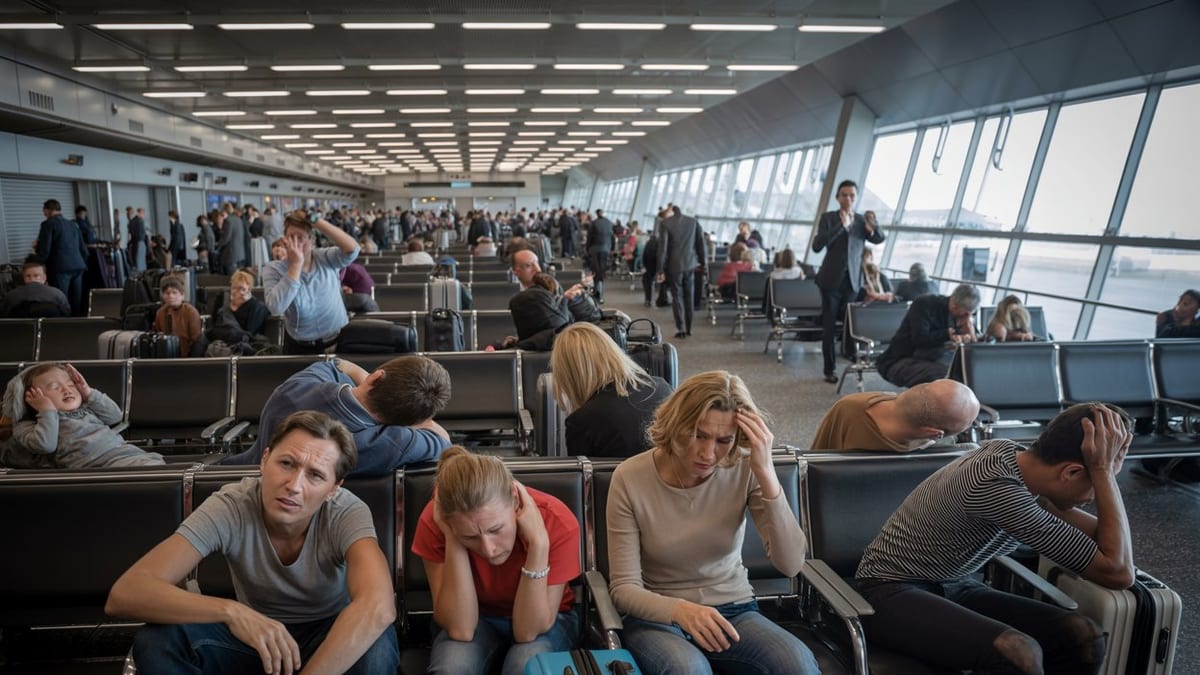
Thousands of air travelers across Asia and the Middle East are facing missed connections, overnight airport stays and last minute rebookings as cancellations and delays at major hubs in China, Thailand, India and the United Arab Emirates trigger a new wave of disruption for regional and long haul routes.
Get the latest news straight to your inbox!
Wave of Cancellations and Delays Across Asian Hubs
Published coverage of today’s operations shows widespread disruption across Asia, with China, Thailand, India and Gulf states all reporting elevated levels of flight cancellations and delays. Data collated from regional flight tracking and aviation news sources indicates that more than two dozen flights have been cancelled and hundreds delayed on routes touching Beijing, Bangkok, Mumbai and Dubai, among other cities.
Reports highlight that Tibet Airlines, Hainan Airlines and Bangkok Airways are among the carriers facing operational strain, contributing to at least 28 cancellations and around 370 delays on affected schedules. These figures sit within a much larger picture of disruption across Asia, where some monitoring platforms have logged hundreds of cancellations and several thousand delays in a single day across multiple countries.
In China, Beijing Capital and Beijing Daxing airports have been repeatedly cited among the most affected, with both cancellations and extensive late departures recorded. In Thailand, Bangkok’s Suvarnabhumi and Don Mueang airports continue to see knock on effects from repeated schedule changes, while in India and the Gulf, Mumbai and Dubai are again featuring prominently in disruption tallies.
Although the headline numbers for Tibet Airlines, Hainan Airlines and Bangkok Airways represent a fraction of the day’s total delays across Asia, the concentration of their routes through key hubs means even limited operational issues can cascade across networks linking China, Southeast Asia, India and the Middle East.
China’s Network Disruptions Spill Over International Routes
Recent Chinese aviation data suggests that domestic congestion and weather or air traffic related constraints are playing a significant role in the current disruption. Travel and tourism outlets tracking same day performance have reported hundreds of cancellations and several thousand delays across major mainland hubs, including Beijing, Shanghai, Guangzhou, Shenzhen and Chengdu.
Within this context, Hainan Airlines has emerged as one of the carriers reporting a notable share of late operations and scrubbed services. Publicly available flight performance breakdowns show Hainan with dozens of cancelled flights and several hundred delays in recent days, affecting both mainland routes and international links. Tibet Airlines, with a smaller network, has recorded a more modest yet still visible number of affected flights, particularly on services connecting interior Chinese cities with larger coastal gateways.
The impact is not confined to domestic travelers. International routes from China to Bangkok, Dubai, Riyadh and other long haul or regional destinations have also featured in disruption snapshots. Travel industry reports from the last 48 hours describe long queues at rebooking counters and growing backlogs on popular China to Middle East and China to Southeast Asia corridors, as delayed departures from Chinese hubs cause missed onward connections.
Observers note that carriers such as China Southern, China Eastern and Air China, which operate extensive networks overlapping with Hainan and Tibet Airlines, are simultaneously managing high volumes of delayed services. This overlap creates tight margins for recovery and increases the likelihood that a cancelled or heavily delayed departure from a Chinese hub will reverberate across joint or codeshare routes linking to India and Gulf states.
Thailand and Bangkok Airways Face Mounting Operational Pressure
Thailand’s aviation sector is also under pressure, with Bangkok Airways and a mix of regional and long haul operators cancelling and delaying flights over the past several days. Coverage from specialist travel publications notes that Bangkok Airways has cancelled more than a dozen services on key regional routes, including flights to Ko Samui, Kuala Lumpur, Tel Aviv, Doha and Shanghai, in addition to delays on domestic sectors.
Bangkok’s Suvarnabhumi and Don Mueang airports remain central nodes in this disruption. Reports indicate that even where outright cancellations are limited, late arriving aircraft, crew rescheduling and tight turnaround windows are contributing to rolling delays across much of the day. This has particular implications for travelers connecting between Southeast Asia and India or the Middle East, as many itineraries route via Bangkok before continuing to cities such as Mumbai or Dubai.
While the number of cancelled Bangkok Airways services tied directly to today’s tally of 28 cancellations is comparatively small, knock on effects are being felt across shared networks. Airlines operating onward segments from Bangkok to India and the Gulf have been forced to adjust schedules, hold departures for connecting passengers or, in some cases, leave travelers to be rebooked on later flights when minimum connection times can no longer be met.
Industry analysts point out that Thailand’s tourism high season, combined with reduced slack in aircraft rotations following earlier regional disruptions, leaves limited room for recovery when a cluster of flights is cancelled or delayed. As a result, even localized issues at Bangkok or Phuket can quickly translate into missed long haul departures bound for Europe or the Middle East.
Ripple Effects in India, the Gulf and Beyond
In India and the Middle East, the effects of today’s cancellations and delays have been felt most acutely at major transit hubs such as Mumbai and Dubai. Publicly available information on flight movements in Dubai shows a pattern of operational strain linked to a series of recent disruptions, including temporary suspensions and schedule adjustments that have already stretched airport and airline resources.
Travel advisories and news coverage note that carriers serving the Mumbai to Dubai and Bangkok to Dubai corridors have been juggling altered departure times, re-timings and occasional cancellations as they absorb both local constraints and late arriving aircraft from China and Southeast Asia. This has increased the risk of passengers becoming stranded mid journey, particularly those with separate tickets or tight connections onward to Europe, North America or Africa.
In parallel, Indian carriers with dense networks into the Gulf and Southeast Asia, as well as Middle Eastern airlines connecting via Dubai, Doha and Riyadh, are rebalancing capacity in response to ongoing airspace and operational challenges in the wider region. Aviation tracking reports from March highlight a succession of schedule revisions, extra recovery flights on some routes and capacity cuts on others, all of which limit the options available to travelers caught up in today’s disruption.
The result is a patchwork of partial solutions. Some stranded passengers are being accommodated on later flights or rerouted through alternative hubs, while others face extended waits for open seats. The fragmented nature of bookings, with many travelers holding separate tickets on different airlines across China, Thailand, India and the Gulf, is adding to the complexity and leaving some individuals to negotiate refunds or rebookings on their own.
What Stranded Passengers Are Being Advised to Do
Consumer advocacy organizations and travel experts responding to the latest wave of Asian flight disruption are emphasizing a few consistent strategies for affected passengers. Public guidance highlights the importance of checking live flight status before leaving for the airport, using both airline channels and independent trackers, and avoiding assumptions that a scheduled flight will depart on time simply because it appears on a printed itinerary.
Travel industry advisories also encourage passengers whose flights have been cancelled or significantly delayed to pursue rebooking or refunds directly through the operating airline wherever possible. Past experiences shared across traveler forums and prior disruption events suggest that dealing with airlines rather than intermediaries can simplify claims for compensation or alternative transport, particularly on complex multi sector journeys crossing China, Thailand, India and the Gulf.
In addition, regional passenger rights frameworks, including European Union regulations for journeys that begin in the EU and connect onward to Asia, may apply in certain circumstances when flights operated by carriers such as Hainan Airlines or other participating airlines are cancelled or heavily delayed. Travel law specialists caution, however, that eligibility depends on itinerary structure, point of origin and operating carrier, and that travelers should review the detailed conditions rather than assuming automatic compensation.
With aviation networks across Beijing, Bangkok, Mumbai and Dubai under heightened strain, analysts expect intermittent disruption to persist in the near term. For now, the experience of passengers caught by today’s 28 cancellations and 370 delays underlines how easily a handful of schedule changes at a few key carriers like Tibet Airlines, Hainan Airlines and Bangkok Airways can ripple across continents and leave travelers stranded far from their intended destinations.