

More news on this day
Thousands of passengers have been left stranded across Asia after a fresh wave of more than 50 flight cancellations and extensive delays hit key hubs in Indonesia, Malaysia, Laos, Taiwan and Hong Kong, disrupting services on busy routes to Jakarta, Bali, Singapore, Sydney, San Francisco and other major destinations.
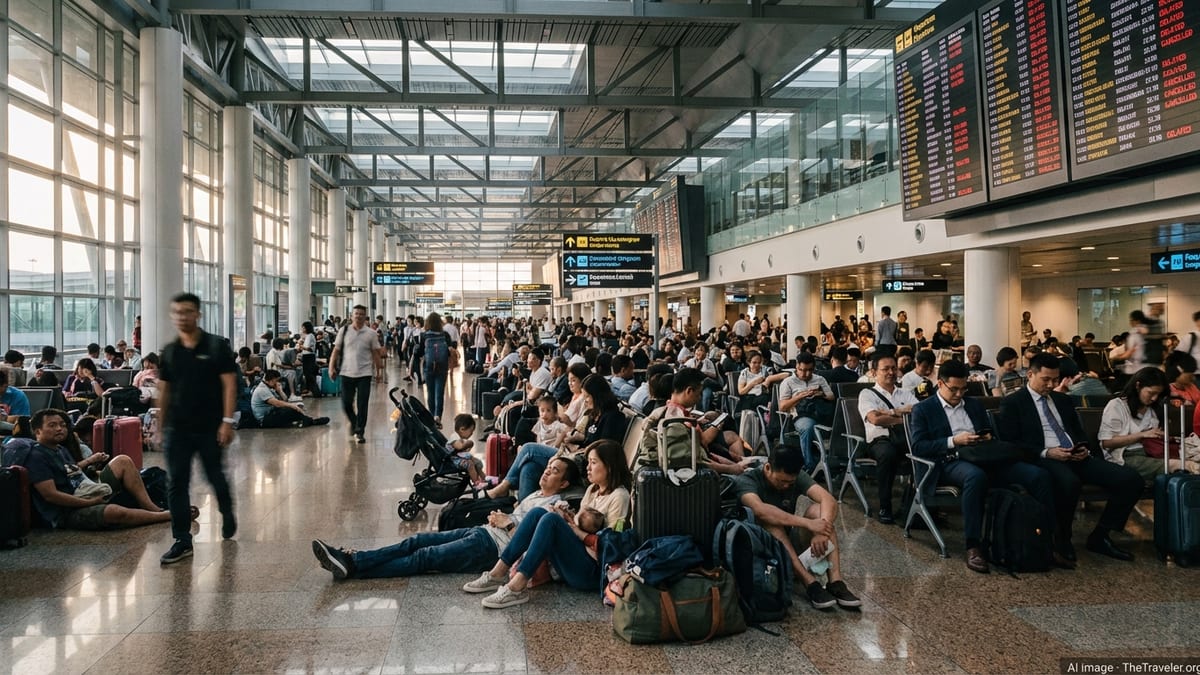
Regional Hubs Buckle Under Wave of Cancellations
Operational pressures across several Asian aviation markets intensified on February 27 as disruption data showed dozens of cancellations and well over 1,000 delays concentrated in Indonesia, Malaysia, Singapore, Japan, China and wider Southeast Asia. Airports in Jakarta, Kuala Lumpur, Taipei and other regional gateways reported packed terminals, long queues at service desks and mounting frustration among passengers seeking rebooking options.
While weather has contributed in some localised cases, industry observers say the broader pattern points to a mix of aircraft rotation challenges, tight crew scheduling and lingering capacity constraints on popular regional and long haul corridors. The disruption follows earlier spikes in January and February that had already exposed how finely tuned many carrier networks remain, particularly around Jakarta and Kuala Lumpur.
In Indonesia, Soekarno Hatta International continued to experience elevated disruption levels, with cancellations and rolling delays for both domestic and regional services. That impact has been felt most acutely by travellers bound for leisure destinations such as Bali, as well as business passengers trying to connect onward to Singapore and major Australian cities.
Malaysia’s main gateway at Kuala Lumpur International has also been under pressure, recording some of the highest delay volumes in the region over recent days. Travellers reported departure boards dominated by late flights, and tight minimum connection times quickly evaporating for those with onward itineraries to Europe and North America.
Batik Air and Low Cost Carriers Among Most Affected
Among individual airlines, Batik Air has emerged as one of the carriers most exposed to the current round of disruption. The Indonesian operator, which has a dense domestic network feeding Jakarta and other hubs, has seen elevated cancellation numbers on routes linking major cities such as Jakarta, Surabaya and Medan, creating a knock on effect for passengers connecting to Bali and regional Southeast Asian destinations.
Low cost giant AirAsia has also been prominently affected, particularly at its Kuala Lumpur hub where high volumes of delayed departures have rippled across its extensive network. Travellers booked on budget itineraries between Malaysia, Indonesia, Thailand and Singapore have faced queues for rebooking at crowded transfer desks, with many reporting same day alternatives either fully booked or substantially more expensive.
Jetstar branded services in the region, together with other value focused operators, have similarly had to manage constrained aircraft utilisation and network congestion. For passengers, that has translated into last minute schedule changes on routes from Southeast Asia to Australia, including flights into Sydney and other eastern seaboard gateways, adding uncertainty for long planned holiday and family visits.
On transpacific links, United Airlines and other long haul carriers have been monitoring conditions closely as Asian feeder disruptions threaten to strand travellers who had expected to connect via major hubs onto services bound for San Francisco and other United States cities. Even where long haul legs are operating on time, missed connections upstream have forced some passengers into overnight stays.
Knock On Impacts in Taiwan, Hong Kong and Emerging Hubs
The disruption has not been confined to Southeast Asia’s largest gateways. In Taiwan, Taoyuan International outside Taipei has reported a steady stream of delayed flights tied to regional congestion and aircraft arriving late from previous sectors. Travellers connecting through Taiwan on multi stop Asian itineraries have experienced extended layovers and tighter turn times to reach onward flights to North Asia and Oceania.
Hong Kong International, a key bridge between East Asia, Southeast Asia and long haul markets, has also felt secondary impacts, particularly on services that interline with carriers operating out of disrupted Indonesian and Malaysian hubs. While core long haul operations have mostly remained intact, irregular arrivals from within the region have complicated gate assignments and baggage handling.
Smaller but increasingly important airports in Laos and secondary cities across mainland Southeast Asia have faced their own challenges. With fewer daily frequencies to key hubs such as Bangkok, Singapore or Kuala Lumpur, a single cancellation or heavily delayed departure can effectively wipe out same day options for stranded passengers trying to reach onward flights to Jakarta, Bali or Sydney.
Tour operators report that some travellers originating in these emerging markets have had to route via alternative hubs at short notice, often involving additional stops and longer total journey times, as they attempt to salvage trips built around fixed hotel check in dates and tour departures.
Tourism and Business Travel Plans Upended
The timing of the latest disruption is particularly acute for leisure travellers, arriving just as late season holiday traffic to Bali and other Indonesian resort islands remains strong. Hotels in popular areas such as Kuta, Seminyak and Ubud have received a flurry of last minute calls from guests delayed en route, with some forced to cut a night or two from their stays because alternative flights were only available a day later.
In Singapore, which relies heavily on seamless regional air connectivity, travel planners have warned that even a relatively small cluster of cancellations can produce outsized effects on short haul city break and cruise itineraries. Cruise passengers in particular are vulnerable when inbound flights from Jakarta or other regional cities arrive late or not at all on embarkation day.
Corporate travel managers across Asia Pacific are also grappling with the fallout as employees miss meetings or key events in regional business hubs. Routes linking Jakarta and Kuala Lumpur with financial centres such as Singapore and Hong Kong have seen travellers scrambling to secure seats on remaining departures, while some meetings have shifted online at the last minute to accommodate colleagues stranded in transit.
Travel insurers say they expect an uptick in claims related to delays, missed connections and additional accommodation costs. However, coverage can vary significantly by policy and by the classification of the disruption, leaving some passengers uncertain about whether they will be reimbursed for out of pocket expenses.
What Travellers Should Do If Their Flight Is Affected
Airports and airlines across the region are advising passengers with imminent departures to monitor their bookings closely, arrive early and build in additional buffer time for connections. Many carriers have enabled limited free rebooking or fare difference waivers on selected routes where disruption has been most acute, although availability tends to be best for those who act quickly.
Experts recommend that travellers heading to or transiting through Jakarta, Bali, Singapore, Kuala Lumpur, Taipei, Hong Kong or Sydney keep airline apps and notifications switched on, and check flight status repeatedly in the 24 hours before departure. Those with tight self arranged connections, especially on separate tickets, are being urged to consider moving to earlier flights or consolidating itineraries on a single carrier where possible.
For those already stranded at airports, seeking assistance early at airline service counters or via call centres remains critical, as same day alternatives can disappear quickly once a wave of cancellations is announced. Travellers who are flexible on routing, travel dates or even destination airport within the same region often have better odds of finding a workable solution.
With disruption levels likely to remain elevated in the short term, regional aviation analysts say the episode underscores how vulnerable densely scheduled Asian networks remain to operational strains. For passengers, it is another reminder that even on well trodden routes between Jakarta, Bali, Singapore, Sydney and San Francisco, a confirmed booking offers less certainty than it once did.