

More news on this day
Thousands of travelers across Asia are facing long queues, missed connections, and unexpected overnight stays as a new wave of aviation disruption triggers 2,241 flight delays and 77 cancellations in a single day, impacting services operated by Batik Air, All Nippon Airways, Air China, American Airlines, IndiGo and other carriers at major hubs from Jakarta to Tokyo.
Get the latest news straight to your inbox!
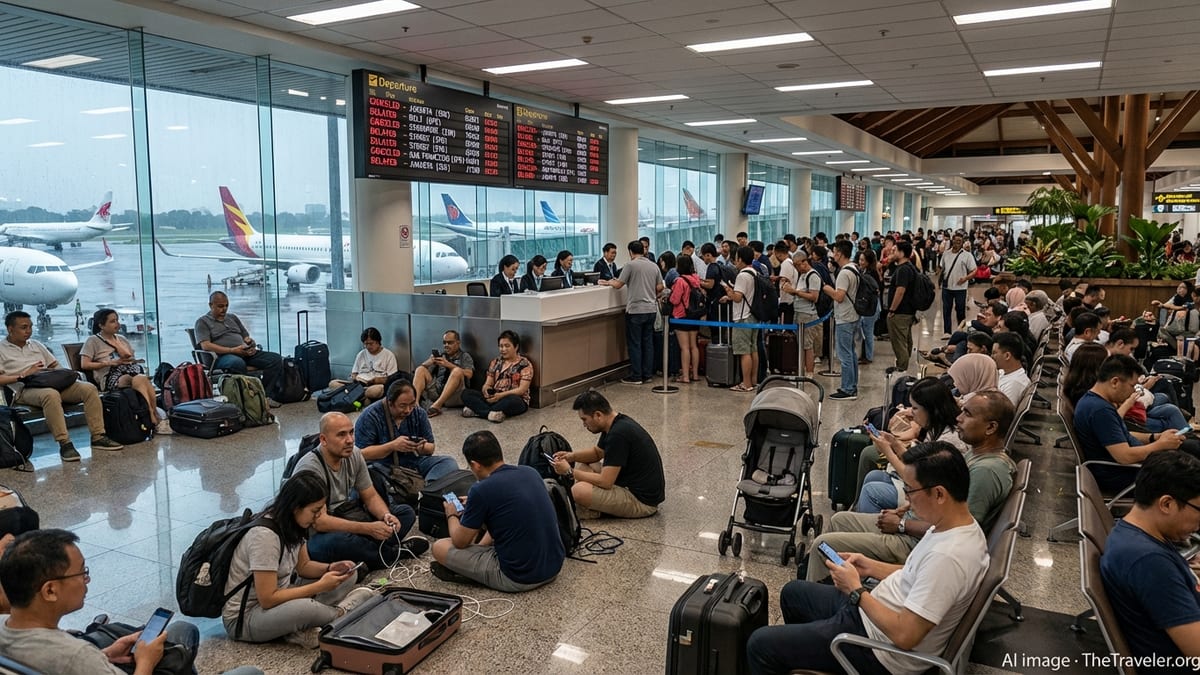
Major Hubs From Jakarta to Tokyo Under Strain
Publicly available flight-tracking data and regional aviation reports indicate that airports in Indonesia, Japan, China, South Korea and India are among the hardest hit, with operational bottlenecks rippling across domestic and international networks. Jakarta’s Soekarno Hatta, Tokyo’s Haneda and Narita, Seoul Incheon, Beijing and Delhi have all reported elevated congestion as delayed aircraft fall out of their scheduled rotations.
In Indonesia, the disruption is particularly visible at Soekarno Hatta International Airport, where Batik Air and other Lion Air Group carriers serve dense domestic and regional schedules. Even a modest number of cancellations has translated into hundreds of missed onward connections, especially for passengers attempting same-day links between secondary Indonesian cities and long-haul services.
Japan’s primary hubs at Tokyo and Osaka are also experiencing a spike in late departures and arrivals. Recent tallies from industry-focused outlets show more than a thousand delays and dozens of cancellations recorded across major Japanese airports on similarly disrupted days, with All Nippon Airways and Japan Airlines frequently listed among the most affected operators. These fresh delays add further stress to already busy spring travel calendars.
Across China and South Korea, irregular operations at Beijing, Shanghai, Guangzhou and Seoul Incheon are compounding the strain. Hub carriers have been forced to juggle aircraft and crews to keep priority routes moving, while regional services are more vulnerable to rolling delays when turnaround times compress.
Multiple Airlines Grapple With Knock-on Effects
The latest figures highlight a broad mix of airlines caught up in the disruption, from full-service network carriers to low-cost operators. Batik Air in Indonesia, All Nippon Airways in Japan, Air China on key Chinese routes, and IndiGo across India’s vast domestic network are all referenced in recent operational summaries as facing elevated delay counts, alongside other Asian and Gulf carriers.
American Airlines and other long-haul operators linking Asian hubs with North America and Europe are also feeling the impact when Asia-originating flights miss their scheduled departure windows. Late arrivals into major transit points reduce the buffer for aircraft and crew changes, increasing the risk of rolling delays across subsequent sectors.
In India, IndiGo’s recent history of large-scale schedule disruption has sharpened sensitivity to fresh irregularities. Previous reporting on the carrier’s cancellations, driven in part by staffing and flight duty-time limitations, underscores how quickly problems at a single airline can cascade across a tightly interconnected domestic market. Current disruption figures show that even when today’s delays are spread over several carriers, the cumulative passenger impact is substantial.
Air China and other Chinese network airlines are facing similar challenges managing heavily banked hub waves at Beijing and Shanghai. When departures in one bank run late, aircraft intended for the next wave of flights often arrive out of position, forcing schedule reshuffles that can push minor delays into multi-hour waits for passengers.
Weather, Congested Airspace and Operational Complexity
While the precise mix of causes varies by airport and country, recent aviation coverage points to a combination of adverse weather, congested airspace, and ongoing operational constraints as key contributors to Asia’s latest day of disruption. Seasonal storms across parts of East and Southeast Asia can quickly reduce runway capacity and slow arrival and departure rates, creating backlogs that take hours to clear.
Air traffic flow management measures in crowded corridors over China, Japan and the Korean Peninsula continue to exert additional pressure on schedules. When traffic levels become too high or military and diplomatic restrictions narrow usable routes, controllers may impose spacing requirements that translate directly into departure holds on the ground.
At the same time, airlines are still navigating resource and regulatory aftershocks from earlier crises, including prior regional conflicts, pandemic-era staffing reductions, and tighter crew duty rules. Industry analyses note that carriers operating at or near pre-crisis capacity with thinner buffers in crew rosters and maintenance slots are more vulnerable when several stress factors converge on the same day.
Technology and infrastructure limits also play a role. Recent global IT outages and airport system failures have demonstrated how quickly check-in, baggage handling and flight planning can become bottlenecks. Even when today’s disruptions are not tied to a single system failure, the complexity of managing thousands of flights daily leaves little margin when multiple pressure points emerge simultaneously.
Passengers Face Long Queues and Patchwork Protections
For travelers on the ground, the statistics translate into long queues at check-in desks, crowded gate areas and last-minute hotel searches when late-night departures are scrubbed. Reports from affected hubs across Asia describe passengers sleeping in terminal seating or on the floor while waiting for rebooking options, particularly where local accommodation inventories are already tight.
Consumer advocates and travel experts quoted in recent coverage continue to emphasize the importance of documenting every aspect of a disrupted journey. Passengers are widely advised to retain boarding passes, delay notifications and receipts for meals, transport and lodging, which may be needed later when seeking refunds, vouchers or statutory compensation where applicable.
Passenger protections vary widely across jurisdictions. Some Asian markets have limited or no formal compensation frameworks for delays, leaving travelers reliant on individual airline policies, while others, including certain Gulf and European carriers serving the region, operate under stricter obligations that may apply on specific routes. This patchwork can create uncertainty for travelers who are unfamiliar with local rules or who booked complex multi-airline itineraries.
Travel insurance policies also differ significantly in their treatment of delays and cancellations, particularly when disruptions stem from broader geopolitical or weather-related events. Recent global experience with large-scale route suspensions has highlighted that many policies exclude coverage for replacement tickets or extended hotel stays, reinforcing the need for travelers to understand benefits before departure.
What Today’s Disruption Signals for the Months Ahead
The wave of 2,241 delays and 77 cancellations across Asia points to an aviation ecosystem that remains operationally fragile, even as demand continues to recover and, on some routes, surpass pre-pandemic levels. Analysts tracking on-time performance in the region note that high load factors and dense scheduling provide efficiency in normal conditions but leave airlines with few options when irregular operations emerge.
For airports such as Jakarta and Tokyo, which function as critical connectors between Southeast Asia, Northeast Asia and long-haul markets, sustained pressure on punctuality can erode traveler confidence and strain ground-handling resources. Longer connection windows, increased staffing at peak times and more conservative scheduling practices are among the measures industry commentators suggest could help absorb shocks.
In the near term, travelers heading through affected hubs are being encouraged by public advisories and specialist travel outlets to build extra time into itineraries, avoid tight self-connecting bookings on separate tickets, and monitor flight status frequently on the day of departure. Those with essential or time-sensitive travel plans are also weighing the benefits of more flexible fares that allow rebooking without high penalties if schedules unravel.
With Asia’s aviation networks tightly interlinked, today’s disruption underscores how localized weather patterns, regional airspace constraints and airline-specific challenges can quickly become a cross-border issue. As carriers and airports review performance data from the latest wave of delays and cancellations, the focus is likely to remain on strengthening resilience before the next peak in holiday and business travel collides with the region’s crowded skies.