

More news on this day
Thousands of passengers have been left stranded across Asia this week as a fresh wave of flight cancellations by Qatar Airways, Batik Air, Malaysia Airlines and other carriers disrupted routes linking Jakarta, Bali, Kuala Lumpur, Phuket, Taipei and Hong Kong to the Middle East and beyond.
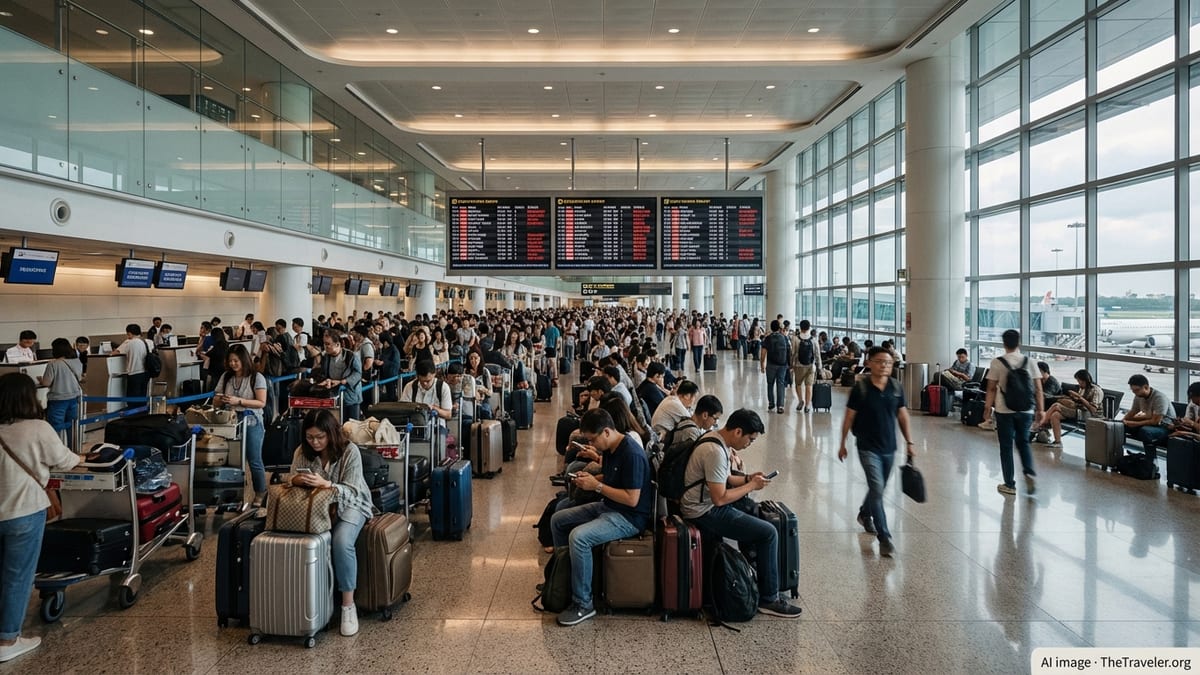
New Wave of Cancellations Hits Key Asian Gateways
Travelers across Indonesia, Malaysia, Hong Kong and Taiwan faced mounting disruption on March 9 and 10 as airlines continued to pare back services in response to ongoing airspace closures over parts of the Middle East. While the initial shock of late February’s shutdowns has faded, operational fallout is still forcing last-minute schedule cuts, with industry trackers and local reports indicating more than 70 additional flights scrubbed in the region over the past 48 hours.
Qatar Airways remains among the hardest hit, with the carrier operating only a limited schedule to and from its Doha hub after a blanket suspension of services at the end of February. Updated advisories show the airline gradually reintroducing select routes, but many Asia-bound sectors remain cancelled through mid-March, keeping pressure on connections from key leisure markets such as Bali, Phuket and Kuala Lumpur as well as business hubs like Hong Kong and Taipei.
Malaysia Airlines has also extended its suspension of Doha services into at least mid-March, severing a popular one-stop link for Southeast Asian travelers heading to Europe and the Gulf. In parallel, Indonesian carrier Batik Air has issued precautionary advisories and trimmed frequencies on some long-haul and connecting services, contributing to a patchwork of cancellations affecting both regional and long-haul itineraries.
The latest schedule cuts have come on top of wider disruption across Asia, where separate operational challenges and weather have already driven hundreds of delays and cancellations this month at major airports including Kuala Lumpur, Jakarta, Bangkok, Shanghai and Taipei.
Jakarta, Bali, Kuala Lumpur and Phuket Bear the Brunt
In Indonesia, passengers departing Jakarta’s Soekarno Hatta and Bali’s Ngurah Rai airports reported lengthy queues at airline counters as they sought rebooking options after overnight cancellations. Services connecting these gateways to Doha and other Middle Eastern hubs have been particularly vulnerable, with aircraft and crew rotations still constrained by restricted routings around closed airspace.
Malaysia’s Kuala Lumpur International Airport, a major transit point for both Malaysia Airlines and low-cost giant AirAsia, has seen repeated waves of disruption in recent days. Data compiled by regional travel industry outlets shows the airport recording a combination of cancellations and heavy delays as airlines shuffle aircraft to cover priority routes and repatriation flights, leaving thinner secondary routes at risk of late-notice cuts.
Phuket International Airport, a key holiday gateway in southern Thailand, has also been affected as carriers adjust their networks. Cancellations on services linking Phuket with Singapore, Kuala Lumpur and hubs in the Gulf have left tourists scrambling to secure alternative journeys home, often involving complex rerouting through Bangkok, Dubai or European cities.
Across these leisure-focused destinations, hotel stays and local transport costs are mounting for stranded travelers, many of whom say they received only a few hours’ notice that their flights were no longer operating.
Ripple Effects Reach Hong Kong, Taipei and Beyond
The disruption is not confined to Southeast Asia. In North Asia, Hong Kong International Airport and Taiwan Taoyuan have reported cancellations and extensive delays on flights tied to Middle Eastern and European connections, including services operated or codeshared by Qatar Airways and other long-haul carriers.
In Hong Kong, passengers reported late-night gate changes and rolling departure revisions as airlines updated routings around restricted airspace and adjusted crew duty times. Travel agents in the city said itineraries that once relied on a single overnight connection via Doha or Dubai now frequently require two or even three stops, extending total journey times by many hours.
In Taipei, local carriers and foreign airlines alike have trimmed schedules or substituted aircraft on certain Middle East-linked services. While local point-to-point regional routes remain largely intact, travelers with onward journeys to Europe, Africa and parts of South Asia are facing the same uncertainty seen elsewhere in the region, with some forced to wait days for the next available seat.
The knock-on effects are also being felt at major hubs outside the immediate focus markets, including Singapore, Bangkok, Shanghai, Delhi and Dubai, where congestion from missed connections and unscheduled rebookings is complicating airport operations and stretching ground staff.
Airlines Juggle Limited Corridors and Crew Constraints
Airlines say the continued cancellations are the result of a complex operational puzzle rather than a single event. With parts of Middle Eastern airspace still effectively closed or heavily restricted following recent regional tensions, carriers have had to reroute flights along longer paths, sharply increasing fuel burn and crew duty times. That has forced schedule overhauls and tactical cancellations, particularly on flights that are less commercially critical or have alternative routing options.
Qatar Airways has outlined a day-by-day list of destinations it can serve under temporary flight authorisations, including a limited number of services to Hong Kong and Kuala Lumpur. However, the airline has cautioned that this reduced network will remain in place at least until the middle of March, and that further changes remain possible at short notice as regulators reassess airspace safety.
Malaysia Airlines, for its part, has prolonged the suspension of its flights to and from Doha, indicating that rerouting those services around closed corridors is not currently viable. Other carriers across Asia and Europe have likewise cancelled or rerouted services that previously traversed Iraqi, Iranian or other affected airspace, adding pressure to already tight aircraft and crew resources.
Operational analysts note that while some airlines have begun operating repatriation and ad hoc services to clear backlogs, many regular schedules remain skeletal. As a result, even when a replacement flight is available, it may not align with passengers’ original connections, extending disruption well beyond the initial cancellation.
Stranded Passengers Face Limited Options and Changing Rights
For travelers on the ground in Jakarta, Bali, Kuala Lumpur, Phuket, Hong Kong and Taipei, the immediate concern is simply finding a way home. Reports have emerged of passengers stuck for several days in Kuala Lumpur after a cancelled Qatar Airways connection, with limited communication on when regular services might resume or whether re-routing via other hubs is possible.
Consumer advocates in the region are urging passengers to document all communication with airlines and to keep receipts for accommodation, meals and alternative transport, as reimbursement policies vary depending on the carrier, route and ticket type. While many airlines are offering free rebooking or travel vouchers, cash refunds or compensation may be harder to obtain on itineraries disrupted by airspace closures considered to be outside the carrier’s direct control.
Travel agents say seats on remaining long-haul flights out of Asia are filling up quickly, and fares on some alternate routings to Europe and North America have surged. Passengers willing to accept complex itineraries involving multiple stops or mixed carriers are having more success securing earlier departures, but those tied to specific airlines or loyalty programs may face longer waits.
With airlines and regulators providing only short-term schedule outlooks, industry observers warn that disruption across Asian gateways could persist for several more days at least. Travelers with upcoming departures to or from Jakarta, Bali, Kuala Lumpur, Phuket, Hong Kong, Taipei and other regional hubs are being advised to monitor their bookings closely and to check directly with airlines before heading to the airport.