

More news on this day
Thousands of passengers across Asia are facing hours-long queues, overnight airport stays and sudden itinerary changes as more than 300 flights are cancelled and over 1,600 delayed from Beijing to Bangkok, Manila and beyond, after airlines including Emirates, Qatar Airways, Hainan Airlines, Batik Air and others pulled services in response to cascading disruptions linked to Middle East airspace closures.
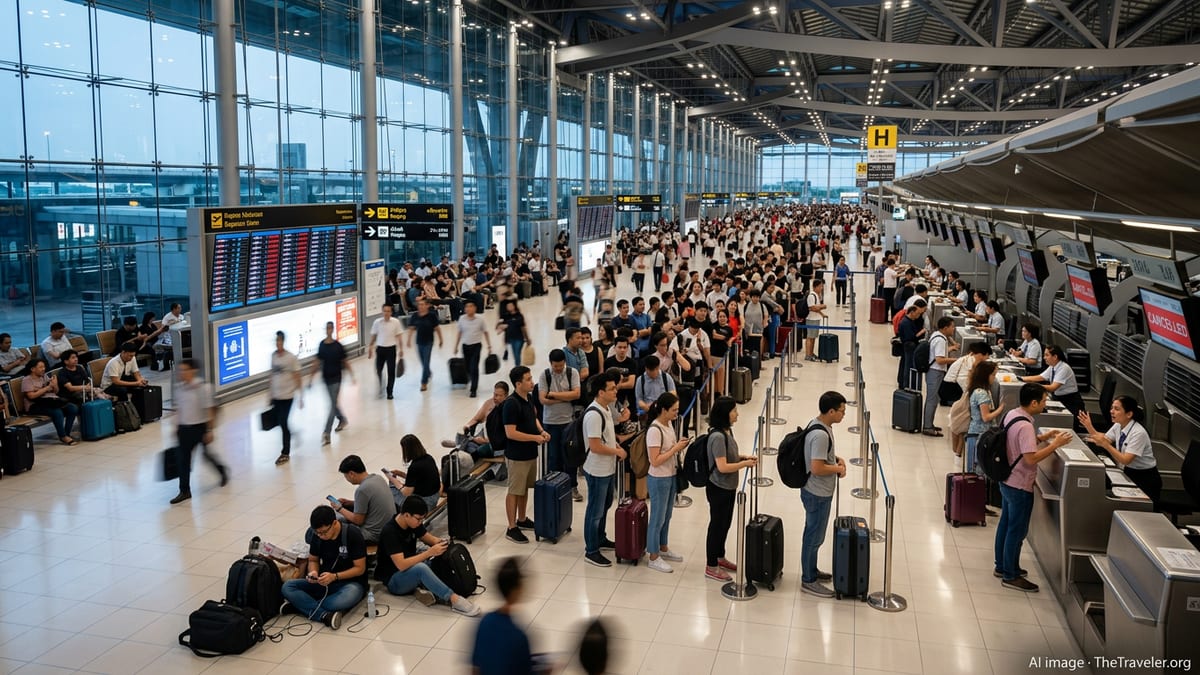
Ripple Effects of Middle East Airspace Shutdowns Reach Asian Hubs
What began as a regional aviation crisis in the Middle East is now rippling across Asia’s busiest airports, with carriers scrambling to reroute aircraft and crews around closed or restricted airspace. Flight tracking data and aviation analytics show that thousands of services connecting Asia with the Gulf and Europe have been scrapped in recent days, forcing airlines to cut or delay departures in major Asian capitals.
In China, Japan, Indonesia, Malaysia, Thailand and Singapore, at least 314 flights have been cancelled and more than 1,600 delayed in the latest 24 hour period, according to regional industry estimates. While these figures represent only a fraction of total daily operations, the knock-on impact on tight aircraft rotations and crew duty limits is magnifying the disruption for travelers.
Routes that typically overfly the Middle East to link East Asia with Europe and Africa are now being replanned via longer, more northerly or southerly corridors. The added flight time and fuel requirements are forcing some airlines to consolidate frequencies or temporarily suspend services, leaving passengers stranded far from their final destinations at Asian transit hubs.
Airline executives and analysts say the full scale of the disruption will likely grow through the week as aircraft and crews fall further out of position. Even where flights are still operating, schedules are being redrawn at short notice, turning once predictable long haul journeys into a patchwork of last minute connections and extended layovers.
Beijing, Narita and Manila Struggle With Crowded Terminals
In Beijing, long lines of passengers formed at international departure halls as travelers attempted to rebook flights to Europe and the Middle East. Check in counters for Middle Eastern and European carriers saw surging demand for alternative routings via East Asian and Central Asian gateways, as direct links through the Gulf remained sharply reduced.
Tokyo’s Narita Airport reported clusters of stranded passengers camped out near airline transfer desks and gate areas, with airport staff distributing water and directing travelers toward limited hotel availability. Japan bound tourists from Europe, who were originally scheduled to transit via Gulf hubs, have been among the most affected, often arriving in Asia on delayed substitute flights only to miss onward legs.
In Manila, ground staff described a rolling wave of disruptions as inbound flights arrived off schedule, creating bottlenecks at immigration and baggage reclaim. With several return services to the Gulf and onward to Europe cancelled, many overseas Filipino workers faced extended waits for seats on remaining flights, while others opted to delay departures entirely amid uncertainty over return options.
The congestion is compounded by the fact that late winter is a busy travel period for business and leisure traffic across North and Southeast Asia. School holidays in some markets and a rebound in post pandemic tourism have left many long haul flights nearly full, reducing spare capacity for reaccommodating displaced travelers.
Emirates, Qatar and Asian Carriers Trim Schedules
Gulf giants Emirates and Qatar Airways are at the center of the turbulence, as they typically funnel large volumes of Asian passengers through Dubai and Doha to Europe, Africa and the Americas. With airspace closures and security concerns constraining departures from their hubs, the airlines have cancelled or delayed a significant share of their Asia bound services, triggering a cascade of schedule changes at the other end of those routes.
Passengers in Beijing, Bangkok and Jakarta reported receiving late night messages about cancellations of flights operated by or codeshared with Emirates and Qatar Airways, with rebooking options often routed through alternative hubs such as Istanbul or via multi stop itineraries through South Asia and Europe. Some travelers have been offered refunds or open tickets in lieu of immediate alternatives, particularly on heavily affected routes.
Regional airlines are also feeling the strain. Chinese carriers including Hainan Airlines and Dalian based operators have adjusted their timetables for services to the Gulf, while Southeast Asian airlines such as Indonesia’s Batik Air have reported delays and aircraft substitutions as they reconfigure long haul operations. For many of these carriers, the Middle East represents a key link in their broader international network, so disruptions there reverberate across Asia.
Low cost and full service airlines alike are under pressure to balance safety considerations with commercial realities. Longer detours around closed airspace can sharply increase fuel burn and operating costs, while also affecting crew duty time limits. As a result, airlines are prioritizing certain trunk routes and consolidating others, leaving some secondary city pairs temporarily underserved.
Bangkok, Jakarta and Singapore Become Pressure Valves
In Southeast Asia, major hubs such as Bangkok Suvarnabhumi, Jakarta Soekarno Hatta and Singapore Changi have taken on the role of pressure valves for disrupted traffic. Airlines are using these airports to regroup aircraft and crews, and to offer passengers alternative routings that avoid the most heavily affected Middle Eastern corridors.
Bangkok has seen a spike in transfer passengers as carriers add capacity on routes linking Thailand with Europe and Northeast Asia. However, the influx is stretching airport resources, with reports of long queues at security screening and airline service counters as travelers attempt to piece together revised itineraries. Local tourism businesses, still recovering from previous downturns, are seeing a mix of unexpected overnight stays and last minute cancellations.
In Jakarta, delays have prompted some airlines to hold connecting flights for late arriving passengers, creating a domino effect across the day’s schedule. Travelers reported gate changes and rolling departure times as operations teams tried to balance the needs of those already in transit with airport night curfew rules and crew rest requirements. Similar scenes played out in Singapore, where one of Asia’s most efficient hubs faced rare instances of overcrowded lounges and fully booked airport hotels.
Authorities at these airports have urged passengers to arrive early, stay closely in touch with their airlines and be prepared for sudden schedule shifts. Many carriers are waiving change fees, at least temporarily, for itineraries touching the affected routes, although fare differences can still apply when moving to alternative flights on peak travel days.
Uncertain Timeline for Normal Operations
Industry experts caution that while some Gulf airports have begun limited operations, the broader impact on Asian schedules will likely persist for days or even weeks. Restoring normal operations requires not only reopened airspace but also the complex realignment of aircraft, crews and maintenance slots that have been thrown off by successive days of cancellations.
Airlines are modeling multiple scenarios based on evolving security assessments and diplomatic efforts in the Middle East. If restrictions ease, carriers could gradually restore suspended services and tighten flight intervals, though residual delays would be expected as stranded passengers are cleared from backlogs. If tensions persist or intensify, deeper schedule cuts could follow, particularly on marginal routes with thinner demand.
For now, travelers are being advised to monitor their flight status frequently, keep flexible travel plans where possible and build in additional buffer time for critical journeys. Travel insurers and consumer watchdogs in several Asian markets are already fielding complaints and queries from affected passengers, especially those facing unexpected accommodation and rebooking costs.
Despite the immediate chaos, aviation analysts note that airlines and airports in Asia have gained experience managing large scale disruption from events such as volcanic eruptions, typhoons and the pandemic. Many carriers have activated crisis response teams and contingency playbooks aimed at maintaining essential connectivity, even as thousands of passengers remain stuck in terminals from Beijing and Narita to Manila, Bangkok and Jakarta.