

More news on this day
Thousands of air travelers across Asia and the Gulf are facing long queues, missed connections and unexpected overnight stays after a fresh wave of schedule disruptions saw more than 240 flights cancelled and over 2,200 delayed across India, China, Vietnam, the United Arab Emirates, Qatar and other countries, hitting major carriers and hub airports simultaneously.
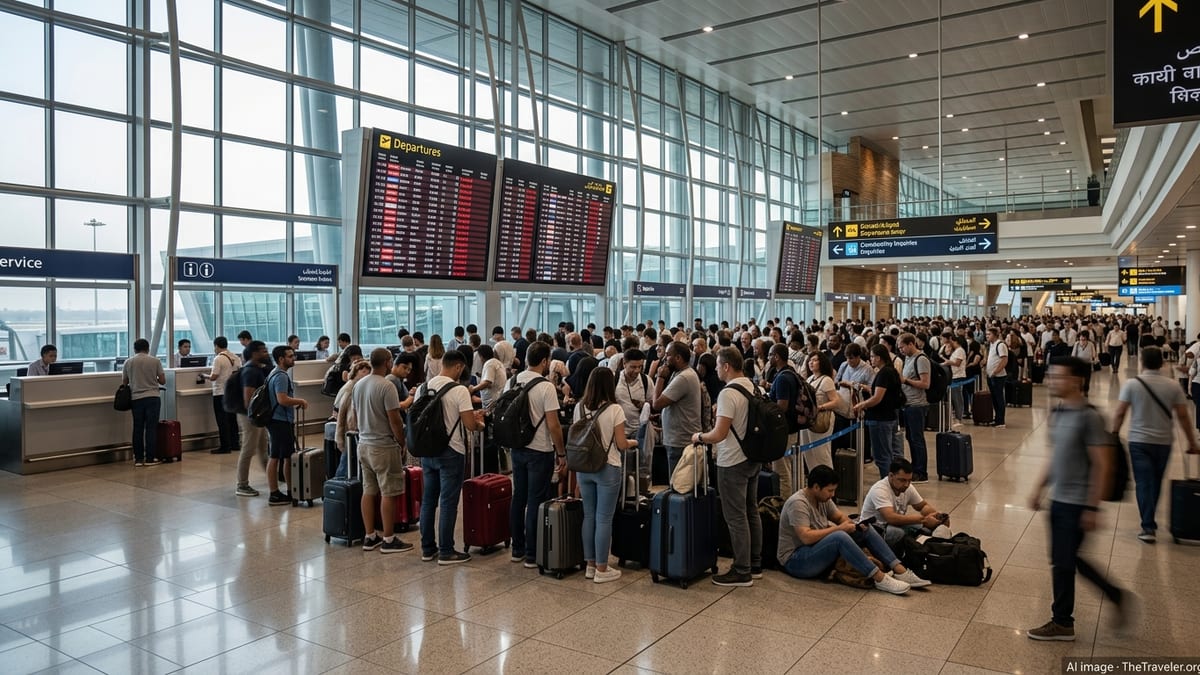
Major Hubs From Delhi to Dubai Buckle Under Disruption
Published data and operational reports indicate that disruption is concentrated at some of the region’s busiest gateways, including Delhi, Phuket, Singapore Changi, Dubai and Riyadh. These airports handle dense banks of connecting traffic, meaning that a single cancelled or heavily delayed departure can quickly cascade into missed onward flights for passengers heading to Europe, North America and within Asia.
At Delhi’s Indira Gandhi International Airport, domestic and international operations have both been affected, with IndiGo among the hardest hit as its dense short-haul schedule leaves little room to recover from rolling delays. Travelers have reported extended waits at check in and security as ground handling teams attempt to rebook disrupted itineraries while managing new departures.
In Southeast Asia, services through Phuket and Singapore Changi have been slowed as delays ripple through regional networks linking India, China and Vietnam with leisure destinations and onward long haul flights. According to publicly available flight tracking data, aircraft arriving late from one hub are departing late to the next, compounding the impact across multiple time zones.
The Gulf hubs of Dubai and Doha are experiencing similar pressures. Emirates and Gulf Air services have seen a mix of cancellations and extended delays, with connecting passengers en route between Asia, Europe and Africa particularly exposed when tightly timed transit windows vanish as schedules slip by several hours.
Airlines Across Asia and the Gulf Struggle to Maintain Schedules
The disruption is being felt across a diverse group of airlines, from low cost and regional operators to full service global network carriers. IndiGo, ANA Wings, Batik Air, Emirates and Gulf Air feature prominently among those with affected flights, alongside other regional and international airlines operating through the same congested hubs.
For IndiGo, the latest bout of cancellations and delays comes after a period in which the carrier has already faced scrutiny over its ability to absorb operational shocks. Aviation analysts note that high aircraft utilization and tight crew rostering leave limited flexibility when weather, airspace restrictions or technical issues intervene, increasing the likelihood of wider knock on effects when something goes wrong.
In Northeast and Southeast Asia, regional operators such as ANA Wings and Batik Air have been contending with crowded skies and busy holiday and business travel periods. Delays on shorter sectors link directly into the performance of partner and codeshare flights, meaning a late departure from a secondary city can reverberate through to major hubs hours later.
Gulf network carriers, including Emirates and Gulf Air, are also heavily exposed when conditions deteriorate along key traffic flows between South and Southeast Asia and the Middle East. These airlines rely on tightly coordinated connecting banks that move large numbers of passengers through hub airports in relatively short windows of time, so even modest schedule changes can trigger large rebooking challenges.
Multiple Factors Combine to Create a Perfect Storm
While detailed causation varies by route and country, publicly available information points to a combination of factors behind the latest disruption. Adverse weather in parts of South and Southeast Asia, periods of airspace congestion and evolving security considerations around certain corridors have all contributed to longer routings and reduced scheduling flexibility.
Operational constraints at some airports, including runway and air traffic control capacity, can also force airlines to compress or retime flights into narrower operating windows. When many carriers adjust their schedules simultaneously, bottlenecks become more likely, particularly at peak travel times in the early morning and late evening.
Industry commentary further highlights the lingering impact of tight staffing and high fleet utilization since the sharp recovery in post pandemic demand. Some airlines have added routes and frequencies faster than they have expanded crews and maintenance capacity, leading to thinner margins for recovery when irregular operations occur.
In addition, rolling delays are being magnified by the complex web of connections that now characterize Asian and Gulf aviation. A disrupted flight from a secondary city can affect multiple onward services across several airlines via shared hubs, amplifying the impact well beyond the original departure point.
Passengers Face Long Queues, Hotel Scrambles and Reworked Itineraries
For travelers, the statistics of 243 cancellations and more than 2,200 delays translate into very personal headaches: missed weddings and business meetings, unexpected nights in airport hotels, and the need to rebook complex itineraries at short notice. Social media posts from Delhi, Changi, Dubai and other hubs describe crowded departure halls, long lines at service desks and uncertainty around new departure times.
Some passengers whose journeys involve multiple connections across Asia and the Gulf have found that a single missed leg renders entire tickets unusable, especially when separate bookings on different airlines are involved. This is particularly acute for travelers combining low cost regional flights with long haul tickets purchased independently, where rebooking protections can be limited.
Travel forums reflect widespread frustration at short notice notifications, with some passengers reporting learning of cancellations only after arriving at the airport. Public guidance from travel advisers and aviation commentators consistently urges passengers to monitor airline apps and flight status tools closely and to maintain flexible backup plans where possible.
Those already in transit have in many cases been rebooked onto later departures or rerouted via alternative hubs, though available seats can be scarce on popular corridors in and out of Delhi, Phuket, Singapore, Dubai and Riyadh. Travelers are being encouraged to keep receipts for unexpected accommodation and meal costs in case post travel claims or goodwill gestures become available.
What the Disruptions Reveal About Regional Air Travel Fragility
The latest wave of disruptions underscores how interconnected and fragile the Asian and Gulf air travel ecosystem has become. High growth in passenger numbers, rapid expansion of low cost and full service networks, and dependence on a handful of powerful hubs mean that operational shocks rarely remain isolated.
Aviation analysts note that as India, Southeast Asia and the Gulf continue to expand their roles as global transit centers, airlines and regulators face mounting pressure to improve resilience. This includes investing in air traffic management, airport infrastructure and contingency planning, as well as reassessing how much standby capacity is needed in fleets and workforces.
For travelers, the events serve as a reminder that even in an era of frequent flights and sophisticated booking tools, long haul trips across multiple regions can still be vulnerable to disruptions outside any single airline’s control. Flexible ticketing options, adequate travel insurance and realistic buffer times between key connections are likely to remain important defenses.
As operations gradually stabilize, attention is turning to how quickly carriers can clear backlogs and restore confidence among passengers who have experienced significant inconvenience. The episode is expected to fuel ongoing debate about service reliability, passenger rights and the balance between efficiency and resilience in one of the world’s fastest growing air travel markets.