

More news on this day
Thousands of travellers across Asia faced lengthy disruptions today as airports in Japan, South Korea, Singapore, China, the Philippines and Hong Kong reported 3,072 delayed flights and 154 cancellations, snarling operations for carriers including Cathay Pacific, Korean Air, Japan Airlines, All Nippon Airways and Air China at major hubs such as Tokyo, Seoul, Manila and Hong Kong.
Get the latest news straight to your inbox!
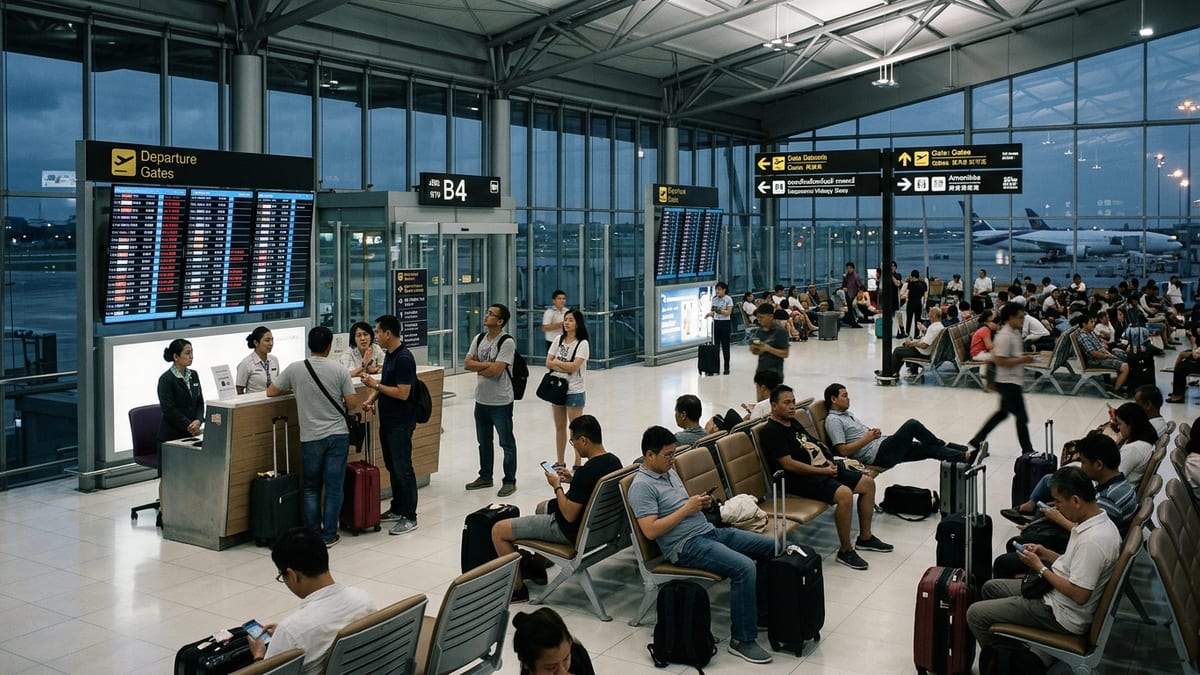
Major Asian Hubs Buckle Under Heavy Disruption
Publicly available flight-tracking data shows that the disruption has been concentrated at some of the region’s busiest international gateways, with Tokyo, Hong Kong, Guangzhou and Seoul among the worst affected. Tokyo Haneda alone recorded 379 delayed services and 11 cancellations, while Hong Kong International Airport saw 282 delays, illustrating how even normally resilient hubs struggled to keep operations moving.
Other large mainland Chinese airports, including Guangzhou and Hangzhou, reported hundreds of delayed departures and arrivals and more than a dozen cancellations each, adding to the widespread knock-on effects across domestic and international networks. Regional travel centres such as Incheon near Seoul and Singapore Changi also registered elevated disruption, with more than 200 delays at Incheon and more than 130 at Changi, according to aggregated operational tallies.
In Southeast Asia, Manila’s Ninoy Aquino International Airport reported close to 140 delayed flights, while Beijing Capital, Kunming and Chengdu in China also featured prominently in the regional disruption picture. Smaller but strategically important facilities, including New Chitose near Sapporo and Osaka Itami in Japan, registered dozens of late-running services, highlighting how far beyond the largest hubs the delays have spread.
Operational statistics indicate that the 154 flight cancellations were distributed across a wide range of airports, from Urumqi and Lanzhou in western China to coastal cities such as Shenzhen and Dalian. While the total cancellation count is modest relative to the number of delays, the resulting aircraft and crew dislocation is likely to reverberate across schedules for at least the rest of the day.
Flag Carriers Among Those Hit Hardest
The disruption has directly affected some of Asia’s best known full service airlines. Reports from airline status pages and aviation data providers point to Cathay Pacific, Korean Air, Japan Airlines, All Nippon Airways and Air China among the large carriers experiencing schedule pressures at their main hubs and focus cities.
Cathay Pacific, which relies heavily on its Hong Kong hub for long haul connectivity to Europe, North America and Australia, has faced a sequence of delayed departures that risk misaligning onward connections for transit passengers. Flight-status boards show multiple Hong Kong departures pushed back significantly from their planned times, as congested arrival flows and tight turnaround windows limit flexibility.
In Japan, both Japan Airlines and All Nippon Airways have seen operations at Tokyo’s Haneda and Narita airports slow, with rolling delays on popular regional routes to Seoul, Taipei and major Chinese cities. According to recent performance data, these carriers have been working to rebuild their networks amid rising demand, but heavy traffic and regional disruptions have periodically undermined on time performance.
On the mainland, Air China and other Chinese airlines operating out of Beijing, Guangzhou, Shenzhen and Kunming have been forced to juggle congested airspace, dense domestic schedules and heightened international demand. The current wave of delays adds to recent operational challenges across the region, where even minor disruptions at one airport can quickly cascade across multi stop itineraries.
Travellers Confront Long Queues, Missed Connections
For passengers on the ground, the numbers translate into crowded terminals, extended waits at check in and security, and mounting uncertainty around connections. Social media posts and local broadcast footage from airports across Asia show long lines at customer service counters as travellers seek rebooking options or accommodation support.
Missed connections are emerging as a key pain point for international travellers, particularly at transfer heavy hubs such as Hong Kong, Tokyo Haneda, Incheon and Singapore Changi. When initial departure delays stretch beyond an hour or two, tight onward connections quickly become unviable, leaving passengers to negotiate complex re routings across multiple carriers and alliances.
Budget conscious travellers connecting between low cost and full service airlines are especially vulnerable, as separate tickets often do not include protected transfers. In these cases, a delayed arrival can mean forfeiting onward segments and shouldering additional last minute costs for new tickets, hotels and meals, further amplifying the economic impact of the operational disruption.
For business travellers, the timing of the disruption during a busy spring travel period in Asia means rescheduled meetings, lost work time and potential knock on effects for trade and investment related trips. Tourism traffic to and within popular destinations such as Japan, South Korea and the Philippines is also likely to feel the impact as travellers lose valuable days from short stays.
Underlying Pressures on Asia’s Aviation System
The latest wave of delays and cancellations comes against a backdrop of mounting pressure on Asia’s aviation infrastructure. Industry analyses published in recent weeks highlight a combination of high passenger demand, constrained airport capacity, tight aircraft availability and elevated operating costs, including jet fuel and insurance, as key stress factors for airlines in the region.
Trade publications note that Asia Pacific carriers have been rebuilding networks rapidly as international borders fully reopen, but airport and air traffic control resources have not always expanded at the same pace. Congested terminals, limited runway slots and occasional technical issues in airspace management systems have all contributed to periodic surges in disruption, particularly during peak travel seasons.
At the same time, some airlines are adjusting route networks in response to geopolitical tensions and evolving overflight restrictions, which can lengthen flight times and reduce scheduling buffers. According to industry commentary, rerouting around sensitive airspace has added complexity to long haul operations, increasing the likelihood that delays in one region will ripple across global networks.
Analysts point out that the current episode of disruption follows several other days of elevated delays across Asia in recent weeks, suggesting a system operating close to its limits. While today’s figures are particularly stark, the pattern underlines how vulnerable the regional air transport network remains to spikes in demand, weather variability or operational bottlenecks.
What Passengers Can Expect Next
With thousands of flights already affected, operational data indicates that airlines and airports across Asia are now in recovery mode, focusing on clearing backlogs and repositioning aircraft and crews. For many travellers, this is likely to mean continued delays into the evening and potentially further adjustments to flight times over the next 24 hours.
Passenger rights and compensation rules vary significantly between countries in Asia, so travellers’ options depend heavily on the origin and destination of their disrupted flights, as well as the policies of individual carriers. Consumer advisory services recommend that affected passengers monitor airline apps and departure boards closely, and retain documentation such as boarding passes and delay notifications for potential future claims where local regulations permit.
In practical terms, industry guidance suggests that travellers facing lengthy delays should proactively seek re routing options, particularly if they have onward connections outside Asia. Where possible, rebooking to alternative hubs or earlier departures on different carriers can reduce the risk of becoming stranded overnight, although seat availability is likely to be tight on popular routes.
As airlines and airports work through the backlog, operational metrics over the coming days will indicate whether this disruption proves to be a one day spike or part of a longer period of instability. For now, the experience of passengers at airports across Tokyo, Seoul, Manila, Hong Kong and major Chinese and Southeast Asian cities underscores the fragility of a regional air travel system still adapting to intense post pandemic demand and complex global operating conditions.