

More news on this day
New rounds of mass flight delays across Asia in late March and early April 2026 are spotlighting how little financial and operational slack many regional airlines have left after years of volatile demand, high fuel prices and crowded skies.
Get the latest news straight to your inbox!
Disruptions Spread Across Key Asian Hubs
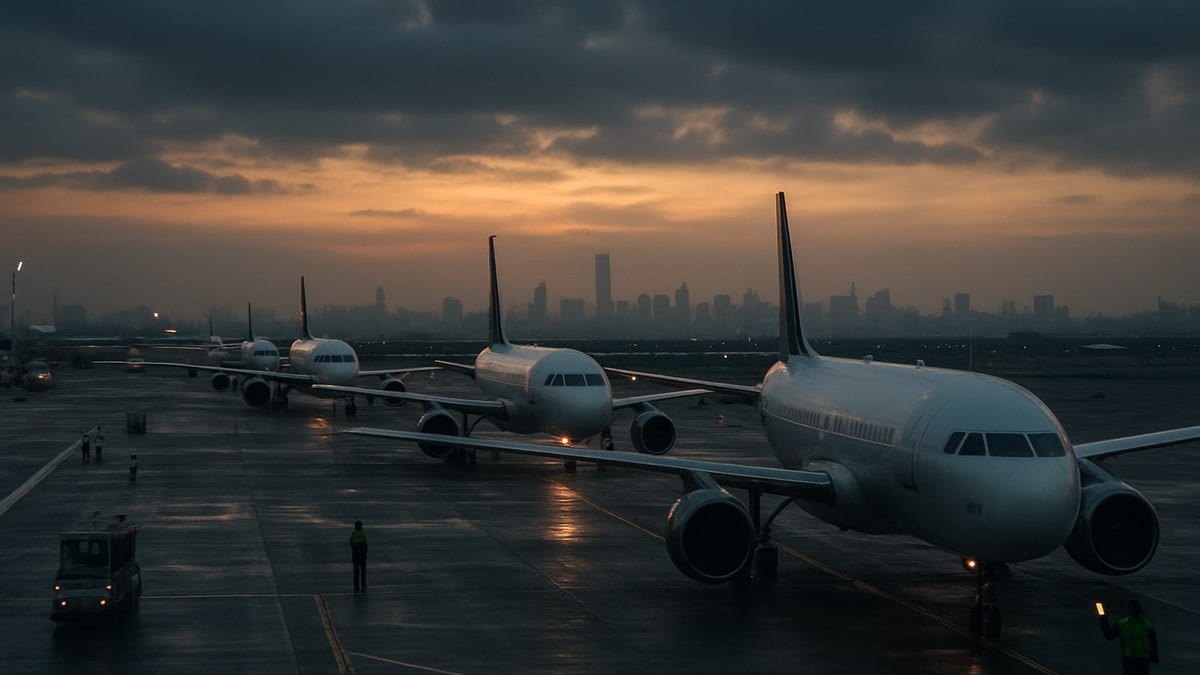
Operational data from late March 2026 show Asia Pacific hubs struggling with cascading delays and cancellations, with several days of large-scale disruption rippling from China and Japan to Southeast Asia and the Gulf. On March 31, reports indicate 388 cancellations and more than 5,000 delays across major airports in China, Japan, Thailand, the United Arab Emirates and Qatar, affecting both regional and long haul carriers.
Earlier, on March 20, separate industry tallies cited more than 2,000 delays and over 100 cancellations in a single day across airports in India, Japan, Thailand, Malaysia, Singapore, Qatar and the UAE. Low cost carriers in India and Southeast Asia, including large budget operators at Delhi, Mumbai and Kuala Lumpur, featured prominently in the disruption statistics, underscoring the vulnerability of volume driven business models when schedules come under stress.
Airports that are usually regarded as high performers on punctuality, such as Singapore Changi and several Japanese hubs, were not spared. While overall cancellation numbers at these airports remained relatively low compared with more congested locations, delay counts climbed sharply, suggesting that even well resourced hubs are operating with minimal spare capacity when regional shocks occur.
The uneven pattern is also evident within countries. Chinese and Japanese full service airlines recorded hundreds of delayed departures and arrivals on the worst affected days, while still keeping cancellations as a share of total operations relatively modest. Analysts interpreting these figures say it reflects network planners choosing to preserve connectivity at the cost of on time performance, a strategy that can quickly strain crew rosters and aircraft utilization.
Fuel Shock and Airspace Closures Squeeze Margins
The operational turmoil is unfolding against a deteriorating cost backdrop for Asian airlines in 2026. Industry coverage from late March highlights a sharp run up in jet fuel prices linked to the ongoing conflict in West Asia, with some regional observers noting that benchmark fuel costs in Asia have roughly doubled compared with pre conflict levels.
Carriers in South Korea and parts of Southeast Asia have publicly signaled emergency cost measures, including capacity cuts on long haul routes, as jet fuel and foreign exchange pressures combine. In the Philippines, travel industry reporting notes that fuel surcharges for tickets issued between April 1 and 15 were cleared to rise to one of the higher bands allowed under the country’s surcharge matrix, adding thousands of pesos to some itineraries and eroding price sensitive demand.
Indian airlines face an added layer of stress from extended airspace restrictions linked to the West Asia conflict. Recent business coverage estimates revenue losses of around 2,500 crore rupees as India Europe routes are forced into longer detours or scaled back frequencies. These additional fuel and time costs land on carriers that are already contending with elevated domestic fuel prices and currency depreciation, compressing margins further even when aircraft are full.
Across the wider Asia Pacific, the International Air Transport Association’s global outlook published in late 2025 projected an average industry net margin of about 3.9 percent in 2026. Analysts now caution that for many Asia based airlines exposed to fuel shocks and rerouted networks, effective margins on key routes are significantly thinner than that headline figure suggests, leaving little room to absorb multi day bouts of disruption without quickly sliding into loss making territory.
Operational Gridlock Reveals Capacity Constraints
Behind the headline numbers on delays and cancellations is a deeper structural challenge for Asia’s aviation system. March 2026 disruption reports describe a network running close to capacity, with limited redundancy in runway, apron and air traffic control resources at several major hubs. When severe weather, airspace closures or infrastructure incidents occur concurrently, buffers disappear and relatively small schedule perturbations can cascade into widespread gridlock.
Analysts point to recent incidents such as runway damage at a key resort airport in Thailand and tightening fuel allocations at some Southeast Asian hubs as examples of how quickly resilience can erode. With aircraft and crews tightly scheduled to keep costs down, one blocked runway or a late arriving long haul service can spill into missed connections, aircraft out of position and crew duty time violations across multiple countries.
The surge in demand across Asia after pandemic era restrictions has further complicated the picture. Airports in India, Indonesia and the Philippines are handling record or near record passenger volumes in 2026 while still working through capacity upgrades. Where terminal and runway expansion has lagged traffic growth, airlines have relied on tight turnarounds and complex wave banks of departures and arrivals, tactics that magnify the impact when weather or airspace constraints disrupt a single bank.
Industry studies on metroplex airspace, including work applying new scheduling models to multi airport regions in China, suggest that improved coordination of arrivals and departures could reduce delays substantially. However, implementing such tools requires sustained investment in air traffic management systems and cross border collaboration, which can move more slowly than traffic growth in fast expanding markets.
Low Cost Carriers Under Particular Pressure
The latest disruption statistics underline the particular exposure of low cost carriers that dominate short haul markets in India and Southeast Asia. On the most disrupted March days, several budget airlines racked up well over one hundred delayed flights each, often representing a significant share of their scheduled operations from key hubs.
Publicly available information on regional financial performance points to these airlines entering 2026 with already slim cushions. In India, sector wide losses for the financial year ending March 2026 are projected in the tens of thousands of crore rupees, with high fuel and lease costs offsetting strong passenger demand. Regulatory moves, such as the phased removal of temporary domestic fare caps, may help revenue, but also expose passengers to more volatile pricing when disruption prompts last minute rebooking.
In Southeast Asia, some budget carriers are contending simultaneously with higher fuel surcharges, infrastructure bottlenecks at their home airports and, in isolated cases, questions about financial sustainability. Reports from the Philippines, for example, describe one major low cost operator facing government collection action over unpaid dues, raising the prospect that any extended period of irregular operations could spill into route cuts or reduced frequencies.
Because many of these airlines serve leisure and migrant worker markets where passengers are highly price sensitive, there is limited scope to pass through the full cost of disruption in the form of higher fares. As a result, each wave of delays and cancellations can translate relatively quickly into cash flow stress, especially where compensation rules or rebooking obligations require airlines to shoulder hotel and meal costs for stranded travelers.
Travelers Face Higher Costs and Longer Recovery Times
For passengers, the convergence of operational disruption and financial strain is translating into a more fragile travel experience in Asia in April 2026. Consumer advisories from travel firms describe longer recovery windows after disruption, with some itineraries taking 24 to 48 hours to rebook when multiple hubs are constrained simultaneously.
In several markets, regulators have permitted higher fuel surcharges or wider fare bands to reflect underlying cost increases. This has raised the baseline price of tickets across popular corridors such as Southeast Asia to the Middle East and domestic trunk routes in India and the Philippines. When irregular operations hit, travelers looking for last minute alternatives often confront a combination of limited seat availability and sharply higher fares.
At the same time, some hub airports and full service airlines are maintaining relatively strong on time records compared with regional peers, even during recent crises. Data points from Chinese and Japanese domestic operations, for instance, indicate that certain carriers are still achieving high levels of punctuality on most days, which may influence how travelers choose routings and connection points through Asia in the coming months.
Looking ahead to the rest of the northern summer season, capacity announcements by major Asian network carriers suggest that demand remains robust. The question confronting the region in April 2026 is whether airport infrastructure, airspace management and airline balance sheets can keep pace. If recent disruption patterns persist, even modest shocks could continue to expose how razor thin many operational and financial margins in Asian aviation have become.