

More news on this day
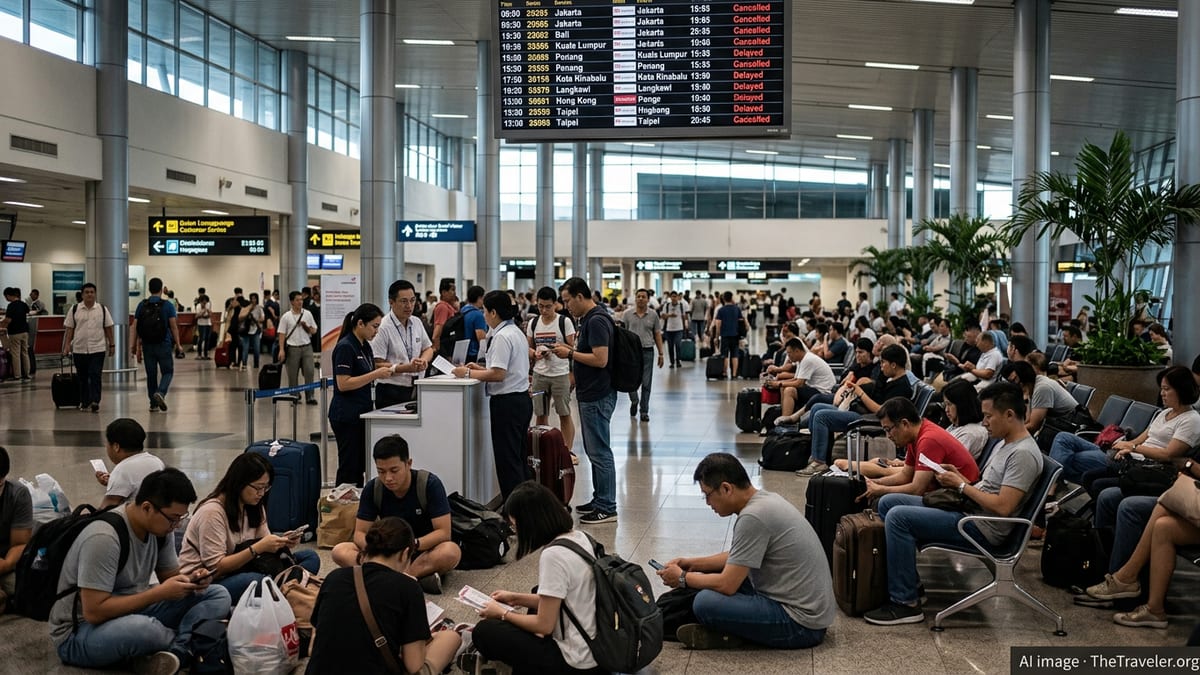
Mounting flight delays across major Asian hubs on April 8 are underscoring how little financial buffer the region’s airlines have as they juggle surging fuel costs, war-related airspace detours and schedules already stretched close to capacity.
Get the latest news straight to your inbox!
Fresh Delays Hit As Fuel Surcharges Rise
Operational data and airline advisories for April 8 indicate another day of elevated delays across key Asian routes, coinciding with a fresh round of fuel-surcharge increases that is pushing ticket prices higher while leaving on-time performance under pressure. In India, Air India’s latest surcharge adjustment, effective April 8, follows a sharp rise in global jet fuel prices linked to ongoing conflict in West Asia and adds to similar increases announced by other regional and Gulf carriers in recent weeks.
Reports from aviation tracking platforms show that congestion remains heaviest on dense intra-Asian corridors, where budget and full-service airlines are running near-maximum load factors. With aircraft and crews tightly scheduled, relatively small disruptions such as extended turnaround times, incremental weather delays or slot restrictions are cascading across the day’s operations, lengthening departure queues and stretching arrival banks at hub airports.
Travel trade coverage has highlighted that carriers are leaning more heavily on fuel surcharges rather than base-fare hikes to pass on costs, especially for flights booked in early to mid-April. While that approach preserves headline fare competitiveness, it offers little protection for passengers facing delays on flights that have already become more expensive, and it reinforces how dependent airlines are on ancillary pricing levers to offset volatile operating costs.
In Southeast Asia, local media and traveler reports point to longer-than-usual departure holds at major hubs such as Singapore, Bangkok and Manila, particularly on services that connect onwards to the Middle East and Europe. Many of these flights have already been re-routed or retimed due to airspace closures, meaning disruption compounds what was already a more complex operational environment.
War-Linked Airspace Constraints Keep Schedules Fragile
Publicly available information on recent airspace closures in the Middle East and parts of South Asia shows that knock-on effects remain significant for Asian carriers as of early April. Restrictions linked to conflict have at various points constrained traffic through Bahrain, Qatar and segments of surrounding airspace, forcing airlines to operate longer routings or redeploy capacity away from traditional Gulf connection points.
Indian and Southeast Asian travelers have been particularly exposed, as many long-haul itineraries to Europe and North America typically rely on Gulf hubs for one-stop connections. Online travel forums and airline notices compiled over March and early April describe extended cancellation windows on some routes to Riyadh and other Gulf cities up to around April 8, alongside rolling schedule changes on services via Doha and Dubai.
Although some affected hubs are gradually restoring traffic, schedule data and passenger accounts suggest that networks have not fully normalized. Extended block times, tighter curfews at secondary airports and congestion at alternative hubs such as Singapore and Istanbul are contributing to a fragile equilibrium in which carriers strive to operate as many flights as possible, yet remain vulnerable to fresh disruption from weather, technical issues or new geopolitical developments.
The decision by many airlines to delay rather than cancel services wherever feasible, highlighted in earlier March disruption analyses, continues to shape the pattern of irregular operations. That strategy helps preserve revenue on days when demand remains strong, but it also pushes aircraft and crew rotations deeper into the night, increasing the risk of duty-time exceedances and further delays on subsequent days.
Jet Fuel Shock Exposes Limited Financial Cushion
Industry financial outlooks published by the International Air Transport Association and sector analysts project that airlines worldwide may achieve a net margin of around 3 to 4 percent in 2026, with Asia Pacific carriers lagging that average. Recent summaries of those forecasts indicate regional net margins closer to roughly 2 to 2.5 percent, equating to only a few dollars of profit per passenger even in a year of robust traffic growth.
Against that backdrop, the spike in jet fuel prices since late February has rapidly eroded what little cushion Asian airlines enjoyed. Travel and business media report that some carriers in the Philippines and Hong Kong have already implemented multiple fuel surcharge increases for April departures, while Air India and others have adjusted surcharges on both domestic and international sectors. These moves are designed to track rapid swings in fuel costs, but they also signal heightened financial stress.
Analyst presentations and lessor reports focusing on the Asia Pacific market describe a region where passenger demand and capacity are expanding faster than in most other parts of the world, yet unit profitability remains structurally weaker. Margins that were already slim before the latest disruptions have left airlines with limited ability to absorb operational shocks without passing costs directly to consumers or trimming marginal routes.
The April 8 wave of delays is therefore landing in an environment where management teams are balancing several competing pressures: sustaining network breadth to defend market share, funding higher fuel and financing costs, and meeting investor expectations for improved returns after years of pandemic-era losses. With so many variables moving at once, even relatively routine disruption can have disproportionate financial consequences.
Airport Bottlenecks and Aging Infrastructure Add to Strain
Beyond fuel and geopolitics, airport capacity constraints continue to play a central role in Asia’s delay picture. Research into metroplex airspace such as the Shanghai terminal area has underscored how quickly congestion can build when closely spaced airports share limited runway and approach capacity. The rapid growth of traffic in hubs like Shanghai, Bangkok and Manila means that minor schedule perturbations can ripple across multiple airports in a single urban system.
Recent incidents have further amplified these structural challenges. Coverage of events at Phuket International Airport in March, where a hard landing damaged the only runway and temporarily reduced capacity, illustrates how vulnerable some popular leisure gateways remain to single-runway disruptions. Even after full operations resume, the recovery period often involves persistent arrival and departure backlogs as airlines work through several days of displaced aircraft and crews.
Elsewhere, delayed infrastructure projects are narrowing the margin for operational flexibility. In Thailand, for example, plans to expand regional capacity through U-Tapao International Airport have been scaled back or slowed pending progress on connecting high-speed rail links, according to public project documents. That has left Bangkok’s main airports handling more of the region’s growth than originally intended, contributing to crowded peak hours and longer queues when irregular operations occur.
These factors combine with weather-related constraints in the late dry and early monsoon seasons to keep on-time performance vulnerable across much of the region. For airlines already operating near the limits of their schedules, every slot restriction, ground delay program or runway inspection adds to a growing list of potential choke points.
Thin Margins Limit Options for Passengers and Carriers
The financial realities underlying Asia’s aviation sector help explain why many airlines appear reluctant to cancel flights outright, even on days when cumulative delays are substantial. Earlier disruption tallies from March showed thousands of late departures across the region on single days, with cancellations remaining comparatively low. That pattern reflects a preference to preserve revenue and keep aircraft in circulation, but it reduces schedule resilience from the passenger perspective.
Travelers flying on April 8 are therefore encountering an environment in which options for same-day rebooking are increasingly constrained. High load factors, visible in both industry forecasts and booking data cited by travel analysts, mean that spare seats on alternative departures are limited, especially on popular trunk routes. As more airlines deploy larger aircraft and densify cabins to maximize revenue per movement, the number of daily frequencies on some city pairs has not grown at the same pace as demand.
From a policy and planning standpoint, the latest delays reinforce long-standing debates about how to balance rapid air traffic growth with investments in infrastructure, air traffic management and resilience. Industry outlooks stress that Asia Pacific will remain the fastest-growing air transport region for years to come, but also caution that growth without corresponding profitability may leave airlines exposed when shocks occur.
For now, the April 8 disruptions serve as another reminder that Asia’s air travel recovery is being achieved on a financial knife-edge. With margins thin, fuel costs volatile and geopolitical risks elevated, both passengers and carriers are likely to face more days of crowded departure boards and tight contingency options before the region’s skies become reliably smoother.