

More news on this day
A fresh bout of flight disruptions across Asia in early 2026 is colliding with rising fuel costs and supply constraints, exposing how little room for error many airlines have left in their already razor-thin margins.
Get the latest news straight to your inbox!
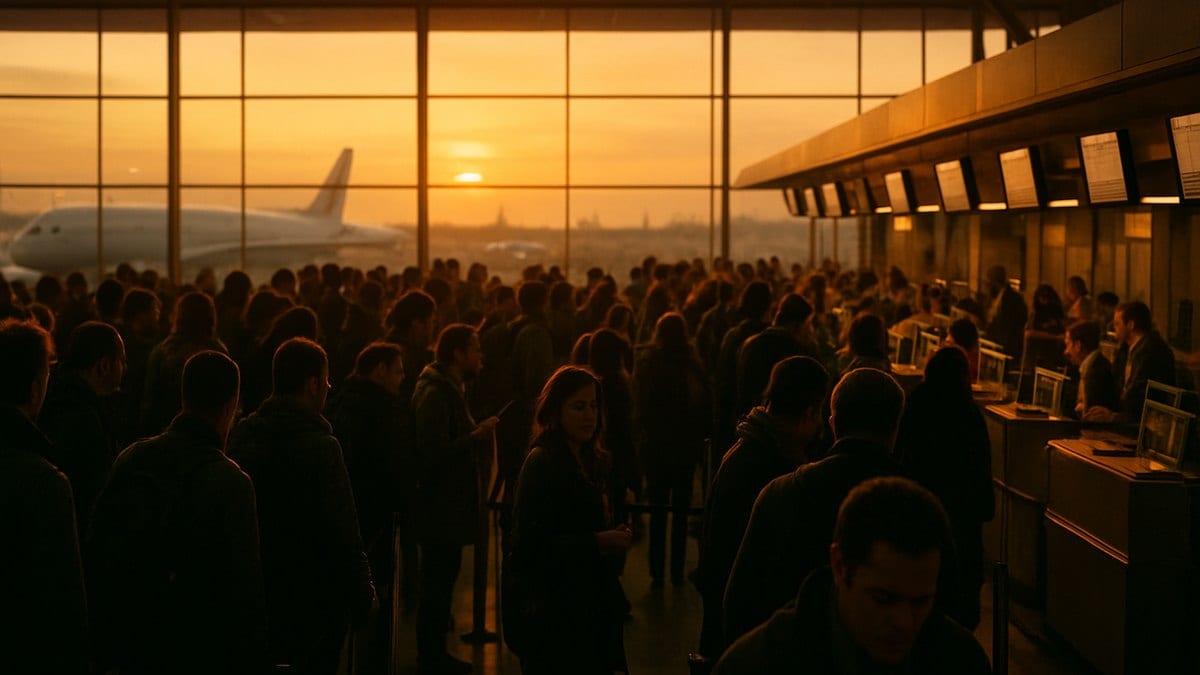
New Wave of Disruptions Hits Key Asian Hubs
Publicly available aviation data for early April indicate that airports across Japan, South Korea, mainland China, Hong Kong, Singapore and the Philippines have experienced a sharp spike in delays and cancellations. One recent snapshot compiled from airport departure boards and tracking platforms showed more than 3,000 delays and over 150 cancellations across major hubs including Tokyo Haneda, Narita, Hong Kong, Guangzhou, Incheon and Singapore Changi in a single day.
Additional reporting by travel and aviation outlets for April 6 and 7 points to several hundred more cancellations and thousands of delays across Asia and parts of the Middle East. The irregular operations have rippled through connecting banks, stranding transfer passengers and forcing large-scale rebooking efforts at some of the region’s busiest international gateways.
These April disruptions follow an already turbulent March, when monitoring services recorded a regional flight crisis with hundreds of cancellations and more than two thousand delays in a single day across Asia Pacific. Weather systems, including early-season storms and lingering winter conditions, combined with airspace rerouting linked to Middle East tensions to create recurring choke points in airline networks.
For carriers, the operational chaos translates directly into added cost. Extra crew duty hours, unplanned aircraft rotations, hotel accommodation for stranded passengers and compensation obligations all eat into margins that industry forecasts already describe as slim, even in a year of recovering demand.
Fuel Shock Turns Operational Hiccups Into Financial Stress
The disruption is arriving just as airlines confront a renewed fuel shock. Jet fuel prices have climbed sharply in 2026 in the wake of the conflict in the Middle East and a broader fuel supply crunch that analysts have linked to an emerging Iran-related energy crisis. Business and economic coverage across Asia and Europe in recent weeks has highlighted concerns that tight supplies could threaten jet fuel availability heading into the peak northern summer season.
Recent analysis from international airline industry bodies projects that fuel remains one of the sector’s largest expenses, typically around a quarter of operating costs. With oil and jet fuel benchmarks moving higher in early 2026, some estimates suggest ticket prices globally may need to rise by close to 9 percent if elevated levels persist, simply to preserve existing margin levels.
Asian carriers are responding with a mix of surcharges and network adjustments. Taiwan-based airlines have announced steep increases in fuel surcharges on both short haul and long haul routes, with some long haul surcharges more than doubling compared with previous levels. In Hong Kong, local media and aviation forums report that Cathay Pacific is implementing successive fuel surcharge hikes in April, citing pressure from jet fuel prices linked to the Middle East conflict.
At the same time, policymakers are adding new cost layers as they accelerate climate measures. Singapore, one of the region’s dominant hub airports, has introduced the city-state’s first sustainable aviation fuel levy in 2026, adding a variable charge to each ticket to help fund cleaner fuel adoption. While the levy is modest on most itineraries, it comes on top of higher base fares and surcharges, further tightening the equation for both airlines and price-sensitive travelers.
Capacity Constraints Leave Little Cushion
The latest disruptions are also exposing how little spare capacity exists in many Asian airline networks after years of restructuring. Publicly available commentary from aviation analysts on the Asia Pacific market in 2026 describes an industry that has largely restored or even exceeded pre-pandemic traffic levels, but often with leaner fleets, thinner staffing and more heavily optimized schedules.
Several Asian carriers reduced fleets during the downturn and have been slow to add backup aircraft or restore full staffing levels, in part because of supply chain delays in aircraft deliveries and maintenance. The result is a system where any shock, from storms to geopolitical detours, can quickly cascade as there are fewer spare airframes and crews available to plug gaps when flights and rotations go off schedule.
Fuel supply uncertainty is amplifying those constraints. Reports from regional business media in early April describe how airlines in Southeast Asia are trimming schedules, tankering extra fuel from airports with better supply and, in some cases, rerouting or consolidating flights. In Myanmar, domestic airlines temporarily suspended services during March because of jet fuel shortages, while carriers in parts of the South Pacific faced refueling restrictions at certain airports.
These defensive measures help guard against outright cancellations if local fuel runs short, but they also tie up aircraft longer on the ground, complicate rotations and reduce the margin for schedule recovery when weather or airspace issues arise. What might once have been a localized delay event can now propagate across networks stretching from North Asia to the Middle East.
Demand Recovery Masks Fragile Profitability
Despite the operational turmoil, demand for air travel in Asia-Pacific remains robust. Airline booking data and commentary from major carriers suggest that international travel demand in the first quarter of 2026 is meeting or exceeding levels seen before the pandemic for many routes, particularly on long haul services connecting Asia with Europe and North America.
Industry outlooks from global airline associations toward the end of 2025 and early 2026 projected that sector profitability would improve, but still rest on relatively modest net margins of around 3 to 4 percent globally. Within that, analysts have consistently flagged Asia-Pacific as a region where strong passenger growth coexists with particularly tight margins because of intense competition, high airport charges in some hubs and elevated exposure to long haul international routes that are more sensitive to fuel and geopolitical risks.
The current disruptions highlight how quickly those slender margins can be eroded. Each canceled flight not only eliminates revenue but can also generate a string of compensation and re-accommodation costs. Extended delays often require rebooking passengers onto competing carriers, cutting into yields. For low cost carriers operating on ultra-thin unit margins, a cluster of bad days tied to weather or fuel shortages can undermine the profitability of an entire quarter.
Financial market commentary in late March has already pointed to airline stocks as vulnerable to further oil price spikes, with some investors noting that many carriers have limited ability to hedge future fuel purchases at reasonable cost. With competition intense on key intra-Asian routes, airlines have only partial scope to pass through the full increase in operating expenses to fares without dampening demand.
Strategic Shifts as Airlines Brace for a Volatile Year
As irregular operations continue, some Asian airlines are adjusting their strategic focus. Capacity is being shifted toward markets viewed as more resilient or higher yielding, in part to offset the revenue drag from disrupted and fuel-intensive routes. Recent announcements from full service carriers in Southeast Asia show expanded schedules to key East Asian cities and selective ad hoc services to Europe to pick up passengers displaced by disruptions among Middle Eastern competitors.
Airlines are also leaning more heavily on revenue management tools and dynamic pricing to capture as much yield as possible from constrained seat supply. With load factors already high in many Asian markets, incremental gains in average fare can provide crucial support to margins when fuel and disruption costs spike.
At the policy level, governments and regulators across the region are promoting sustainable aviation fuel and infrastructure investments to strengthen long term resilience. However, the near term effect is often higher operating costs as carriers pay a premium for low carbon fuels and navigate new levies, all while maintaining competitive pricing in a crowded marketplace.
The events of early 2026 suggest that Asia’s air travel recovery is colliding with a harsher operating environment marked by volatile energy markets, fragile supply chains and crowded skies. With margins as thin as they are, even short-lived waves of disruption can have an outsized financial impact, leaving airlines with little choice but to continually recalibrate networks, pricing and fuel strategies as the year unfolds.