

More news on this day
Thousands of travellers across Asia and the Gulf faced severe disruption on April 5 as publicly available flight-tracking data indicated 514 cancellations and 5,262 delays across key hubs in South Korea, China, Japan, India, the United Arab Emirates and other markets, disrupting operations at airports from Beijing and Tokyo to Jakarta, Delhi and Dubai.
Get the latest news straight to your inbox!
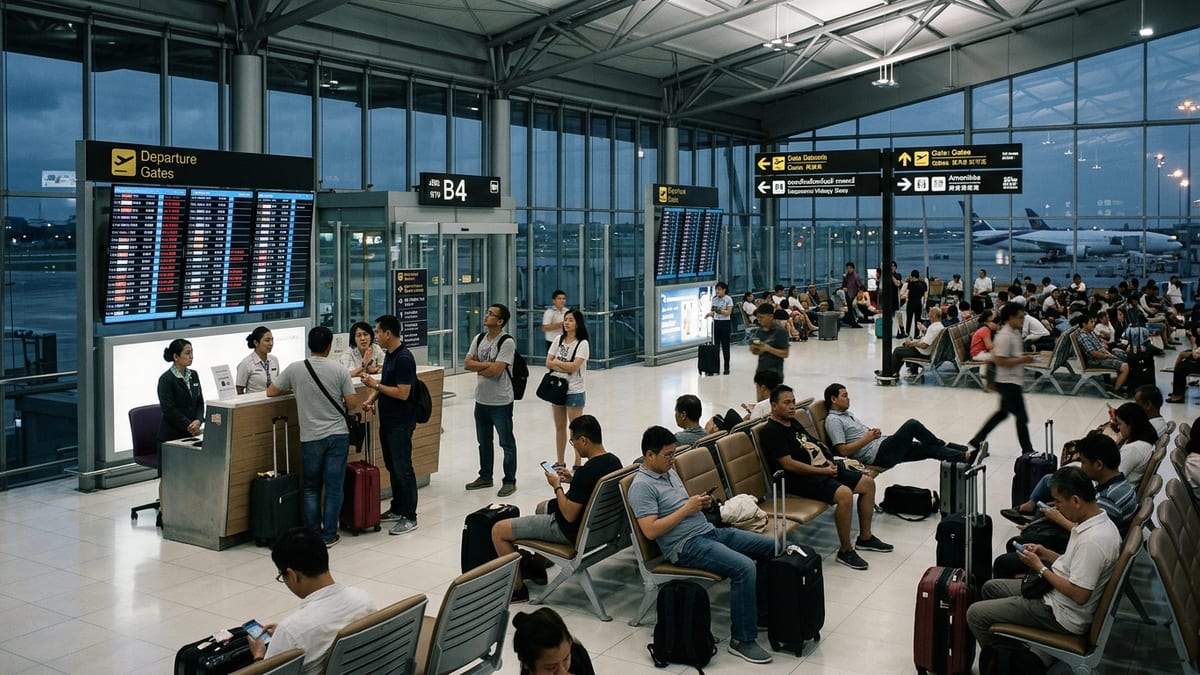
New Wave of Disruptions Across Asian and Gulf Hubs
Aggregated aviation data for April 5 shows a sharp escalation in schedule disruption across Asia, building on several days of operational strain at major airports. Reports indicate that a combined 5,776 flights were either cancelled or significantly delayed within a single operational window, hitting both regional and long-haul networks.
The latest figures refine earlier tallies of several thousand affected flights across China, Japan, South Korea, India, Indonesia, Singapore and Gulf states such as the United Arab Emirates. Travel and aviation outlets describe the impact as region-wide, with knock-on effects reaching secondary cities as delayed aircraft rotate through their daily schedules.
While the highest concentrations of disruption are clustered around large hubs such as Beijing, Tokyo, Seoul, Jakarta, Delhi and Dubai, smaller airports in China, Japan and Indonesia are also recording elevated delay rates. This pattern mirrors earlier waves of disruption identified in late March and early April that left passengers facing missed connections, diversions and unexpected overnight stays.
Specialist coverage from travel industry publications notes that these repeated spikes in cancellations and delays have contributed to an environment of sustained volatility on Asia and Middle East routes, particularly where traffic volumes are already close to pre-pandemic levels and spare capacity is limited.
Major Carriers Affected, From All Nippon to FlyDubai
The disruption is affecting a broad mix of full-service and low-cost airlines, including Japan’s All Nippon Airways, Indonesia-based Batik Air, Chinese giant China Eastern and Gulf carrier FlyDubai, along with a host of regional operators. Recent data snapshots show that China Eastern has been among the hardest-hit carriers by outright cancellations in several recent disruption windows, while Japan Airlines and All Nippon Airways have absorbed large numbers of delayed departures on Japan–China and domestic Japan routes.
In Indonesia, Batik Air has featured prominently in delay statistics at Jakarta’s Soekarno-Hatta and other key airports, as congestion and weather-related issues ripple through domestic and international rotations. Separate coverage of earlier disruptions in late March pointed to Indonesian carriers facing elevated schedule pressure, with delays in Jakarta and Bali cascading into later sectors.
In the Gulf, FlyDubai has been listed among carriers experiencing a mix of cancellations and delays on services touching Dubai International, one of the region’s primary hubs for Asia–Europe and Asia–Africa itineraries. Other Middle Eastern and Asian airlines operating through Dubai, Abu Dhabi and Doha have already been adjusting schedules in recent weeks in response to regional airspace constraints, which has reduced the margin to absorb fresh disruptions originating in Asia.
Publicly available airline and airport performance tables for April 5 indicate that no single carrier is responsible for the bulk of the disruption. Instead, the pattern is one of widespread, moderate-to-severe irregular operations across multiple airlines, suggesting shared external pressures such as weather, congested airspace and operational bottlenecks.
Pressure Points at Beijing, Tokyo, Delhi, Jakarta and Dubai
Several of Asia’s largest hubs are again at the centre of the latest wave of disruption. Data compiled by travel news outlets for April 5 highlights high levels of delays at Beijing Capital and Beijing Daxing, Tokyo Haneda, Seoul Incheon, Delhi Indira Gandhi, Jakarta Soekarno-Hatta and Dubai International, among others.
Tokyo Haneda has repeatedly appeared near the top of global rankings for delayed departures in recent days, with one recent dataset showing more than 500 delayed flights and over a dozen cancellations in a single day. Beijing’s twin airports have likewise posted delay counts in the low hundreds, with dozens of cancellations across various operational windows as schedules strain under heavy traffic and intermittent weather issues.
In India, Delhi has again recorded several hundred delays in tandem with a smaller number of cancellations, while Mumbai and Bengaluru have also experienced elevated disruption levels. Jakarta and Bali’s Ngurah Rai have seen waves of delays that affect both domestic and regional services, impacting travellers connecting onward to other Asian cities and to the Middle East.
Dubai International continues to feel the knock-on effects of both Asia-origin disruptions and wider Middle East capacity adjustments that have been in place since late February. Industry analyses in March identified more than 14,000 cancellations out of Middle Eastern hubs over a multi-week period, and the latest irregular operations in Asia appear to be adding further stress to already stretched networks linking Asia with Europe and North America.
Underlying Causes: Weather, Congestion and Network Strain
Travel and aviation industry coverage attributes the April 5 disruption to a combination of severe weather affecting parts of East Asia, chronic congestion at high-traffic hubs and continuing knock-on effects from airspace and capacity constraints in the Middle East. Storm systems tracked across sections of China, Japan and South Korea have periodically disrupted departure and arrival flows, forcing temporary ground holds and runway capacity reductions.
These weather events are interacting with pre-existing structural pressures. Airlines across the region are operating near peak capacity for the spring travel season, leaving limited flexibility to re-time services or swap aircraft when disruptions occur. Delays in morning banks at major hubs, particularly in Beijing and Tokyo, are reported to compound through the day, as the same aircraft rotate through multiple sectors.
Network strain has been intensified by route changes and schedule reductions linked to conflict-related airspace constraints in parts of the Middle East. Earlier analyses in March noted a significant number of cancellations and extended routings on Asia–Europe and Asia–Africa services, which have increased block times and reduced the buffer for handling weather or technical issues elsewhere in the network.
Aviation analysts cited in public reports suggest that the current pattern of recurring daily or near-daily disruption clusters may persist while carriers and airports work through staffing, maintenance and slot allocation challenges that have built up alongside the rapid return of demand.
What Travellers Can Expect in the Coming Days
Publicly available commentary from travel portals and aviation specialists indicates that schedules across much of Asia and the Gulf are likely to remain fragile in the short term, even if headline cancellation and delay numbers fluctuate from day to day. With recent tallies showing multiple days where several thousand flights were disrupted across the region, passengers are being encouraged by consumer advocates and travel advisers to build extra resilience into upcoming itineraries.
For travellers transiting through hubs such as Beijing, Tokyo, Seoul, Jakarta, Delhi, Dubai and Singapore, same-day connections with minimal layover times carry heightened risk while disruption levels remain elevated. Industry guidance suggests allowing longer connection windows, monitoring flight status closely from 24 hours before departure and being prepared for potential re-routing through alternative hubs.
Given ongoing operational strain, observers note that travellers may encounter longer queues at check-in, security and rebooking desks when disruption spikes, particularly during morning and evening peaks. Those holding separate tickets for onward travel may be more exposed to missed connections, as protections and rebooking options are typically weaker than on through itineraries issued under a single booking.
While airlines and airports across the region are gradually adding capacity and refining contingency plans compared with earlier phases of the recovery, published data for early April indicates that Asia’s air travel ecosystem remains vulnerable to sharp swings in punctuality when multiple external pressures coincide on the same operational day.