

More news on this day
Passengers across Asia are facing mounting travel disruption as a fresh wave of delays and cancellations involving Gulf and Asian carriers affects flights in and out of Thailand, Malaysia, Indonesia, China and India, with publicly available data and reports pointing to at least 152 delays and 29 cancellations in the latest update.
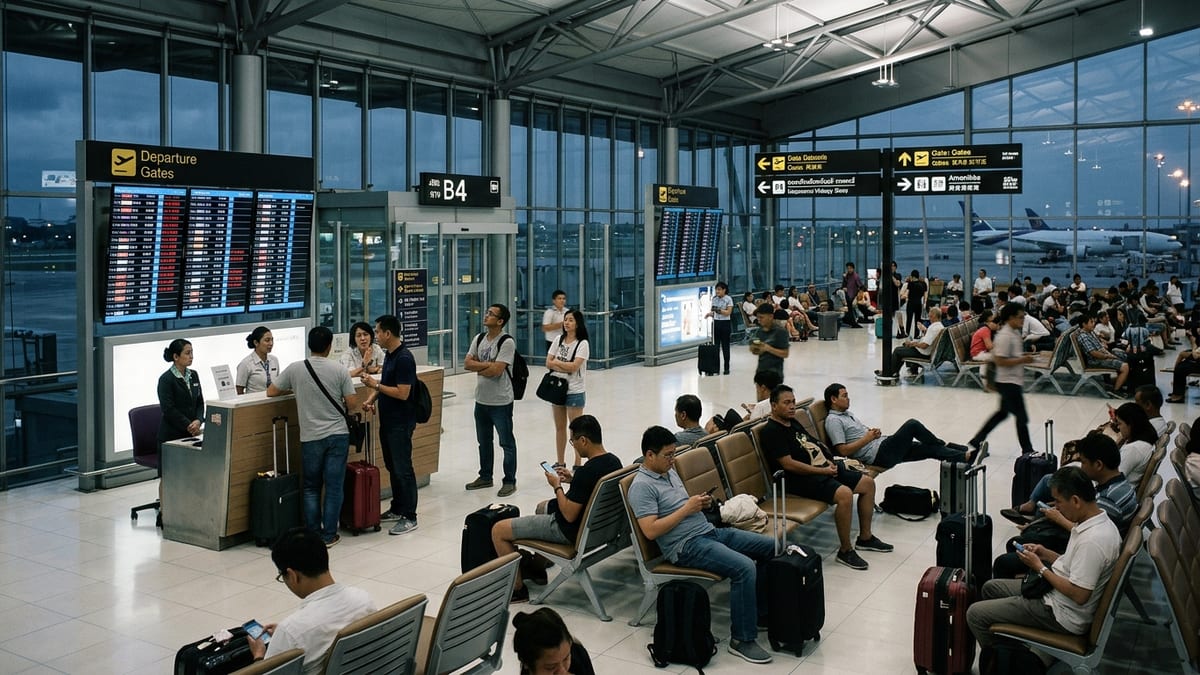
Air Travel Across Asia Feels Ripple Effects of Route Turmoil
Recent disruptions to long-haul routes linking Asia with the Middle East and beyond are reverberating through major hubs in Thailand, Malaysia, Indonesia, China and India, affecting both regional and connecting traffic. Publicly available flight-tracking snapshots and airport status boards reviewed on March 21 indicate a pattern of rolling delays and selective cancellations as airlines adjust schedules and reroute aircraft around affected corridors.
Gulf Air and Qatar Airways, which normally carry large volumes of connecting passengers between Asian cities and Europe, Africa and North America, feature prominently in the latest disruption patterns. Industry trackers show a mixture of prolonged departure delays out of Bangkok, Kuala Lumpur and major Indian metros, along with cancellations on certain Middle East bound services, as airlines re-time or consolidate flights to maintain network resilience.
The disruption is not confined to Gulf carriers. Regional and Asian airlines including Batik Air, China Eastern and Air India are also listed among the operators experiencing notable operational irregularities. The combined tally of at least 152 delays and 29 cancellations across the affected countries underlines how even limited schedule adjustments can cascade across a highly interconnected route map.
While the overall scale falls short of a full-scale grounding, the scattered nature of the problems is creating uncertainty for travelers using Asia as a transit bridge between continents. Passengers on multi-leg itineraries are particularly exposed when one delayed sector leads to a missed connection at a Gulf or Asian hub, requiring rebooking and, in some instances, unexpected overnight stays.
Thailand, Malaysia and Indonesia See Knock-On Disruptions
In Southeast Asia, Thailand’s Bangkok and resort gateways, Malaysia’s Kuala Lumpur International Airport and Indonesia’s Bali and Jakarta airports are all registering irregular operations linked to the broader pattern of schedule volatility. Reports from travelers and airport information screens show outbound flights to Gulf hubs, as well as inbound services returning aircraft to Asian bases, being held for extended periods or withdrawn from the schedule at short notice.
Carriers such as Qatar Airways and Gulf Air rely heavily on strong feeder traffic from Bangkok, Kuala Lumpur and Jakarta, and adjustments to their long-haul operations can quickly translate into local disruptions. When an inbound aircraft from the Middle East or Europe is late or cancelled, the corresponding return leg from Southeast Asia is frequently rescheduled, consolidated with another service, or replaced by a different aircraft type, all of which introduce further uncertainty for passengers.
Regional airlines including Batik Air have also been contending with schedule instability, compounding the impact on travelers who use low-cost or hybrid carriers for intra-Asian connections into larger Gulf or Chinese networks. In Indonesia and Malaysia in particular, reports indicate that some passengers are arriving at airports to find departure times repeatedly pushed back as carriers await updated slot timings, crew availability and revised overflight clearances.
Tourism-dependent destinations such as Bali and Phuket are particularly sensitive to such disruptions, as many long-haul visitors rely on one-stop itineraries via Middle Eastern and Chinese hubs. Even a modest spike in delayed or cancelled flights can lead to congestion at check-in, longer queues at transfer desks and pressure on local accommodation when overnight stays become necessary at short notice.
China and India Hubs Struggle With Network Complexity
In China and India, major gateways such as Shanghai, Beijing, Delhi and Mumbai are grappling with the operational complexity of managing large domestic and international networks amid shifting long-haul patterns. Publicly available data from flight-tracking platforms reviewed on March 21 shows a noticeable cluster of delayed departures and arrivals involving China Eastern and Air India on routes that connect into Gulf or Southeast Asian hubs.
China Eastern’s extensive network across East Asia and its long-haul links to Europe and the Middle East leave it exposed to timetable changes outside its home markets. When aircraft and crew are held up on one sector, rotations into Southeast Asia or India can be affected hours later, leading to rolling delays that are difficult for passengers to anticipate when they first check their flight status.
In India, Air India’s wide-body operations through key hubs are similarly sensitive to upstream disruptions. According to recent published coverage of Asia–Gulf flight issues, some India–Middle East services have been rescheduled or temporarily suspended on certain days, with knock-on effects for passengers connecting onward to Europe or North America. Even when flights continue to operate, routing changes and extended flight times can lead to late arrivals and missed onward connections.
Both Chinese and Indian airports are also dealing with heavy domestic traffic that limits their capacity to absorb irregular operations. When international flights run late, they compete for slots, gates and ground handling resources with a full program of domestic departures, increasing the likelihood of late-night arrivals and early-morning departure banks bunching up and causing additional congestion.
Passengers Face Missed Connections, Overnight Stays and Refund Hurdles
For travelers, the most immediate impact of the latest wave of disruptions is measured in missed connections, disrupted itineraries and unplanned expenses. Reports shared publicly by affected passengers in recent weeks describe scenarios in which a delayed or cancelled Gulf Air or Qatar Airways flight from an Asian city leads to a missed long-haul connection in the Middle East, leaving travelers to negotiate rebookings on alternative services operated by Air India, China Eastern or other partners.
In some cases, publicly available accounts indicate that passengers have been rebooked onto different airlines altogether, particularly when their original carrier has reduced frequencies or temporarily suspended a route. This has included routings via secondary hubs in China, India or Southeast Asia, sometimes involving additional stops or longer total journey times compared with the original itinerary.
Accommodation and meal arrangements for stranded passengers vary widely depending on the carrier, ticket type and point of sale. While a number of airlines have announced flexible policies, including options for free date changes or refunds on affected routes, travelers continue to report challenges reaching call centers and securing timely assistance, especially during peak disruption windows when phone lines and online chats are congested.
Consumer advocates in several Asian markets are drawing attention to the importance of understanding local and international passenger rights regimes. For flights originating in the European Union or the United Kingdom and operated by qualifying carriers, compensation rules for long delays and cancellations may apply, while domestic protections in countries such as India, Thailand and China can influence what support is available in the form of re-routing, refunds or care during disruptions.
Airlines Adjust Schedules While Seeking to Restore Confidence
Airlines affected by the current wave of disruptions are continuing to adjust schedules and capacity in response to operational and routing constraints, with public timetables showing a mix of frequency reductions, retimed flights and, in some cases, the deployment of larger aircraft to consolidate demand. Gulf Air and Qatar Airways, along with regional operators such as Batik Air, China Eastern and Air India, are all visible in these timetable changes across Thailand, Malaysia, Indonesia, China and India.
Published airline statements and notices emphasize safety and regulatory compliance as the primary drivers of these adjustments. At the same time, network planners face the challenge of maintaining viable connectivity for key markets, particularly for business travelers and long-haul leisure passengers who rely on predictable transit times through major hubs.
Industry analysts note that restoring traveler confidence will depend not only on the physical operation of flights, but also on clear, timely communication when plans change. Digital tools, from airline apps to real-time flight trackers, are playing an increasingly central role in helping passengers monitor their journeys, though inconsistent updates and last-minute schedule shifts continue to frustrate many users.
With at least 152 delays and 29 cancellations in the latest update across the five affected countries, Asia’s aviation sector is once again being tested on its resilience and responsiveness. How efficiently airlines and airports manage this period of disruption, and how swiftly they can stabilize schedules, will shape traveler perceptions of reliability on some of the world’s busiest international corridors in the weeks ahead.