

More news on this day
Thousands of travelers across Asia and the Middle East faced cascading disruption on April 4, 2026, as aviation data showed at least 283 flights canceled and nearly 4,000 more delayed across major hubs from Beijing and Tokyo to Delhi and Dubai, hitting carriers including Korean Air, ANA Wings, IndiGo, Qatar Airways and others.
Get the latest news straight to your inbox!
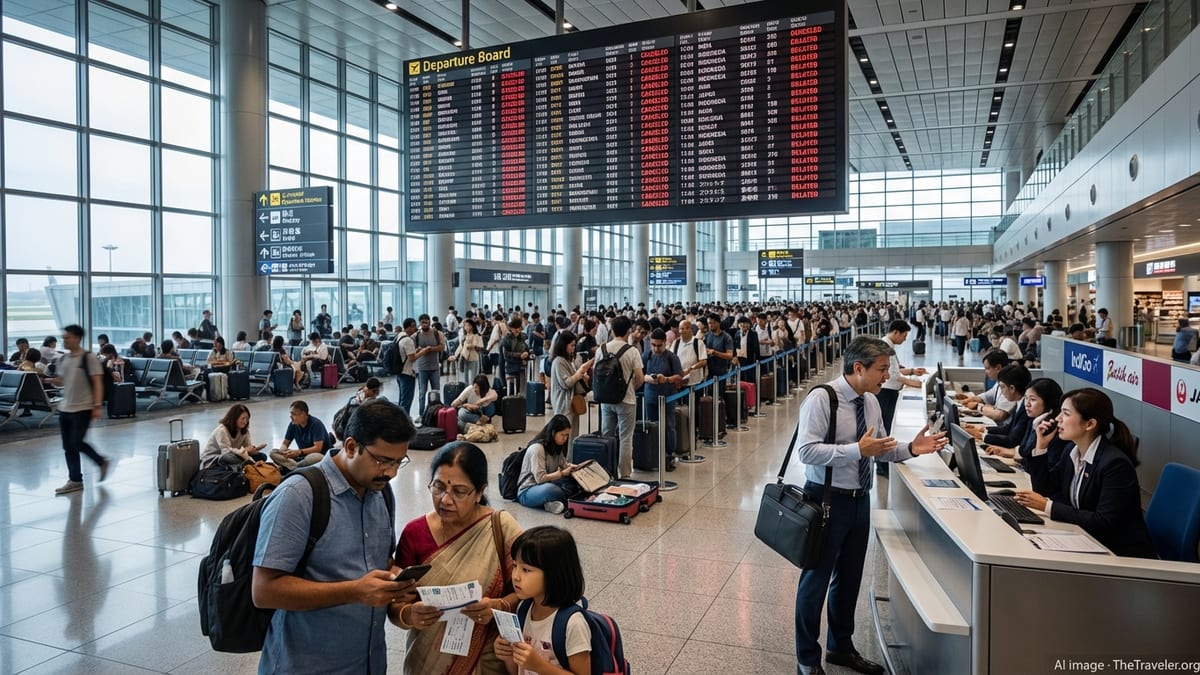
New Wave of Disruption Across Asian and Gulf Hubs
Publicly available aviation dashboards and media reports for April 4 indicate a fresh wave of operational turmoil across Asia, with widespread delays and a smaller but still significant number of outright cancellations at key international gateways. Aggregate tallies point to 283 services canceled and about 3,972 delayed across the region and connected Middle Eastern hubs, straining airline schedules and airport infrastructure.
The disruption is concentrated at major nodes in the Asian network, including Beijing, Tokyo, Delhi, Seoul and Jakarta, and extends through Gulf transit points such as Dubai and Doha. Passengers on Korean Air, ANA Wings, IndiGo, Qatar Airways and other regional and long haul operators are experiencing extended waits, missed connections and, in more severe cases, unexpected overnight stays as aircraft and crews fall out of position.
Flight data snapshots suggest that while cancellations remain in the hundreds, delays are the defining feature of the current disruption. Long queues at departure gates and crowded transfer areas have been reported at several hubs, reflecting how even modest schedule changes can ripple through tightly timed regional and intercontinental networks.
Travel analysts note that the cumulative effect of rolling disruptions over recent weeks is amplifying the impact of each new operational shock. Airlines that have already been operating with thinner buffers in terms of spare aircraft and crew are more exposed when fresh constraints emerge, whether from airspace closures, weather or technical issues at individual airports.
Japan’s Domestic Network Buckles Under Heavy Delays
Japan’s normally punctual domestic system has become a focal point of the latest turbulence. According to same day reporting, more than 1,100 domestic flights were delayed and at least 20 canceled on April 4 across airports serving Osaka, Tokyo, Fukuoka, Miyazaki, Shizuoka, Aomori and other cities, affecting operations at All Nippon Airways, Japan Airlines, ANA Wings, Skymark, Solaseed and smaller carriers.
The data from Japan underline how a predominantly delay driven event can still cause extensive passenger disruption. With the majority of flights operating but running late, missed onward connections, crew duty time limits and aircraft rotation challenges accumulate through the day, ultimately forcing selected cancellations on lower priority routes in order to protect core schedules.
Observers point out that Japanese carriers are simultaneously managing knock on effects from broader regional instability. Aircraft operating domestic sectors often feed international rotations to and from East Asia and the Middle East, meaning that any irregularities on long haul services can push stress back into the domestic grid, complicating recovery efforts.
Despite the strain, operational statistics show that Japan’s cancellations remain a small fraction of overall movements, suggesting that airlines are prioritizing completion of scheduled services, even at the expense of on time performance. For passengers, however, the distinction between a delayed and a canceled flight can blur when missed connections lead to enforced rebooking or overnight stays.
Middle East Airspace Crisis Continues to Reverberate
The latest figures come against the backdrop of an ongoing airspace crisis in West Asia that has transformed regional and intercontinental travel since late February. Industry analyses published this week describe a sharp contraction in Middle Eastern capacity following military escalation involving Iran, with estimates of around one third of regional seats temporarily removed from the market and dozens of airlines partially or fully suspending operations to affected destinations.
Carriers based in the Gulf, including Emirates, Qatar Airways and Etihad, have cut or restructured services to manage restricted routings and crew constraints, directly affecting connectivity between Asia and Europe. Travelers who would typically transit through Dubai, Doha or Abu Dhabi are facing cancellations, forced reroutes via alternative hubs and additional flying time of two to four hours on some routes.
Ripple effects extend across Asia, where Southeast and East Asian airlines that rely on Middle Eastern connections for Europe and Africa traffic have had to withdraw or retime flights. Airports in Bangkok, Singapore, Hong Kong and Tokyo have each recorded waves of cancellations and delays linked to disrupted Gulf operations over the past several weeks, contributing to the elevated totals seen on April 4.
At the same time, some carriers outside the directly affected zone have moved to capture displaced demand. European and Asian airlines with hubs further from the conflict area have reportedly added frequencies to major Asian cities, attempting to absorb passengers unable to transit through the Gulf, although capacity remains below pre disruption expectations.
Indian and Chinese Routes Under Pressure
India and China are emerging as critical pressure points in the current disruption cycle. In India, IndiGo, Air India and other carriers are still adjusting to a volatile environment on West Asia routes, where airspace restrictions and changing security advisories have repeatedly forced schedule revisions since early March. Recent schedules published in Indian media show IndiGo and the Air India group mounting carefully calibrated operations to Gulf destinations, while still cancelling or consolidating other flights as conditions evolve.
These constraints intersect with lingering operational challenges on the Indian domestic network, where crew availability and aircraft utilization have been under scrutiny since a major scheduling crisis at IndiGo in late 2025. Although current disruption levels are materially lower than at that peak, any new external shock, such as the Middle East airspace closures, can quickly tighten margins, particularly at busy hubs like Delhi.
In North Asia, Chinese and Japanese routes are facing a separate but related squeeze. Reports from aviation outlets highlight a steep reduction in China to Japan capacity through March 2026, tied to diplomatic tensions and regulatory restrictions. The resulting thinner schedules leave fewer options for rerouting when irregular operations occur, making each cancellation or extended delay more painful for travelers between the two countries and for connecting passengers onward to Southeast Asia or Oceania.
The combined effect is a network in which multiple sub regions are operating with reduced resilience at the same time. With Indian carriers constrained westward by airspace issues and Chinese operators moderating services to Japan, regional travelers have a narrower range of alternative routings when things go wrong, magnifying the impact of the 283 cancellations and thousands of delays recorded on April 4.
What Passengers Are Experiencing on the Ground
Anecdotal accounts circulating on social media platforms, travel forums and passenger advocacy channels describe crowded terminals, long lines at airline service desks and difficulties securing prompt rebookings, particularly on popular Asia to Europe and Asia to Middle East itineraries. Travelers connecting through Gulf hubs report itinerary changes with little advance notice, as airlines adjust schedules in response to evolving airspace and operational constraints.
Publicly available airline notices in recent weeks show a patchwork of travel waivers, refund policies and rebooking options across affected carriers. IndiGo, Qatar Airways, Emirates and others have issued advisories offering varying degrees of flexibility for passengers whose flights have been cancelled or significantly delayed on Middle East and connected routes, often covering travel booked before the onset of the latest tensions.
At Asian hubs such as Tokyo, Beijing and Delhi, the experience is shaped as much by delays as by outright cancellations. Passengers may see their flights still listed as operating, yet face multi hour waits, revised boarding times and uncertainty around onward connections. For many, the disruption only becomes fully apparent upon arrival at a transit hub, when misaligned schedules lead to missed long haul segments and forced overnight stays.
Industry commentators suggest that travelers booked through late April should monitor flight status frequently, allow additional connection times where possible and be prepared for last minute changes. As long as Middle Eastern airspace remains constrained and East Asian networks continue to operate with reduced buffers, the risk of renewed spikes in cancellations and delays across the region is expected to remain elevated.