

More news on this day
Passengers across China, Laos, Thailand, India and neighboring markets are facing extensive disruption after a new wave of flight cancellations and delays involving China Eastern, Lao Airlines and Tibet Airlines left travelers stranded at major hubs including Beijing, Lhasa, Vientiane, Xining and Kunming.
Get the latest news straight to your inbox!
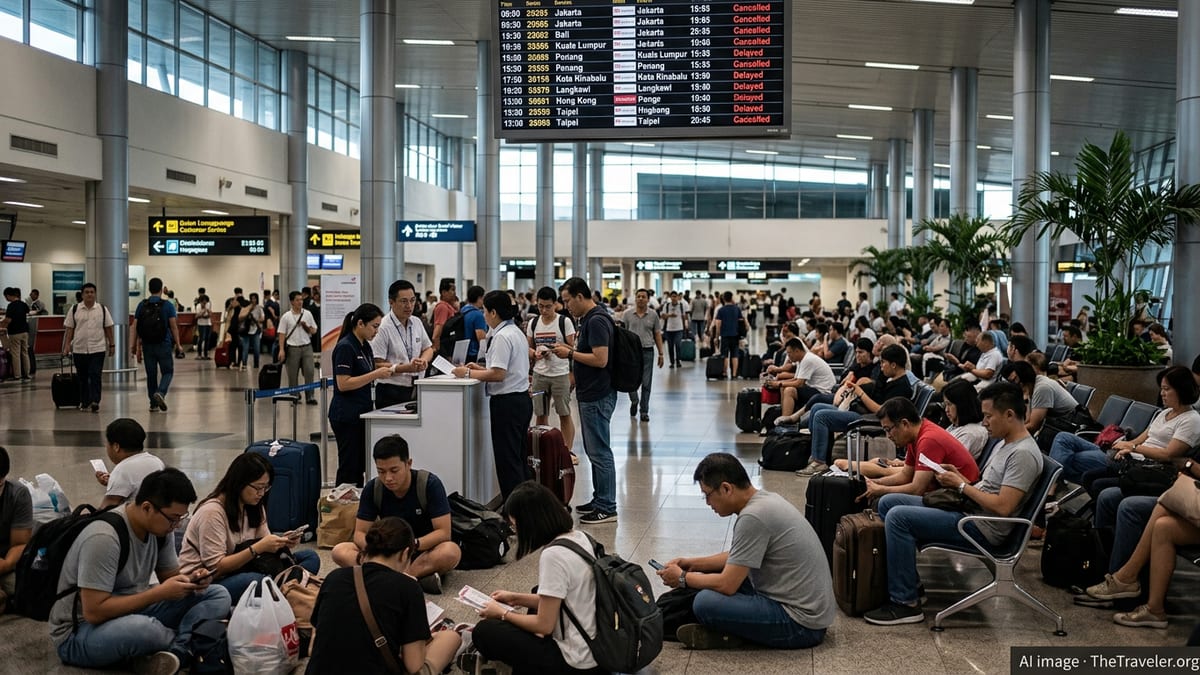
Regional Disruptions Ripple Across Asian Hubs
According to publicly available aviation dashboards for early April 2026, a cluster of operational disruptions has resulted in 33 flight cancellations and 416 delays on services linked to China Eastern, Lao Airlines and Tibet Airlines. The affected routes span mainland China, the Himalayan region and mainland Southeast Asia, interrupting both domestic and cross border travel.
China’s air network has been particularly strained in recent days, with new data indicating that delays and cancellations have mounted at Beijing, Kunming and other major airports as airlines grapple with congested schedules and weather related bottlenecks. Industry tracking platforms show that the latest disruption wave builds on earlier episodes this month in which hundreds of flights across key Chinese hubs were delayed or grounded, leaving thousands of passengers seeking rebooking options.
In parallel, regional carriers linking China with Laos, Thailand and India have seen schedules affected as aircraft and crews fall out of rotation. Services that rely on carefully timed connections through secondary cities such as Xining or Kunming have proven especially vulnerable, with a single late inbound aircraft triggering knock on delays through the rest of the day.
Travel publications monitoring the region report that the disruption has come during a period of heightened demand on Asia Pacific routes, amplifying the impact on leisure travelers and migrant workers who rely on limited weekly flights to return home or onward to long haul connections.
Beijing, Kunming, Lhasa and Xining Face Mounting Pressure
Beijing’s airports remain a focal point of the disruption, with China Eastern and other major Chinese carriers facing rolling delays on trunk routes that feed into international services. Recent analysis of flight status data shows repeated schedule slippages on busy Beijing corridors, which in turn affect onward journeys to Southeast Asia and South Asia.
Further southwest, Kunming and Xining have emerged as pressure points in the network. Both cities serve as important gateways to and from the Tibetan Plateau, with flights routing passengers onward to Lhasa and smaller regional airports. When flights into Kunming or Xining are delayed or cancelled, departures to Lhasa often cannot be retimed quickly due to altitude, crew duty and daylight constraints, leaving Tibet bound passengers stranded for extended periods.
Lhasa’s Gonggar Airport is experiencing its own challenges as Tibet Airlines and partner carriers adjust to late arriving aircraft, leading to schedule reshuffles and, in some cases, cancellations. Given the limited number of daily services into and out of Lhasa, even a handful of affected flights has a pronounced impact, forcing travelers to wait for scarce seats on later departures or reroute via alternative Chinese hubs.
Reports from aviation trackers suggest that congestion management and turnaround times at these plateau and gateway airports remain particularly sensitive to disruptions originating elsewhere in the network. When major hubs such as Beijing and Kunming encounter rolling delays, smaller but strategically important airports like Lhasa and Xining quickly feel the effects.
Vientiane, Thailand and India Feel Knock On Effects
Beyond China’s borders, Vientiane and other regional capitals are experiencing knock on consequences from the wave of schedule changes. Lao Airlines and partner carriers have had to adjust their operations as China facing flights encounter delays or fleet imbalances, creating gaps in service on some Laos China routes and tighter aircraft utilization across the network.
Thailand and India are also being drawn into the disruption. Publicly available schedules and tracking data indicate that regional flights linking Chinese hubs with Bangkok, Chiang Mai, Delhi and other major cities have recorded elevated delay levels in early April, often traced back to upstream hold ups at Chinese hubs. In some instances, late arrivals have forced airlines to shorten turnaround windows or consolidate lightly booked services.
Analysts note that this pattern mirrors broader Asia Pacific volatility observed in recent weeks, as weather disturbances, airspace constraints and tight crew rosters leave little buffer in regional timetables. Airlines frequently prefer to delay rather than cancel flights, but when tight rotations are stretched beyond crew duty limits, outright cancellations become unavoidable.
The result is a patchwork of disruptions across the region that is difficult for travelers to anticipate. Even passengers flying entirely outside mainland China, on routes such as Vientiane to Bangkok or Delhi to Southeast Asia, may be affected if their aircraft or crew are repositioned from China related services.
Thousands of Travelers Face Missed Connections and Overnight Stays
The combination of 33 cancelled flights and more than 400 delays has translated into missed connections, involuntary overnights and extended airport stays for thousands of travelers. Based on recent patterns documented in industry coverage, passengers connecting from regional Asian services onto long haul flights to Europe, North America and Australia face the greatest risk of severe disruption.
In Beijing and Kunming, travelers arriving late from secondary Chinese cities or neighboring countries frequently miss onward departures with limited same day alternatives. Those on separate tickets, such as low cost regional legs feeding into full service long haul flights, may have to purchase entirely new itineraries if they misconnect.
Meanwhile, passengers heading to and from Lhasa, Vientiane, smaller Thai cities and Indian gateways are dealing with the scarcity of replacement options. Many of these routes operate only a few times per week, meaning that a single cancellation can push travel plans back by days rather than hours. Travel forums and consumer platforms have recently highlighted stories of passengers in such markets facing long rebooking queues and difficulty reaching airline support channels during peak disruption periods.
Industry observers warn that these secondary impacts are likely to persist even after the immediate wave of delays subsides, as airlines work through aircraft repositioning and crew scheduling backlogs created by the latest disruption.
What Travelers Can Do When Schedules Unravel
Travel and aviation experts point to several strategies passengers can use when faced with widespread cancellations and delays of the kind currently seen across China, Laos, Thailand and India. Publicly available guidance from consumer advocates emphasizes the importance of monitoring airline apps and flight tracking tools from the moment a disruption is suspected, rather than waiting for airport announcements.
Passengers are advised to document any cancellation or significant delay, including screenshots of flight status pages and messages from airlines or booking sites, as these records may be useful when pursuing refunds or vouchers later. For those with tight connections, checking alternative routings through different hubs in advance can provide a head start when negotiating rebooking options at customer service desks.
Specialists in air passenger rights note that compensation and care obligations vary widely across jurisdictions and carriers in Asia. While some countries have developed frameworks similar to European regulations, others rely instead on airline specific policies. Travelers are therefore encouraged to review the conditions of carriage of China Eastern, Lao Airlines, Tibet Airlines or any code share partners involved in their trip to understand what support may be available during disruption.
With the latest episode of cancellations and delays adding fresh strain to an already fragile regional network, frequent flyers in Asia suggest building longer connection windows, avoiding last departure of the day flights when possible and considering travel insurance that explicitly covers missed connections and extended delays.