

More news on this day
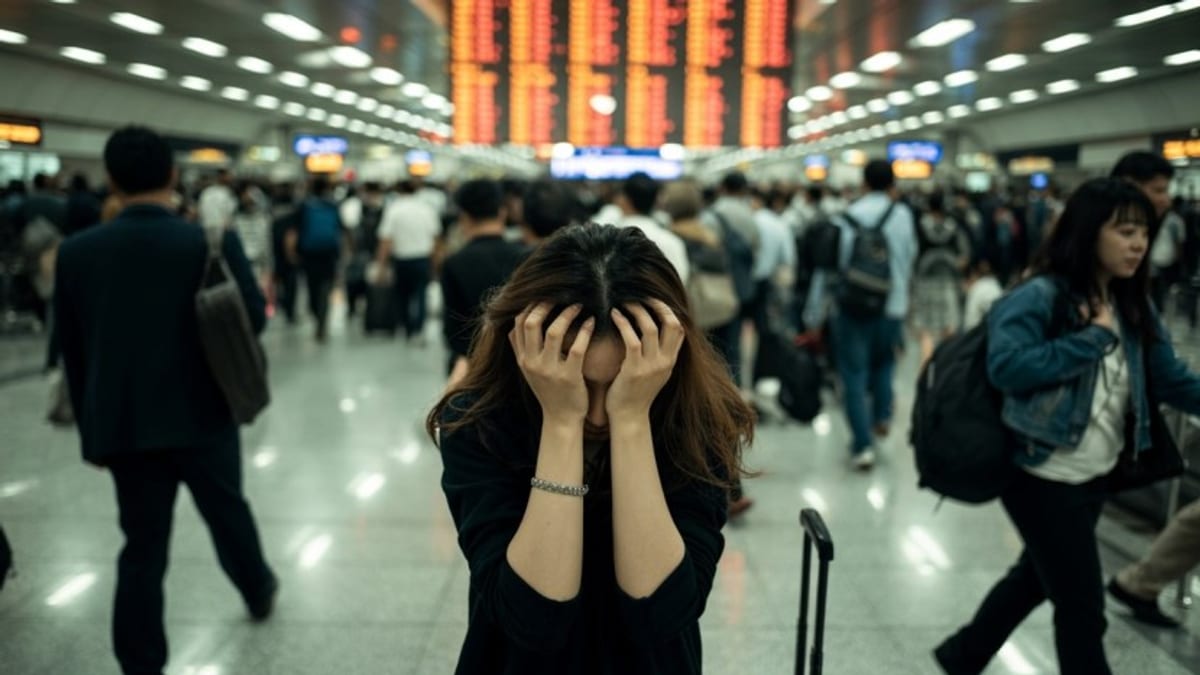
Thousands of travellers across Asia are facing widespread disruption as airports in Japan, South Korea, Singapore, mainland China, the Philippines, and Hong Kong report 3,072 delayed departures and 154 cancellations, snarling operations for major carriers including Cathay Pacific, Korean Air, Japan Airlines, Air China, All Nippon Airways, and others across key hubs from Tokyo and Seoul to Manila.
Get the latest news straight to your inbox!
Major Hubs Across North and Southeast Asia Struggle
Publicly available flight tracking data and aggregated airport departure boards show that the latest wave of disruption is heavily concentrated at major North Asian gateways, including Tokyo’s Haneda and Narita airports and Seoul Incheon, as well as at Hong Kong International Airport and multiple mainland Chinese hubs. These airports typically serve as critical connective nodes for traffic between Asia, Europe, North America, and Oceania, which means schedule problems in one location can quickly cascade across regions.
Singapore Changi and Manila’s Ninoy Aquino International Airport have also reported elevated delay levels, with a mix of late departures, aircraft rotations running behind schedule, and knock-on congestion at security and immigration. While some airports are recording relatively few outright cancellations, longer-than-normal turnaround times and crowded airspace are contributing to rolling hold-ups that stretch throughout the day’s departure banks.
In mainland China, large coastal hubs such as Shanghai Pudong and Guangzhou Baiyun, as well as fast-growing inland gateways including Chengdu and Xi’an, have seen an uptick in disruption as weather patterns, air traffic control restrictions, and operational backlogs intersect. When combined with the challenges at Japanese and Korean airports, the result is a dense web of delays that impacts both regional shuttles and long haul services.
Hong Kong International Airport, which functions as a primary transfer point for traffic in and out of southern China and the wider Asia Pacific, continues to experience pressure on departure punctuality. Reports indicate that congestion in surrounding airspace and tight aircraft rotations are leading to late pushbacks, even on flights that manage to avoid cancellation.
Flag Carriers and Regional Airlines Hit on Key Routes
National and regional flag carriers are among the most visible airlines affected by the latest disruption. Data compiled from aviation tracking platforms and industry coverage shows Cathay Pacific services to and from Hong Kong facing significant delays, particularly on routes connecting to Japan, South Korea, and major Chinese cities. These routes are central to the airline’s network, so even modest schedule shocks can reverberate through its long haul operations.
In Japan, All Nippon Airways and Japan Airlines are contending with congested departure boards at both Haneda and Narita. Late-arriving aircraft, ground handling bottlenecks, and shifting departure slots are contributing to a pattern of rolling delays rather than isolated incidents. For passengers, this often translates into missed connections and extended waits at crowded terminals, even when their specific flight is not marked as cancelled.
Korean Air services from Seoul Incheon and Gimpo have also been swept up in the disruption, particularly on routes linking South Korea with Japan and Southeast Asia. Public information from scheduling data and timetables points to tightened aircraft utilization across the carrier’s short and medium haul network, leaving crews and operations teams with less flexibility when weather or airspace restrictions emerge.
Mainland Chinese carriers, including Air China and other major state-backed airlines, are dealing with a combination of domestic congestion and international knock-on effects. Flights linking Shanghai, Beijing, Guangzhou, and Shenzhen with Tokyo, Seoul, Singapore, and Manila are central to business and leisure demand, so delays and cancellations on these corridors tend to strand large volumes of passengers at once.
Weather, Airspace Constraints, and Fuel Pressures Converge
Recent coverage from aviation industry outlets highlights a confluence of factors behind the elevated disruption levels. Periods of severe weather in parts of East and Southeast Asia, including thunderstorms and low visibility around some coastal hubs, have triggered temporary ground stops and tightened spacing between departures and arrivals. When such events hit complex multi-runway airports, clearing the resulting backlog can take many hours.
At the same time, air traffic control constraints and occasional system outages are adding another layer of complexity. Reports from the region in recent days describe episodes where traffic flow into busy airspace sectors had to be restricted, causing holding patterns and departure slot pushbacks at airports hundreds of kilometres away from the original bottleneck. These constraints can be particularly painful for hubs that rely on tightly timed connection banks.
Overlaying these operational challenges is the broader jet fuel squeeze that has been building across the Asia Pacific. Trade and aviation industry publications indicate that some carriers are recalibrating schedules, trimming frequencies, or concentrating capacity on the most profitable routes as fuel costs rise. While the latest tally of 3,072 delays and 154 cancellations reflects the immediate operational picture, it is taking place against a background of structural cost pressure that makes it harder for airlines to carry surplus capacity for contingency.
The combination of weather volatility, airspace restrictions, and fuel-related schedule adjustments means that travellers are increasingly exposed to multi-layered risk. Even when a given flight operates, it may do so after substantial delay, and rebooking opportunities on alternative services can be scarce when multiple airlines face simultaneous disruption.
Knock-On Impacts for Travellers and Global Connections
The ripple effects of Asia’s latest flight upheaval extend well beyond the region. Because airports such as Tokyo, Seoul, Hong Kong, and Singapore serve as major transit points for itineraries linking Europe and North America with Australia, New Zealand, and Southeast Asia, missed connections and misaligned schedules can leave passengers stranded far from their final destinations.
According to publicly accessible flight-status tallies, the disruption is not confined to budget or leisure traffic. Premium-heavy routes catering to corporate travellers, including Japan and South Korea’s links to major financial centres, are also experiencing delays that complicate business itineraries and increase pressure on corporate travel managers. When connection windows shrink or evaporate, companies must decide between costly last-minute rebookings and extended layovers.
Within Asia, domestic and short haul travellers are equally affected. Regional flights between Japan, South Korea, China, the Philippines, and Southeast Asian capitals often operate with high load factors, particularly during peak holiday and business travel periods. Once delays accumulate across multiple waves of departures, same-day alternatives can disappear quickly, forcing travellers into overnight stays or long surface journeys where options exist.
Travel industry commentary notes that recurring large-scale delay events of this magnitude are becoming more frequent in Asia’s tightly interlinked aviation ecosystem. Each new episode of multi-airport disruption not only causes immediate inconvenience but also erodes schedule resilience, as airlines, airports, and passengers grapple with staff shortages, aircraft positioning challenges, and infrastructure constraints.
What Travellers Can Do Amid Ongoing Disruptions
Consumer guidance from aviation analysts and travel advocacy groups consistently emphasizes proactive monitoring and flexibility as the best tools for coping with disruption on this scale. Travellers booked through hubs such as Tokyo, Seoul, Hong Kong, Singapore, Manila, or major mainland Chinese airports are encouraged to track their flight status closely via airline channels and airport information boards, both in the hours before departure and while in transit.
Where possible, passengers connecting between long haul and regional services are advised to build in longer layover times, particularly when their itineraries rely on airports that are currently reporting high delay volumes. Booking non-stop services, or selecting routings that use hubs less exposed to severe weather or airspace constraints, can reduce connection risk, even if it sometimes involves a higher fare.
Travel insurance and flexible ticket policies can also play a role in softening the impact. Many airlines now publish disruption waivers during significant operational events, allowing travellers to rebook within a specified window without change fees. Understanding the terms attached to these waivers, as well as any compensation or reimbursement rules that apply in the relevant jurisdiction, can help passengers make faster, more informed decisions when schedules unravel.
With thousands still grounded across Asia and further operational volatility possible, the latest figures on delays and cancellations illustrate how sensitive the region’s aviation network has become to overlapping strains. For now, travellers moving through hubs in Japan, South Korea, Singapore, China, the Philippines, and Hong Kong face a landscape where careful planning and real-time information are essential to keeping journeys on track.