

More news on this day
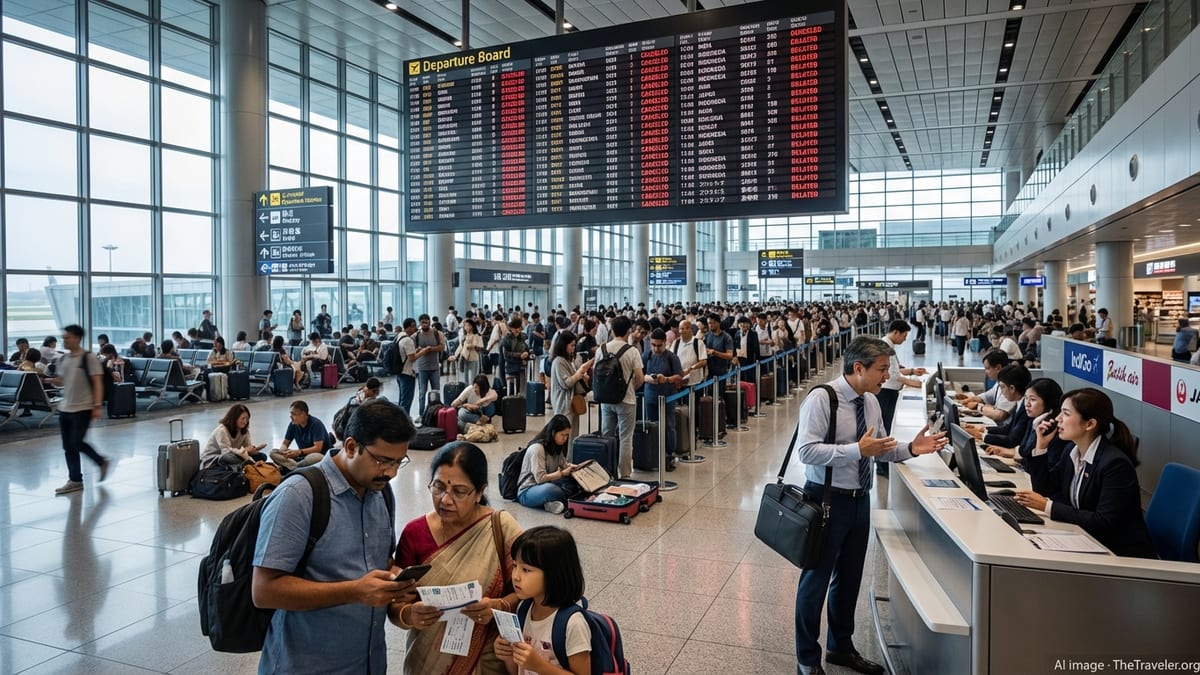
Thousands of passengers across Asia faced long queues, missed connections and overnight airport stays as more than 3,200 flights were delayed and over 130 were cancelled across Thailand, Japan, Singapore, China, India, Hong Kong and Indonesia, disrupting operations for carriers including Cathay Pacific, Japan Airlines, Air China and Air India at major hubs such as Bangkok, Beijing and Kolkata.
Get the latest news straight to your inbox!
Wide Ripple Effects Across Asia’s Busiest Corridors
Publicly available flight-tracking and aviation data indicate that the disruption has affected a total of 3,251 delayed services and 134 cancellations across the region, concentrating pressure on major hubs in Bangkok, Beijing, Singapore, Hong Kong, Delhi, Mumbai and Jakarta. The imbalance between delays and outright cancellations has contributed to extended congestion as aircraft and crew cycles fall further behind schedule rather than being reset with grounded services.
At Bangkok’s Suvarnabhumi Airport and Beijing Capital International Airport, departures and arrivals on regional trunk routes have borne the brunt of the disruption. Flights linking Thailand and China with Japan, India, Singapore and Indonesia are a critical part of Asia’s short and medium haul network, meaning problems in one country can quickly cascade across the rest of the system as aircraft fail to return in time for subsequent legs.
Reports from regional aviation outlets describe long lines forming at check in, manual processing replacing automated kiosks at times, and departure boards dominated by rolling delay notices. The pattern echoes earlier episodes in which operational strains, weather events or technical issues in one part of Asia created multi-day knock on effects for travellers several countries away.
Although the volume of cancellations remains lower than the tally of late departures, the number of affected flights is significant against a backdrop of steadily rising post pandemic demand on intra Asia routes. With more passengers transiting through hubs rather than flying point to point, even modest levels of disruption often translate into missed onward connections and forced overnight stays.
Flag Carriers Among Airlines Most Exposed
Schedule data and airline statements show that leading full service carriers have been among those most exposed to the current wave of disruption. Hong Kong based Cathay Pacific, Japan Airlines, Air China and Air India all operate dense regional networks that connect through their home hubs and into major cities such as Bangkok, Singapore and Jakarta, magnifying their vulnerability when delays strike on multiple routes simultaneously.
Hong Kong’s role as a connecting gateway between Northeast Asia, Southeast Asia and India means even a relatively small shift in on time performance can strand large numbers of passengers in transit. Publicly available information from recent disruption events in Hong Kong describes how technical or systems issues can quickly slow check in, boarding and baggage handling, forcing airlines such as Cathay Pacific to retime or consolidate flights and leaving travellers waiting for rebookings.
In China, Air China’s operations at Beijing Capital are similarly central to regional connectivity. Past disruption patterns captured by aviation trackers show that when Beijing experiences extended delays, services bound for Japan, India, Thailand and Singapore often depart late or are rerouted, with aircraft and crews arriving out of position for later flights. That dynamic appears to be repeating, contributing to the elevated delay figures now emerging across the wider region.
Indian flag carrier Air India, which has recently recorded a mix of technical issues and crew duty time constraints on certain routes, also faces compounding pressures when flights to and from regional hubs run behind schedule. Public reports on earlier incidents involving aircraft groundings in Kolkata and other cities highlight how safety rules on maximum crew working hours can force airlines to cancel or significantly delay flights once disruption crosses a certain threshold.
Bangkok, Beijing and Kolkata Under Particular Strain
Bangkok stands out as one of the most severely affected airports, with reports indicating large clusters of delayed departures to cities in Japan, China, India, Singapore and Indonesia. Suvarnabhumi’s role as a dual hub for both Thai carriers and foreign airlines means any operational congestion is quickly transmitted to international partners, including Cathay Pacific, Japan Airlines and Air India, which rely on coordinated timings for inbound and outbound connections.
Beijing has also emerged as a focal point. Previous episodes documented by regional media, including weather related restrictions and air traffic control constraints, have shown that Beijing’s high traffic density leaves limited room for recovery once schedules begin slipping. With China’s domestic and international traffic levels now closer to pre pandemic volumes, smaller disturbances can cascade into prolonged delays, especially on popular Japan, Southeast Asia and India routes.
In India, Kolkata has reported a noticeable uptick in disruption as part of the broader pattern affecting the country’s eastern and northeastern gateways. Publicly available coverage of earlier events at Netaji Subhas Chandra Bose International Airport illustrates how technical checks or aircraft groundings can disrupt tightly timed rotations to and from Southeast Asia, especially overnight and early morning departures that set the rhythm for the rest of the day’s schedule.
Other Indian airports, including Delhi, Mumbai, Bengaluru and Hyderabad, are also feeling downstream impacts as delayed inbound flights from East and Southeast Asia arrive late, shrinking turnaround windows and putting additional pressure on ground handling, security screening and immigration processing.
Knock On Disruptions for Singapore, Hong Kong and Indonesia
Singapore Changi and Hong Kong International, two of Asia’s most important connecting hubs, are contending with secondary effects as delayed aircraft and passengers flow in from disrupted points such as Bangkok and Beijing. Publicly available information from previous system outages and disruption days shows that both airports typically maintain relatively low cancellation rates, instead absorbing shocks through rolling delays, gate changes and manual processing.
In Singapore, major regional carriers including Singapore Airlines and various low cost operators depend on fast turnarounds on high frequency routes to Bangkok, Jakarta, Kuala Lumpur, Hong Kong and multiple Chinese cities. When upstream airports experience delays, these closely packed schedules leave less flexibility, a pattern that is mirrored in the current high number of late services compared with full cancellations.
Indonesia’s main international gateways, particularly Jakarta and Bali, are also recording higher numbers of delayed flights according to regional travel and aviation trackers. With Indonesia sitting at the southern edge of key routes linking India, Singapore, Thailand, Hong Kong and Japan, disruption on any of these corridors can produce bottlenecks as crews and aircraft struggle to return to base in time for domestic and onward departures.
For travellers, the practical effect is similar whether delays originate in China, India or Southeast Asia: extended waits at departure gates, reissued boarding passes, missed connections and difficulties securing accommodation at short notice. Social media posts and user generated travel reports from recent disruption days underline the scale of inconvenience, with passengers recounting hours long queues and uncertainty over rebooking options.
Passengers Advised to Prepare for Rolling Disruptions
Travel industry guidance emerging in response to the latest figures emphasizes preparation and flexibility rather than reliance on original schedules. Airlines across Asia typically encourage passengers to monitor real time status updates and to build in longer connection times when routing itineraries through busy hubs such as Bangkok, Beijing, Singapore, Hong Kong or Delhi, especially during peak travel periods and in seasons prone to adverse weather.
Publicly available advice from airline and airport information channels also highlights the value of early check in, ensuring that contact details are up to date in booking records, and using carrier apps where possible for notifications about gate changes, retimings or automatic rebookings. During widespread disruption, automated tools often process changes faster than airport counters, which can become overwhelmed by in person requests.
Analysts following Asia’s aviation sector note that the region’s rapid traffic recovery has outpaced infrastructure and staffing in some markets, leaving thinner margins for error when multiple operational challenges occur at once. The latest wave of 3,251 delays and 134 cancellations illustrates how interconnected the system has become, with issues in one country quickly echoing across others.
With travel demand expected to remain strong across 2026, passengers flying on Cathay Pacific, Japan Airlines, Air China, Air India and other regional carriers through hubs in Thailand, China, India, Singapore, Hong Kong and Indonesia are likely to face further disruption episodes. Planning for potential delays, choosing itineraries with more generous connection times and staying informed throughout the journey may help mitigate some of the impact when Asia’s skies grow congested again.