

More news on this day
Thousands of air travelers across Asia are facing hours-long waits, missed connections, and last-minute rebookings as fresh data points to more than 200 flight cancellations and over 3,000 delays in a single day, with major hubs in Thailand, Singapore, Saudi Arabia, China, India, and Malaysia reporting widespread disruption for carriers including AirAsia, Singapore Airlines, Saudia, IndiGo, and others.
Get the latest news straight to your inbox!
Major Asian Hubs Struggle With Wave of Disruptions
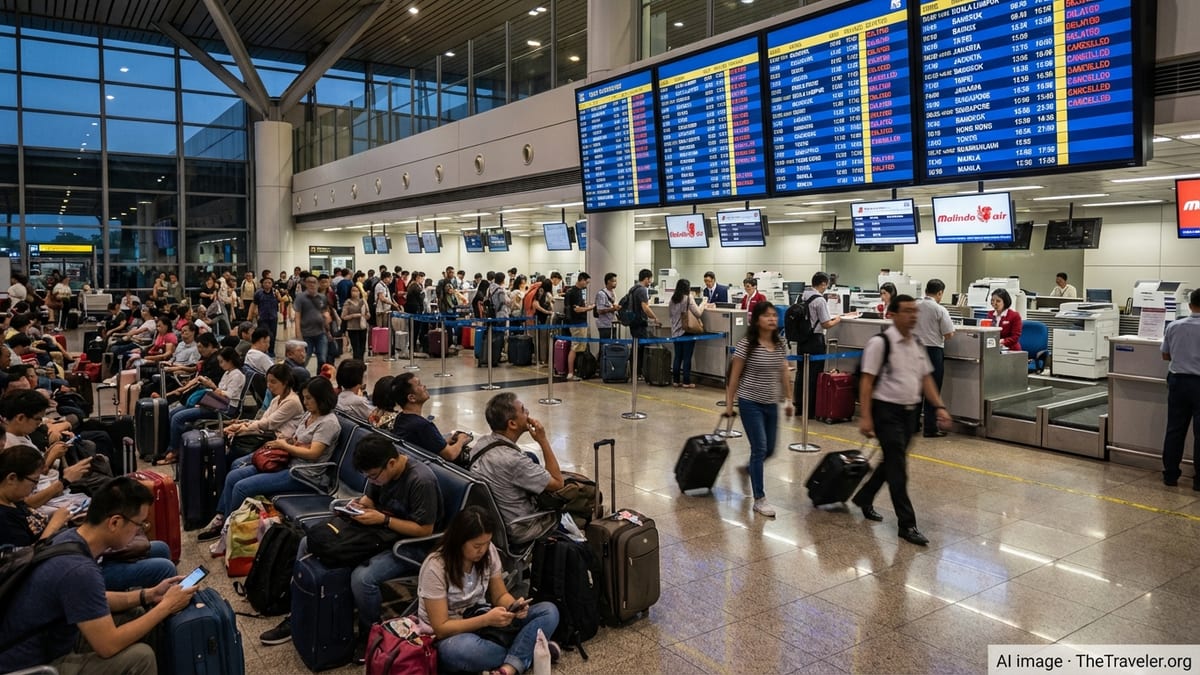
Recent operational data compiled from airport and aviation tracking services indicates that airports across Asia have collectively recorded about 203 cancellations and roughly 3,055 delayed departures and arrivals within a 24-hour period, underscoring the scale of current disruption. Reports from regional travel outlets describe terminal departure boards dominated by yellow and red status markers at major hubs, particularly during peak bank times.
Bangkok, Beijing, Delhi, Singapore, and key Gulf and Chinese gateways have been among the most affected, with congestion rippling from early-morning schedules into late-night services. In several cities, rolling delays rather than mass groundings have created a cascading effect, where aircraft and crew are out of position for subsequent rotations, compounding the impact on passengers throughout the day.
Publicly available on-time performance snapshots show similar patterns to other recent disruption days in Asia, where several thousand flights have run behind schedule across Tokyo, Hong Kong, Guangzhou, Incheon, and Singapore, alongside dozens to more than a hundred cancellations. This latest episode follows that trend, but with a distinct focus on Southeast Asia, India, and the Middle East-linked routes, tightening pressure on large regional low-cost and full-service airlines.
Travel-industry analysis notes that such concentrated disruption at multiple hubs on the same day significantly increases the likelihood of missed long-haul connections, as passengers moving between Europe, the Middle East, and Asia often rely on tight transfer windows in Bangkok, Singapore, and major Indian and Chinese cities.
AirAsia, Singapore Airlines, Saudia and IndiGo Bear the Brunt
The latest figures show that the operational stress is being felt across both low-cost and full-service networks, with AirAsia, Singapore Airlines, Saudia, IndiGo, and several Chinese and regional carriers all experiencing elevated disruption levels. AirAsia’s dense network within Southeast Asia and to secondary cities in China and India means even modest delays can ripple quickly, as aircraft typically operate multiple short sectors per day.
For Singapore Airlines, the current turbulence builds on an already challenging environment linked to ongoing airspace restrictions on some long-haul routes. Recent advisories published by the airline outline continued cancellations on services transiting the Middle East and schedule adjustments that reduce flexibility for absorbing new disruption elsewhere in the network.
Saudi Arabia’s Saudia is also navigating a complex operating landscape, as recent regional disruptions have periodically affected traffic flows through Riyadh and Dammam. Industry summaries of recent days show dozens of cancellations and delays at Saudi airports during peaks in regional tension, and any renewed operational challenges in Asia can further destabilize already tight long-haul rosters.
In India, IndiGo’s large domestic and regional footprint makes it particularly exposed when multiple hubs encounter weather, congestion, or airspace-related challenges at once. Publicly available coverage of recent disruption episodes has highlighted that Indian carriers can see several hundred cancellations and delays on peak stress days, especially when long-haul detours or temporary route suspensions are in effect.
Weather, Airspace Restrictions and Congested Skies Converge
Aviation analysts point to a combination of seasonal weather, lingering airspace closures in parts of the Middle East, and congested air traffic corridors over Asia as key contributors to the latest spike in delays and cancellations. Earlier this year, data from flight-tracking and passenger-rights platforms documented severe disruption across Asia-Pacific, with hundreds of cancellations and over two thousand delays tied to storms, monsoon rain, and typhoon activity affecting Thailand, Malaysia, and neighboring countries.
Parallel to weather-related issues, continued restrictions or partial closures of airspace in and around the Middle East have forced airlines to reroute many Europe–Asia flights via longer paths. Public analyses of these detours describe additional flight times of two to five hours on some routes, which can create crew duty-time constraints and knock-on delays for aircraft scheduled to continue to India, Southeast Asia, or China.
When these long-haul complexities intersect with already busy domestic and regional schedules, airports such as Bangkok, Delhi, and Beijing can quickly become bottlenecks. Even minor slot or ground-handling delays during peak periods can cascade across dozens of flights, turning what begins as a manageable schedule adjustment into an all-day disruption across multiple carriers and destinations.
Industry commentary suggests that while each operational day is shaped by a different mix of weather, technical, and geopolitical factors, the structural strain on Asian airspace and hub capacity is making the system more vulnerable to exactly the kind of widespread disruption observed in the current figures.
Passengers Face Missed Connections and Lengthy Airport Stays
For travelers, the immediate impact of 203 cancellations and more than 3,000 delays across the region is being felt in missed connections, long queues at transfer desks, and extended stays in crowded terminals. Reports from recent disruption days in Asia describe passengers in Bangkok, Singapore, and Delhi lining up for hours to rebook itineraries after inbound aircraft arrived too late to meet onward flights.
Long-haul passengers connecting between Europe and Asia via Gulf or Southeast Asian hubs are particularly exposed. With rerouted long-haul flights arriving later than scheduled, short transfer windows into regional services to cities such as Chiang Mai, Phuket, Kochi, or secondary Chinese destinations can evaporate quickly, forcing overnight layovers or significant detours.
Families and business travelers alike are also facing difficulties around baggage handling, as tight transfer times and last-minute rebookings increase the risk of luggage not following passengers onto new flights. Industry case summaries from recent months highlight that delayed baggage claims often spike in tandem with widespread schedule disruption, adding another layer of stress for already delayed passengers.
Travel-sector observers note that prolonged time in transit areas can translate into additional expenses for food, last-minute accommodation, and local transport, particularly at premium-priced hubs. For some travelers, the indirect costs of a missed connection can rival or exceed the price of the original ticket, especially when tours, cruises, or important business meetings are affected.
What Travelers Can Do If Their Flight Is Affected
Consumer-rights organizations and airline advisories published in recent weeks offer practical guidance for passengers caught in these disruption waves. The most consistent recommendation is to monitor flight status directly through airline apps or websites and airport information boards, rather than relying solely on email or text notifications that may arrive late when systems are under strain.
Many carriers in Asia now allow same-day or short-notice rebooking through digital channels when there is a significant schedule change, which can save hours that would otherwise be spent in airport queues. Some airlines also publish dedicated disruption pages listing affected flights and outlining options for refunds, travel credits, or free date changes during periods of exceptional operational stress.
Travel insurance policies vary widely, but published policy summaries often indicate that coverage may apply when flights are canceled or significantly delayed for reasons beyond the traveler’s control, such as severe weather or extended airspace closures. Passengers are encouraged to keep documentation of delays, additional expenses, and any written communications from airlines to support future claims.
Amid the latest wave of disruption spanning Thailand, Singapore, Saudi Arabia, China, India, and Malaysia, advisers consistently suggest building extra buffer time into itineraries involving critical connections, particularly when routing through Middle East or major Asian hubs. With data showing how quickly delays can multiply into hundreds or thousands of affected flights, cautious planning has become an essential part of flying across Asia in the current environment.