

More news on this day
Air travel across Asia faced another bruising day on April 4 as at least 65 flights were cancelled and 651 delayed at Shenzhen Bao’an, Jakarta Soekarno-Hatta and Beijing Daxing international airports, stranding passengers and compounding a wider regional disruption that has built through late March and early April.
Get the latest news straight to your inbox!
Knock-on Turmoil at Three Key Asian Hubs
Shenzhen Bao’an International Airport in southern China, Jakarta’s Soekarno-Hatta and Beijing Daxing emerged as focal points for fresh disruption, according to live tracking tallies and operational data compiled by aviation analytics platforms. Together, the three hubs recorded 65 cancellations and 651 delayed departures and arrivals, a concentrated spike that added further stress to already stretched airline schedules in the Asia-Pacific region.
Shenzhen Bao’an, a major base for both domestic Chinese and regional international services, registered clusters of late-running departures as aircraft and crews arrived out of position from earlier sectors. Publicly available operational statistics for Chinese carriers show that even relatively small waves of cancellations can rapidly magnify delays when airspace congestion and tight turnarounds leave little slack in the system.
At Beijing Daxing, which handles a growing share of Beijing’s domestic and international traffic, delay reports pointed to bottlenecks during peak morning and evening banks of flights. The airport has been promoted as a more efficient alternative to the capital’s older hub, but analysts note that its performance is still closely tied to air traffic management constraints affecting the broader Beijing region.
In Indonesia, Soekarno-Hatta International Airport near Jakarta saw a mix of domestic and regional routes affected. Public flight-status feeds showed extended holding patterns and late gate arrivals on services linking the capital with secondary cities such as Lombok and Palembang, as well as with regional hubs including Singapore and Doha, underlining how even localized disruption can quickly spill across borders.
Stranded Passengers Face Long Queues and Limited Options
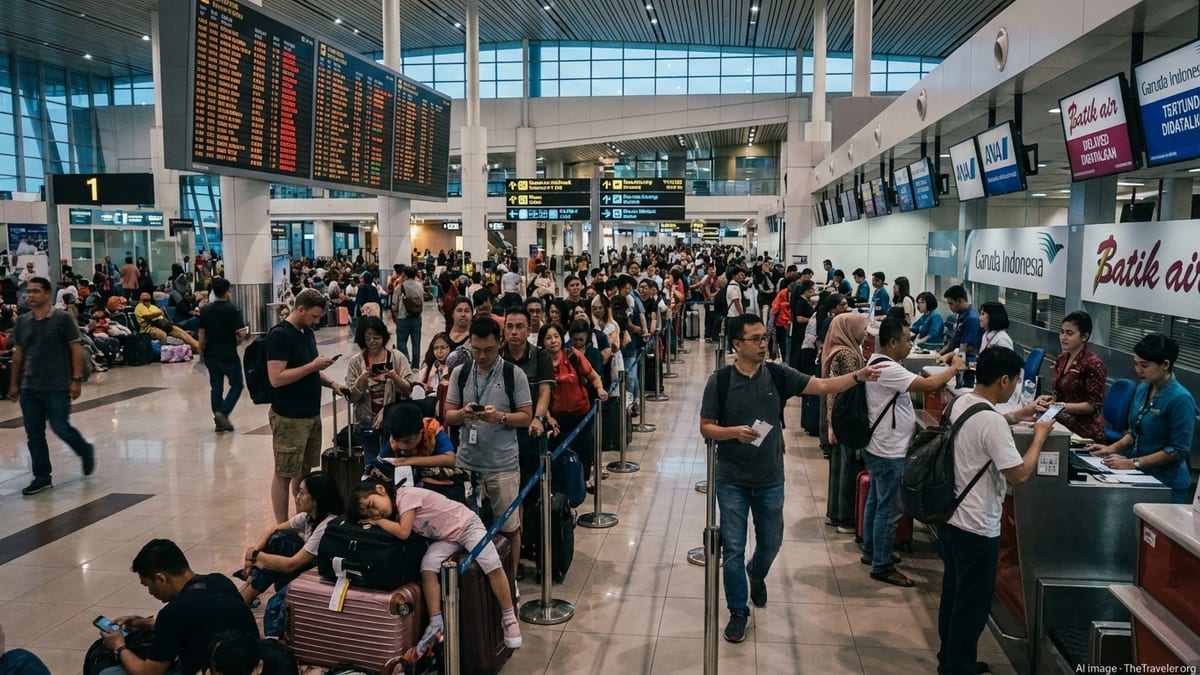
The uneven pattern of cancellations and rolling delays left travelers facing crowded terminals, long check-in and rebooking queues, and scarce same-day alternatives on popular routes. At all three airports, peak-time departures were particularly affected, reducing the ability of disrupted passengers to be re-accommodated on later flights.
Travelers transiting through Shenzhen and Beijing Daxing encountered additional complications when misaligned connections forced itinerary changes. China’s hub-and-spoke domestic network means a cancelled or heavily delayed flight into a hub often results in missed links to smaller cities, a dynamic that can strand passengers far from their intended destination even when only a modest number of flights are officially cancelled.
In Jakarta, Soekarno-Hatta’s role as Indonesia’s primary gateway magnified the impact for both domestic and international passengers. Those connecting between low-cost and full-service carriers, often on separate tickets, were especially vulnerable to missed onward flights, with published advice from travel forums and aviation specialists consistently warning that such self-connections carry little protection when disruptions occur.
Airport services also came under pressure. Reports from recent disruption events across Asia highlight recurring patterns of crowded boarding areas, limited seating, and fast-closing food and retail outlets as delays stretch into late evening. With many flights still operating but off schedule, terminal congestion can linger for hours after the initial operational trigger has passed.
Fuel Costs, Airspace Constraints and Weather Add to Pressure
While the immediate causes of the latest disruption varied by airport, the problems unfolded against a backdrop of rising operational pressures on Asian carriers. In Indonesia, publicly available information shows that domestic jet fuel prices jumped sharply from April 1, prompting renewed calls from airlines to adjust fare caps in order to cover escalating costs. Higher fuel prices can reduce the financial flexibility airlines have to add extra sections or reposition aircraft to recover from irregular operations.
Across China’s busy southern and eastern corridors, structural airspace constraints continue to limit routing options and recovery flexibility when weather or congestion hits. Commentaries from frequent flyers and industry watchers have long pointed to a pattern of holding and re-sequencing around Shenzhen and other major coastal hubs, with even routine thunderstorms triggering extended knock-on delays.
Regional disruption is also interacting with global factors. Recent analyses of Asia-Pacific schedules point to weakened growth expectations amid ongoing airspace closures and reroutings linked to geopolitical tensions in the Middle East. Longer flight times on some intercontinental routes, along with higher operating costs, have left less capacity in reserve to absorb shocks when multiple hubs experience problems on the same day.
At Beijing Daxing, seasonal weather volatility around the capital, ranging from spring winds to summer thunderstorms, frequently intersects with these systemic limitations. When arrival rates are reduced, prioritizing long-haul and banked connections can leave short-haul and regional flights more exposed to last-minute timing changes or cancellations.
Ripple Effects Felt Across Asia-Pacific Networks
The cancellations and delays recorded at Shenzhen, Jakarta and Beijing Daxing did not remain isolated events. According to data and analysis from independent aviation trackers, recent days have already seen hundreds of cancellations and thousands of delays across the broader Asia-Pacific region, with disruptions clustered around major hubs from Tokyo and Seoul to Bangkok, Riyadh and Dubai.
Network planners note that each cancelled sector removes not just a single flight but also the onward rotations that aircraft was scheduled to operate, creating a cascade that can take several days to unwind. This is particularly acute in early April, when airlines ramp up schedules for spring and early summer demand but have not yet fully activated seasonal spare capacity.
Passengers flying on multi-stop itineraries find themselves vulnerable to these hidden knock-on effects. A delay on a feeder leg into Shenzhen or Beijing may not immediately appear related to the situation in Jakarta, yet all three hubs sit inside overlapping regional networks where aircraft and crews criss-cross multiple countries each day. As a result, a bottleneck at any one of them can subtly degrade on-time performance across dozens of city pairs.
Industry observers suggest that, with regional operations still recalibrating after years of pandemic-related disruption and more recent geopolitical shocks, Asia’s air transport system has less resilience than before. Even moderate episodes of bad weather, technical restrictions or staffing shortfalls at a handful of hubs are now capable of creating a level of disruption that feels disproportionate to the initial trigger.
What Travelers Can Expect in the Coming Days
With schedules already crowded and several structural pressures unlikely to ease immediately, analysts expect intermittent disruption to persist across parts of the Asian network in the short term. Forecasts published by aviation consultancies indicate that cancellation rates at key hubs may remain above seasonal norms through much of April as airlines juggle higher fuel costs, shifting long-haul routings and strong demand.
For travelers, operational data and recent disruption patterns point to a continued premium on flexibility. Itineraries that rely on tight self-connections, late-night arrivals with limited backup options, or multiple stops across different carriers appear particularly exposed when airports like Shenzhen, Jakarta and Beijing Daxing experience further strain.
Consumer advocates and travel advisers routinely recommend that passengers monitor airline apps and flight-status tools closely in the 24 hours before departure, and consider building longer layovers into complex journeys. The recent wave of cancellations and delays at major Asian hubs underscores how quickly apparently routine travel days can unravel when several pressure points in the system are triggered at once.
In the meantime, today’s figures from Shenzhen Bao’an, Soekarno-Hatta and Beijing Daxing stand as another reminder that the region’s air travel recovery, while robust in headline passenger numbers, remains vulnerable beneath the surface. Until airlines and infrastructure providers can restore more operational buffer into schedules, episodes of concentrated disruption are likely to remain a recurring feature of flying in Asia.