

More news on this day
Global air travel is on track for a historic expansion, with long-range industry forecasts indicating that passenger demand could roughly double by around 2050, led by rapid growth in Asia Pacific and Africa as rising incomes, urbanization and new airport investments reshape the aviation map.
Get the latest news straight to your inbox!
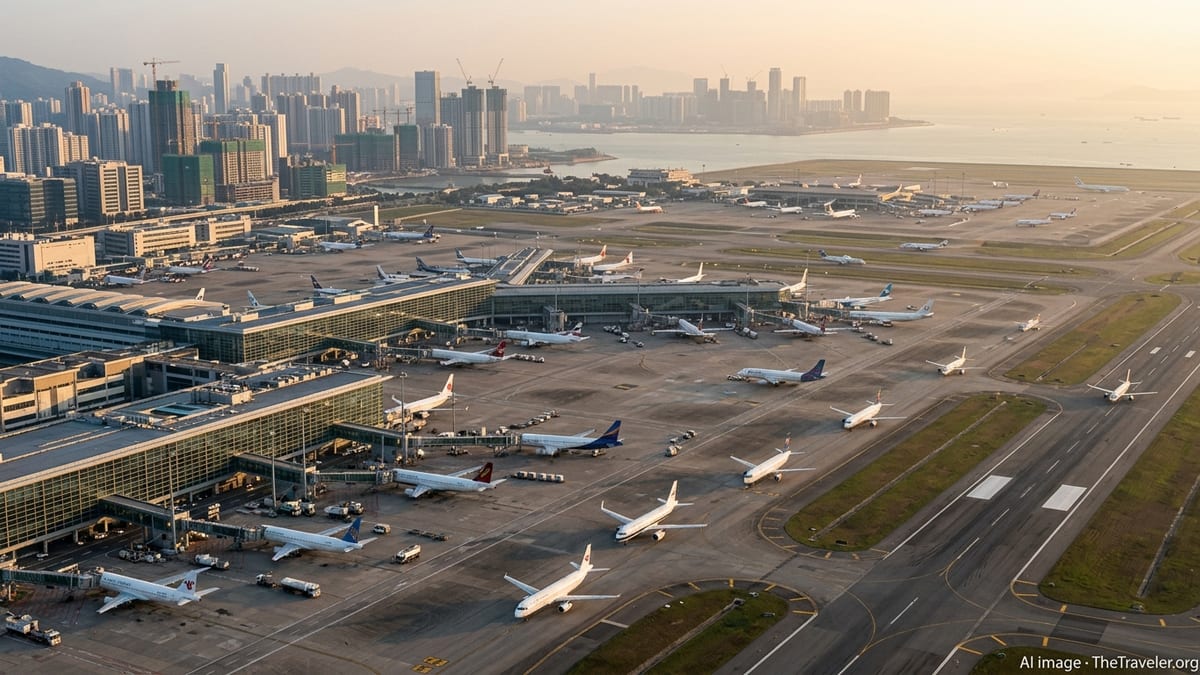
Global Demand Set to Double as Traffic Shifts East and South
Industry forecasts from major manufacturers and aviation bodies point to a long-term doubling of global air traffic over the next two decades, with much of that momentum extending toward mid-century. Airbus’ latest global market outlook projects average annual passenger traffic growth of about 3.6 percent through 2044, a pace that would result in a near doubling of the world’s commercial aircraft fleet and a substantial increase in total journeys taken.
Fresh long-term projections released by the International Air Transport Association in early 2026 indicate that global passenger traffic, measured in revenue passenger kilometres, could be around 2.1 times higher by the early 2040s than in 2019, effectively setting the path toward a doubling of demand as the industry approaches 2050. These outlooks underline a fundamental reshaping of where and how people fly, as the centre of gravity shifts toward emerging markets.
While mature markets in North America and Europe are expected to keep growing, forecasters highlight that Asia Pacific and Africa will register the strongest expansion rates. Capacity, aircraft deliveries and airport infrastructure are already being redirected toward these regions, reflecting expectations that hundreds of millions of first-time flyers will enter the market in the coming decades.
Asia Pacific Emerges as the World’s Aviation Growth Engine
Asia Pacific is consistently identified as the fastest-growing air travel region. Airbus’ recent services forecasts for the area, including China and India, anticipate passenger traffic growth of around 4.4 to nearly 5 percent annually through the mid-2040s, outpacing the global average and cementing the region’s status as aviation’s primary growth engine. The company estimates that Asia Pacific will require tens of thousands of new aircraft over the next 20 years, and that its aviation services market will more than double in value by the early 2040s.
Independent airport traffic outlooks echo this trend. Joint projections from Airports Council International and the International Civil Aviation Organization suggest that global passenger volumes will exceed 12 billion by 2030, with Asia Pacific providing a substantial share of that growth as domestic and regional networks in countries such as China, India, Indonesia and Vietnam continue to expand.
Demographic and economic fundamentals are driving this shift. The region combines rapidly growing middle classes with dense urban corridors and government-backed airport programs that are adding new capacity from mega-hubs to secondary city gateways. Recent updates on airport expansions in Southeast Asia and large-scale fleet orders across the region are seen as early steps in accommodating the next wave of travellers.
Africa’s Young Population Fuels a Late but Rapid Takeoff
Africa is expected to be the other major growth story, starting from a smaller base but expanding at some of the world’s fastest rates. Boeing’s recent commercial market outlook for the continent projects passenger traffic growth of around 6 percent per year through the mid-2040s, supported by rapid urbanization, a young and expanding population and increasing connectivity between African cities and global hubs.
These growth rates imply that Africa’s commercial fleet could more than double by the 2040s as airlines add capacity to serve both intra-African and intercontinental routes. Publicly available analyses highlight that links between Africa and Asia Pacific are set to be among the fastest-growing traffic flows, reflecting deeper trade, tourism and investment ties between the two regions.
Flag carriers and new entrants across Africa are positioning themselves to capture this demand through fleet renewal programs, hub development and expanded training pipelines. However, infrastructure funding, regulatory harmonization and safety oversight will remain critical variables in how quickly the continent can translate demographic potential into sustained aviation growth.
Infrastructure, Fleet and Workforce Strain on the Horizon
The projected doubling of passenger demand places intense pressure on physical and human infrastructure. Global market forecasts indicate that meeting mid-century travel needs will require a near doubling of the in-service commercial fleet, along with substantial investment in maintenance, training and air traffic management systems. Asia Pacific alone is expected to account for a large share of new aircraft deliveries, while Africa’s fleet will grow from a relatively small base but at high speed.
Airport capacity is another pinch point. Executive summaries from airport traffic forecast reports highlight that many of the world’s fastest-growing hubs are in Asia, where several major gateways are already planning new terminals, runways and city-linked rail connections. In Africa, planned expansions at key hubs and new greenfield airports are intended to prevent bottlenecks as traffic rises, but financing and execution risks remain.
Workforce development is emerging as an equally important constraint. Training organizations and regional aviation bodies in Asia Pacific have warned that pilot, technician and air traffic controller pipelines must expand significantly to keep pace with demand. Similar concerns are being raised in Africa, where skills shortages and brain drain could slow growth unless coordinated training and retention strategies are implemented.
Decarbonization and Policy Will Shape How Sustainable the Boom Becomes
The scale of projected growth in Asia Pacific and Africa also sharpens the focus on aviation’s environmental footprint. International climate commitments endorsed through the United Nations aviation framework set a long-term goal of net zero carbon emissions from international aviation by 2050, a target that will be tested as hundreds of millions of new passengers take to the skies in emerging markets.
Manufacturers and airlines are increasingly orienting long-term strategies around more efficient aircraft, higher use of sustainable aviation fuel and, eventually, new propulsion technologies such as hydrogen and hybrid-electric designs. Industry roadmaps suggest that Asia Pacific will be a crucial proving ground for large-scale deployment of these solutions, while Africa could benefit from direct investment in modern fleets and infrastructure that leapfrog older, less efficient technologies.
Policy choices will heavily influence outcomes. Analysts note that coordinated airspace modernization, incentives for cleaner fuels and transparent carbon pricing mechanisms can help manage the environmental impact of a booming sector. For governments in Asia Pacific and Africa, the challenge over the coming decades will be to capture the economic upside of soaring air travel demand while keeping congestion and emissions in check as the world approaches 2050.