

More news on this day
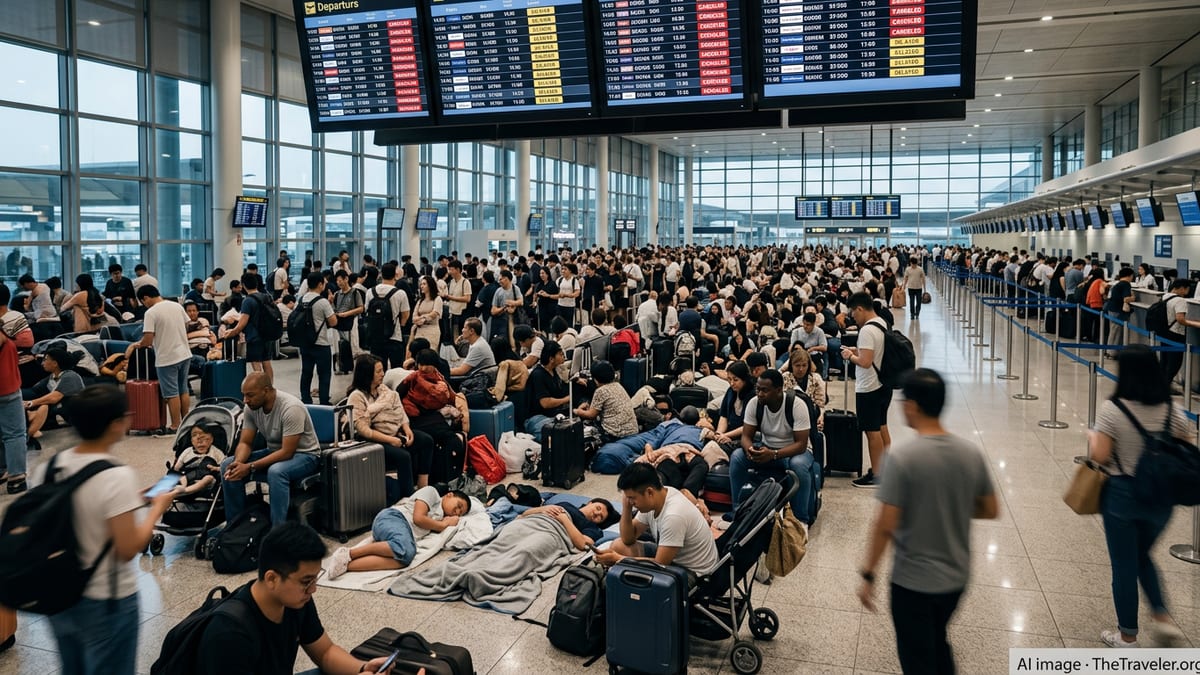
Asia-Pacific travelers are facing severe disruption as the closure of key Middle East airspace following US and Israeli strikes on Iran, and Iran’s subsequent retaliation, forces mass flight cancellations, marathon reroutes, and chaotic scenes at airports from Sydney to Seoul.
What Triggered the Middle East Airspace Shutdown
The current aviation turmoil stems from a sharp escalation in the Iran conflict that began on February 28, 2026, when US and Israeli forces launched coordinated strikes on targets inside Iran. Within hours, Iran responded with missile attacks across the Gulf, including strikes aimed at Qatar and areas around major transport hubs. Regional governments moved quickly to close or heavily restrict their skies to civilian traffic, citing the risk of further missile or drone attacks.
By March 1, authorities in Iran, Israel, Qatar, the United Arab Emirates, Bahrain, Kuwait, Syria, and Iraq had all imposed sweeping airspace closures or tight curbs on overflights. That decision effectively severed some of the world’s busiest east–west flight corridors, which normally channel traffic between Europe, the Middle East, and the Asia-Pacific. Aviation analytics firms report that thousands of flights to, from, and over the region have been canceled or diverted in just a few days, with cancellation rates at Gulf hubs soaring to crisis levels.
The Middle East acts as a giant aerial bridge between continents, and its sudden closure is reverberating across global networks. Airline planners who normally take days to rework schedules have been forced into minute-by-minute decisions, rerouting planes around a widening no-fly zone and scrambling to position aircraft and crew in unfamiliar patterns.
How Asia-Pacific Routes Are Being Rerouted or Cut
For Asia-Pacific passengers, the most immediate impact is on journeys that typically connect through the Gulf megahubs of Dubai, Doha, and Abu Dhabi, as well as through Bahrain and Kuwait. Travelers from Australia, New Zealand, Southeast Asia, and parts of East Asia often rely on these hubs for one-stop connections to Europe and North America. With large swathes of Middle East airspace shut, many of these one-stop itineraries have vanished overnight.
Major Gulf carriers have suspended the vast majority of their services, with only a handful of carefully coordinated flights operating on special approvals. Long-haul routes between the Asia-Pacific and Europe that once tracked efficiently over Iran and the Gulf are being pushed far north over Central Asia or south via the Indian Ocean and East Africa, adding hours of flying time and creating new bottlenecks at alternative hubs. Airlines in India, Southeast Asia, and East Asia are trimming schedules that rely on Middle Eastern overflight rights, while selectively operating recovery flights on longer, more fuel-intensive paths.
In Australia and across the Pacific, passengers have reported aircraft turning back mid-journey or diverting to South Asian and North African airports as airspace closures came into force mid-flight. Those still planning travel are finding that traditional Gulf transits are either unavailable or subject to last-minute changes, forcing a switch to routings via Singapore, Bangkok, Kuala Lumpur, Hong Kong, Tokyo, or European gateways that can be reached without crossing the conflict zone.
Airports Under Strain and the Scale of the Disruption
The figures emerging from aviation data providers underline the scale of the shock. On some days since the strikes, more than 40 percent of scheduled flights to the wider Middle East have been canceled, with cancellation rates at times exceeding three-quarters of all operations in Bahrain, Qatar, and the UAE. That has left major hubs such as Dubai International, Doha’s Hamad International, Abu Dhabi’s Zayed International, and Manama’s Bahrain International effectively frozen for regular transit traffic, even as they struggle to care for stranded passengers already in terminals.
Knock-on effects are rippling across Asia-Pacific airports that normally feed those hubs. In Mumbai and Delhi, large crowds have formed around airline counters after Indian carriers suspended or drastically reduced services using Middle East airspace. In Sydney, Melbourne, and Brisbane, departure boards have filled with cancellations and delays for Europe-bound flights that once flowed through the Gulf, while in Singapore and Kuala Lumpur, airlines are battling to accommodate diversion traffic and last-minute rebookings.
Some airports far from the conflict are emerging as emergency relievers. Cairo, for example, has seen a surge in diverted long-haul flights seeking a safe operational base and available gates. In the Asia-Pacific, secondary hubs with spare capacity are handling additional services as airlines try to rebuild fragmented networks. The result is a patchwork of ad hoc routings that change from day to day, making it extremely difficult for passengers and even travel agents to predict which journeys will operate as scheduled.
What Airlines Are Doing for Stranded and Future Passengers
Airlines across the Asia-Pacific are rolling out special waivers, refund policies, and flexible rebooking options as they grapple with the operational and financial shock. Several Indian and Southeast Asian carriers have announced fee-free date changes and full refunds for customers booked on routes that require overflight of the affected Middle East corridors, extending flexibility windows into mid-March to cover the immediate uncertainty. Major Gulf carriers have similarly offered free rebooking and vouchers for canceled flights, while warning that recovery operations will take time once airspace restrictions begin to ease.
Carriers are also running limited rescue or recovery flights where safety and approvals permit, focusing on bringing home citizens and residents stranded at hubs like Dubai and Doha. These services often operate on circuitous routings that avoid closed airspace, with extended flight times and tightly capped passenger numbers due to fuel and crew constraints. Some Asia-Pacific airlines are temporarily redeploying widebody aircraft from lightly used regional routes to support these recovery missions and to shore up alternative long-haul paths via Europe, Central Asia, or the southern Indian Ocean.
Behind the scenes, airline operations centers are working around the clock, recalculating flight plans to account for longer distances, higher fuel burns, and congested alternative corridors. That complexity, coupled with evolving regulatory advisories, means schedules remain highly provisional. Even confirmed bookings can change on short notice, and travelers are being urged to keep contact details current and monitor airline communications closely in the days ahead.
Advice for Asia-Pacific Travelers With Upcoming Trips
For Asia-Pacific passengers who have yet to start their journeys, the most important step is to confirm whether their itinerary crosses the affected region, either via a transit hub or overflight. Travelers with existing bookings through Gulf airports or on routes that typically pass over Iran, Iraq, or the wider conflict zone should expect disruption and consider requesting alternative routings, even if their flights have not yet been formally canceled. Many airlines and travel agents are now prioritizing rebookings onto services that route via East Asia, South Asia’s southern corridors, or European hubs reachable without traversing the closed airspace.
Passengers already en route or stranded at intermediate points should prepare for longer-than-expected delays and overnight stays. Travel experts recommend carrying essential medications in hand luggage, keeping digital copies of key documents readily accessible, and maintaining flexible hotel and ground-transport arrangements at destination. With call centers under heavy strain, airlines are increasingly using apps and direct messaging to push real-time updates and rebooking options; staying responsive to those notifications can make the difference in securing a scarce seat on a recovery or rerouted flight.
Governments across the Asia-Pacific, including in Australia, India, Japan, and Southeast Asian nations, have issued or updated travel advisories urging citizens to avoid non-essential travel that requires transiting the Middle East. Consular services are focusing on assisting nationals who are stranded or whose visas and onward connections are affected by the turmoil. Until there is a durable de-escalation in the conflict and a coordinated reopening of regional skies, Asia-Pacific travelers should brace for a period of prolonged uncertainty on some of the world’s most important long-haul routes.