

More news on this day
The café at Asia Supermarket in south Belfast is preparing to close after seven years of trading, a move that reflects growing pressures on small hospitality operators and raises fresh questions about how changing retail patterns are affecting both tourism and everyday community life in the city.
Get the latest news straight to your inbox!
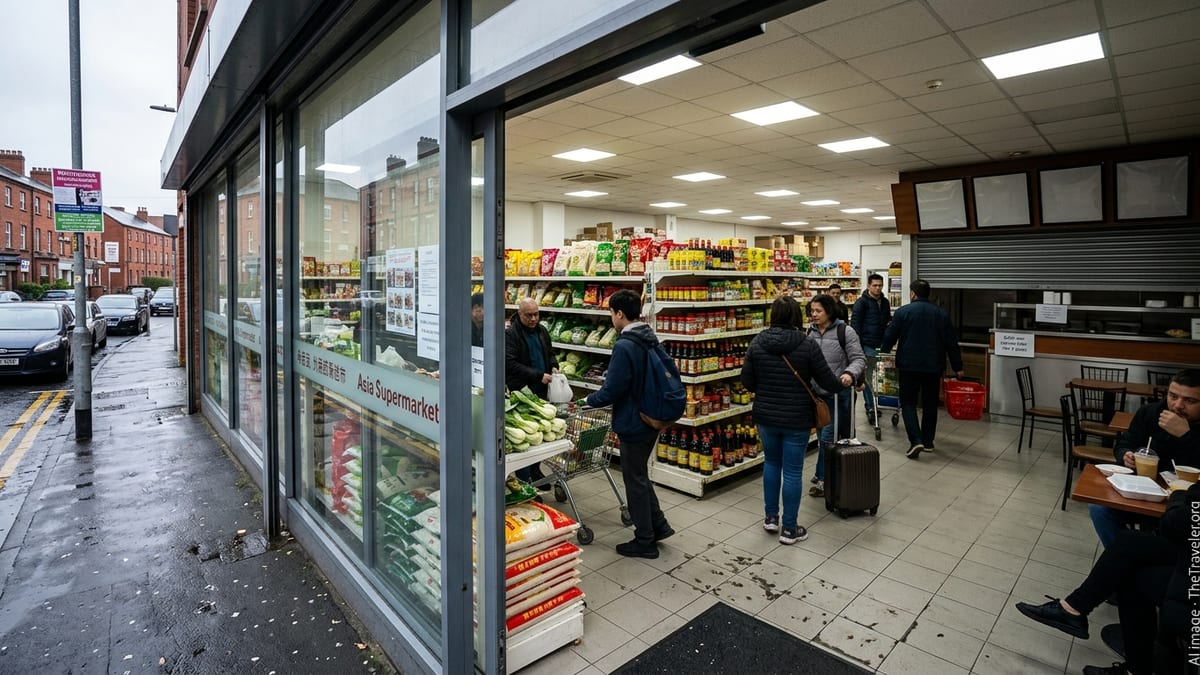
A Beloved Stop Inside a Growing Retail Landmark
Asia Supermarket, located on the city’s south side, has developed over the past decade into one of Belfast’s best known international food retailers, drawing shoppers from across Northern Ireland and visiting tourists seeking specialist ingredients. Publicly available information shows that the in-store café has operated as an extension of that experience, offering hot dishes and snacks that allowed visitors to sample Asian cuisines before filling their baskets.
Reports indicate that the café will now cease trading after seven years, even as the wider supermarket operation continues. For regulars who combined a grocery trip with a sit-down meal, the change marks the end of a familiar routine. For first-time visitors, it removes a casual, low-barrier way to experience regional dishes that might otherwise feel unfamiliar.
The closure comes at a time when food-led retail environments have become an important part of how cities market themselves to visitors. In Belfast, guide material produced for students and tourists has in recent years highlighted Asia Supermarket as a distinctive destination, and the café’s menu helped underpin that reputation by turning a shopping trip into a more rounded cultural encounter.
Economic Pressures Converge on Small Hospitality Operators
Across the United Kingdom and Ireland, cafés and small restaurants have reported mounting pressure from higher energy bills, food price inflation and increased wage costs. Coverage of the hospitality sector over the past two years points to a pattern of independent venues closing or scaling back, even when footfall appears strong, as margins shrink and long-term investment becomes more difficult.
In this context, the decision to close the café section at Asia Supermarket aligns with broader trends rather than standing as an isolated case. Industry commentary over recent months has noted that many operators embedded in retail environments are reassessing whether in-house dining still justifies the space and staffing it requires, particularly when supermarkets and food halls are expanding their takeaway and ready-meal ranges.
While no detailed financial breakdown has been made public, the timing of the café’s closure after seven years suggests the end of a lease or review period that coincides with higher operating costs. Observers of the local food scene have also pointed to shifting customer habits, with more people opting for quick grab-and-go options instead of sitting down for a full café meal during a shopping trip.
Impact on Tourism Appeal and Visitor Experience
South Belfast has increasingly promoted its food culture as part of a wider tourism offer that includes live music, riverside walks and heritage attractions. Asia Supermarket’s café played a role in that narrative by giving visitors an accessible way to taste dishes from East and Southeast Asia without leaving the supermarket building, often at lower prices than full-service restaurants.
Travel guides and university orientation materials have frequently mentioned the store as a point of interest for newcomers, especially international students and short-stay visitors staying in guesthouses and hotels nearby. The café’s closure removes a sit-down venue that bridged the gap between everyday grocery shopping and a more curated culinary experience, potentially shortening the amount of time visitors spend in the area.
The change may also affect how tour operators and informal city guides plan their routes. While the supermarket itself remains a draw, the absence of a café makes it less convenient as a mid-day stop where groups can both explore the aisles and take a break over hot food. Instead, visitors may be directed to alternative cafés on nearby streets, subtly shifting footfall patterns and spend away from the supermarket complex.
A Cultural and Social Space for the Local Community
Beyond its role in tourism, the café has functioned as a social hub for local residents and members of Belfast’s diverse Asian communities. Public commentary over the years has described it as a place where students met between lectures, families gathered after weekend grocery runs and workers from nearby offices sought out affordable lunches that offered more variety than standard high street options.
The setting, directly within an international supermarket, helped normalise ingredients and dishes that might once have been considered niche. Diners could try a noodle soup or rice dish in the café and then walk a few steps to find the exact sauces, spices or vegetables used to recreate it at home. With the café closing, that immediate feedback loop between eating and shopping will be harder to replicate.
Local observers note that the loss of such informal gathering spaces can have an outsized impact on everyday social life, particularly in districts where rising commercial rents make it difficult for independent cafés to survive. While other coffee shops and restaurants operate nearby, they may not provide the same combination of cultural familiarity, language comfort and menu variety that regulars found inside Asia Supermarket.
What the Closure Signals for South Belfast’s Food Landscape
The decision to shutter the café while keeping the core supermarket open highlights how operators are prioritising essential retail over discretionary hospitality offerings. Analysts of retail trends suggest that large-format grocery stores are increasingly focused on streamlining their operations, concentrating on high-turnover aisles and flexible product lines rather than fixed café spaces that can be costly to maintain.
For South Belfast, the café’s exit raises broader questions about how the district can retain its reputation for accessible, multicultural food experiences. New ventures may yet emerge to fill the gap, whether in the form of street-food concepts, pop-up kitchens or partnerships with nearby restaurants. However, these models may not fully reproduce the spontaneity and convenience of a café located at the heart of a busy supermarket.
As Asia Supermarket adjusts its offer, residents and visitors are likely to watch closely for signs of how the freed-up space will be used. Whether it becomes additional shelving, a takeaway counter or a new type of service area, the decision will signal how the business views changing customer priorities in a post-pandemic retail environment. For many in the community, the hope is that the spirit of culinary discovery that defined the café’s seven-year run will continue to shape whatever comes next.