

More news on this day
Luxury cruise lines are knitting Asia and Alaska together in new ways for 2026, unveiling transpacific itineraries that combine Japanese ports, glacier country and resort-style ships into one sweeping ocean journey.
Get the latest news straight to your inbox!
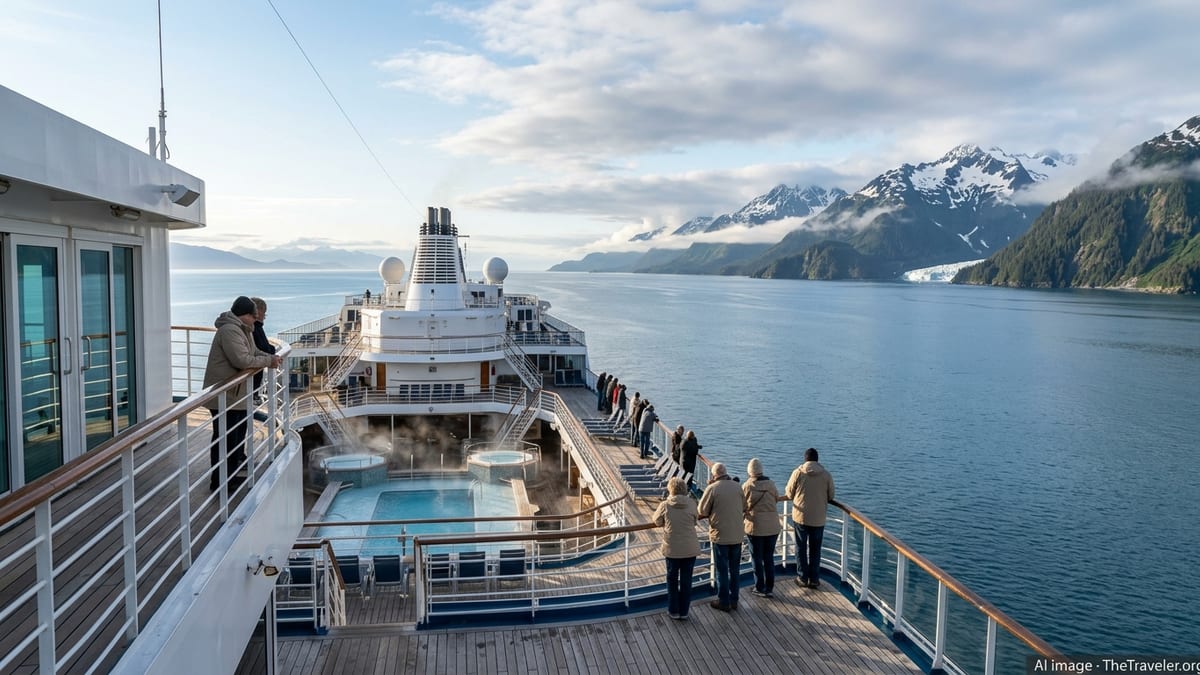
Epic Transpacific Routes Link Tokyo, Vancouver and the Inside Passage
For 2026, premium and luxury cruise operators are leaning into longer, one-way sailings that span the North Pacific, connecting hubs such as Tokyo and Vancouver with Alaska’s Inside Passage. According to published itineraries, new and extended “grand voyages” and repositioning cruises are being marketed as an alternative to traditional roundtrip Alaska routes, inviting guests to cross the International Date Line and experience two continents in a single trip.
Travel trade listings highlight multi-week sailings that depart from Canadian and U.S. West Coast ports, call at Alaska’s marquee glacier regions and frontier towns, then continue on to Japan and wider Asia. A June 2026 voyage by Crystal Symphony, for example, is scheduled to move from northern Japan across the Pacific to Alaska before reaching Vancouver, blending coastal Japan with classic Alaska scenery in one itinerary. Other planners promote Canada to Japan grand cruises in late summer 2026 that similarly tie together Vancouver, Alaskan fjords and Japanese ports on a single continuous route.
These itineraries are being positioned as “once-in-a-lifetime” journeys for well-traveled guests who have already sampled standard seven-day Alaska cruises. Instead of repeating a single region, the new routes promise a narrative arc that begins in the temples and neon of East Asia, continues through glacier-carved channels where the Pacific meets the Arctic, and concludes in cosmopolitan Pacific Northwest cities.
Glacier Adventures Meet Deep-Dive Japan and Southeast Asia
Published schedules show that many 2026 grand voyages and extended Asia programs are structured around two pillars: intensive glacier and wildlife viewing in Alaska, and in-depth cultural calls in Japan and Southeast Asia. Marketing materials from major North American cruise brands describe days spent tracing tidewater glaciers and searching for whales in Alaska before swinging across the Pacific to explore pagodas, night markets and UNESCO-listed temples.
Holland America Line’s 2026 grand voyage program, for example, has been refreshed to include additional time in Asia before or after a Pacific crossing, with segments that can be booked independently for guests focused on particular regions. Public brochures indicate that guests may join segments that include multiple Japanese ports followed by a transpacific leg that ultimately reaches Alaska and the North American West Coast. The structure effectively turns Alaska’s glacial landscapes into one chapter in a wider circumnavigation of the Pacific Rim.
On the Asia side, cruise lines are layering in more overnight or late-night calls in cities such as Tokyo and Singapore, along with extended itineraries in Southeast Asia for late 2026 and early 2027. Announcements for Royal Princess deployments, for instance, highlight that the ship will conclude its Alaska season in September 2026 before shifting into Southeast Asia, underscoring how vessels now shuttle seasonally between glacier cruising and tropical city-hopping. This pattern allows guests to stitch together back-to-back segments that move from Alaska’s fjords to Asian metropolises in one extended journey.
Floating Resorts: Suites, Spas and Culinary Programs at Sea
Alongside more ambitious routing, the 2026 Asia-to-Alaska offerings are emphasizing hardware. Newer and recently refurbished ships are being marketed less as basic transport and more as floating resorts, with a strong focus on suites, wellness facilities and destination-led dining. Promotional images from lines that dominate both Asia and Alaska show multi-story glass atriums, wraparound promenade decks and expansive spa complexes designed to turn sea days into a core part of the experience.
In the luxury and upper-premium segments, publicly available information highlights all-suite or suite-heavy ships operating selected transpacific crossings. These vessels typically feature large balconies positioned for glacier viewing, thermal spa areas with floor-to-ceiling windows, and specialty restaurants that shift menus as ships move from Japanese waters to the Alaskan coast. Wine programs, sake tastings and menus built around seasonal Alaskan seafood are increasingly framed as a way to link onboard life with the regions outside.
Even on larger contemporary ships, cruise lines are carving out ship-within-a-ship zones featuring private lounges, upgraded cabins and dedicated concierges. These areas are being pitched to Asia-to-Alaska guests who want resort comforts during long stretches at sea between port-intensive segments. As itineraries lengthen to 20 nights or more, operators appear keen to ensure that the onboard product feels comparable to a high-end land resort, rather than a simple means of reaching glacier viewpoints.
Alaska’s Classic Highlights, Recast for Longer Voyages
Despite the expanded geography, Alaska itself remains the emotional centerpiece of many 2026 transpacific sailings. Cruise line brochures for upcoming seasons continue to feature marquee experiences such as Hubbard Glacier, Glacier Bay National Park, the fjords around Juneau and the wildlife-rich channels near Ketchikan. These are promoted alongside chances to see bears, humpback whales and bald eagles, with itineraries often timed for peak wildlife viewing between late spring and early autumn.
What is changing is how Alaska is framed within the overall journey. Instead of being the sole focus of a one-week vacation, it increasingly serves as a dramatic middle act. Travelers might board in Japan after visiting shrines and cherry-blossom viewpoints, then sail into Alaska’s cool, misty fjords for glacier viewing and wilderness excursions before continuing on to the Pacific Northwest. Some world and grand Pacific voyages published for 2026 extend even further, sending ships down the West Coast toward California, Central America and the Panama Canal after Alaska, transforming the glacier segment into a highlight within a multi-continent loop.
This repositioning also supports more flexible booking patterns. Many grand voyages can be broken into shorter segments, so guests who only want the Asia-to-Alaska section can disembark in Vancouver or Seattle, while others remain aboard for additional legs. The result is a spectrum of options, from focused 10- to 14-night sailings that link Alaska with select Asian ports, to multi-month cruises where Alaska is one stop among dozens.
New Demand Drivers and Booking Considerations for 2026 Travelers
Travel advisors report rising interest in 2026 departures as lines open bookings further in advance for complex itineraries. Discussions in consumer travel forums suggest that experienced cruisers are targeting Asia-to-Alaska routes to “level up” after standard Inside Passage trips, often booking balconies or suites specifically to maximize glacier and open-ocean views. Longer lead times are encouraged in official planning guides, which note that Alaska cabins with prime sightlines can sell out quickly, particularly during school holidays and peak wildlife periods.
At the same time, changes in deployment patterns indicate that some ships traditionally dedicated to Alaska are being reassigned or repositioned as companies rebalance their global fleets. Public schedules for Norwegian Sun, for instance, show that the vessel will cease sailing Alaska itineraries from Seattle from 2026 onward, while other brands introduce or expand Asia programs that dovetail with Alaska seasons on different ships. This underscores how Asia-to-Alaska crossings are part of a broader strategic shift, with lines seeking to connect high-demand regions and keep ships earning year-round.
For travelers, the emerging 2026 landscape means more choice at the top end of the market, but also a need for careful comparison. Key differentiators include the number of glacier days, whether itineraries feature Inside Passage scenic cruising, the mix of Japanese and Southeast Asian ports, and the level of onboard inclusions such as specialty dining or shore excursion credits. With bookings for 2026 and even 2027 already open across many brands, Asia-to-Alaska luxury cruises are positioned to be one of the most talked-about segments in long-haul ocean travel over the next two years.