

More news on this day
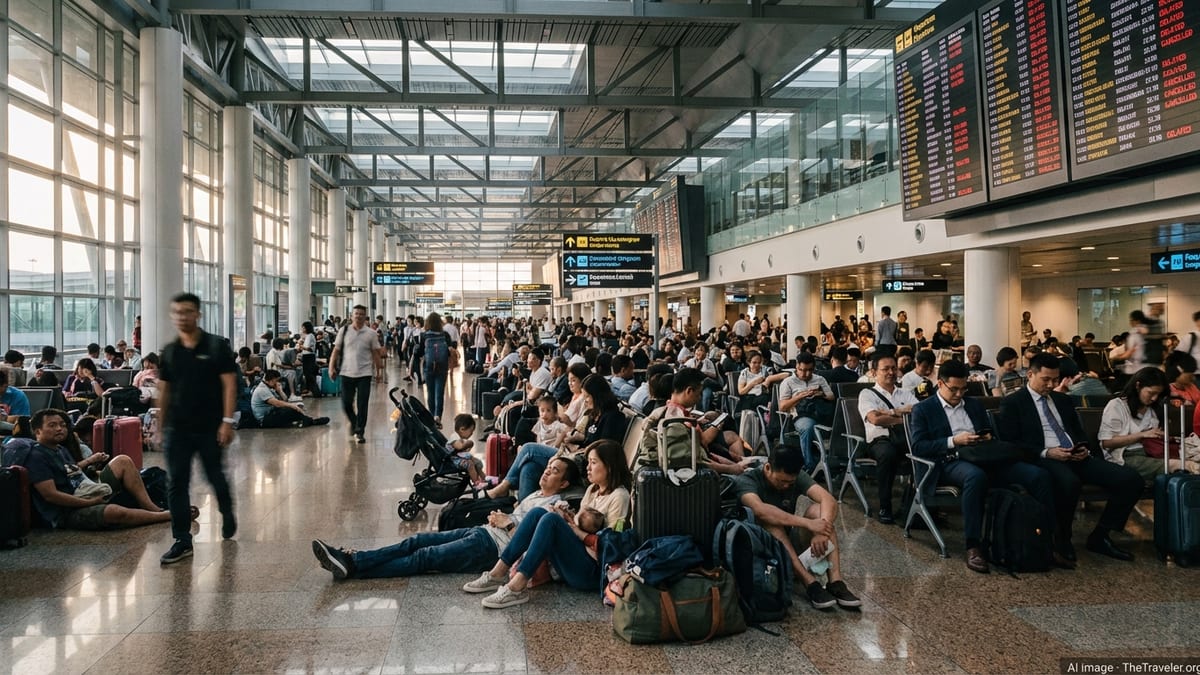
Passengers across Asia faced mounting disruption today as 57 flights were cancelled and 576 delayed at major hubs including Beijing Daxing, Chengdu Tianfu, Guangzhou Baiyun, Shanghai Hongqiao, Jakarta and Bali, snarling regional and long haul travel plans.
Get the latest news straight to your inbox!
Ripple Effects From China’s Crowded Skies
China’s busy aviation network once again formed the epicentre of the disruption, with publicly available operational data indicating clusters of cancellations and delay-heavy traffic patterns at Beijing Daxing, Chengdu Tianfu and Guangzhou Baiyun. These hubs handle a dense mix of domestic routes alongside regional connections into Southeast Asia, Japan and the Middle East, making them especially vulnerable when schedules slip.
Beijing Daxing and Chengdu Tianfu have reported higher than usual delay volumes in recent months, reflecting both strong passenger demand and tight turnarounds for aircraft. When a relatively small number of flights are cancelled outright, knock-on effects can quickly cascade across connecting banks of services. The latest figures, showing multiple cancellations combined with dozens of late departures and arrivals at each airport, are consistent with this pattern.
Guangzhou Baiyun, a major base for China Southern Airlines and a key gateway between mainland China and Southeast Asia, has also been operating with a delay-dominant profile. Reports indicate that even when the number of cancellations is limited, congestion on taxiways and in airspace around Guangzhou can push minor schedule slips into hour-long waits at gates, forcing some passengers to miss subsequent connections.
These three hubs play a central role in China’s domestic and international connectivity. Disruption at all of them on the same day magnifies the impact far beyond their own departure boards, adding stress to already tight network planning and leaving travelers from secondary Chinese cities struggling to rebook.
Jakarta And Bali Add To Southeast Asia Gridlock
In Southeast Asia, Jakarta’s Soekarno Hatta International Airport and Bali’s main international gateway in Denpasar contributed significantly to the regional disruption. Both airports are key nodes for leisure and labor traffic, linking Indonesia with China, Australia, the Middle East and other ASEAN states. When operations slow in Indonesia at the same time as in China, the result is an extended chain of missed connections and forced overnight stays for travelers relying on multi segment itineraries.
Jakarta often experiences pressure on its runways and terminals during peak periods, with weather, ground handling capacity and congestion around immigration all cited in recent coverage as recurring stress points. With delays now stacking up on routes feeding to and from China, even modest operational issues can translate into longer holding patterns and late departures.
Bali International Airport faces its own set of challenges. The destination’s popularity with regional tourists and long haul visitors means daily traffic remains intense outside of traditional holiday peaks. Occasional weather related disruptions and limited room for rapid expansion compound the pressure. When a cluster of flights is cancelled or pushed back, as indicated in today’s figures, resort transfers, cruise departures and inland travel schedules are all affected.
For many passengers, Bali or Jakarta are only one leg of longer trips that might include stopovers in Singapore, Kuala Lumpur or Hong Kong. The current wave of delays is therefore being felt not just in Indonesia but across a broad swath of the Asia Pacific network.
Shanghai Hongqiao And Regional Connectivity Strain
Shanghai Hongqiao, which primarily handles domestic Chinese flights alongside limited regional services, has also recorded a notable share of the cancellations and delays. The airport is a vital connector between China’s economic heartland and cities across the country, and it feeds international departures from nearby Shanghai Pudong as well as from Guangzhou and Beijing.
When delays mount at Hongqiao, passengers heading for international services via other hubs can quickly lose their onward flights. Publicly available flight tracking patterns show that a delay of even 45 minutes on busy domestic sectors from Shanghai is often enough to break carefully planned minimum connection times at onward hubs.
The latest disruption comes against a backdrop of strong demand for travel into and out of Shanghai, following a sustained recovery in domestic tourism and business trips. Airlines have been operating close to capacity on many trunk routes, reducing their ability to absorb irregular operations without resorting to cancellations or extensive re timing of flights.
With Hongqiao functioning as a key spoke for both Beijing and Guangzhou networks, the current problems there tighten the bottleneck across the entire eastern China corridor, affecting passengers who may never set foot in Shanghai but rely on its connectivity.
Thousands Of Passengers Facing Missed Connections
Across the affected airports, the combined tally of 57 cancellations and 576 delays reflects a disruption pattern in which late running flights greatly outnumber outright cancellations. This dynamic typically leads to terminals crowded with waiting travelers, as aircraft and crews remain in circulation but fail to meet scheduled departure times.
Travel and aviation tracking outlets report that in similar recent disruption events around Asia, the majority of impacted passengers were not those whose flights were cancelled altogether, but those who lost critical onward connections or arrived many hours late at their final destinations. The current situation appears to be following the same pattern, with missed links at large hubs adding to the overall total of stranded travelers.
Passengers on itineraries involving more than one Asian hub are particularly exposed. A delay departing Beijing Daxing can cause a missed connection in Guangzhou, while a late arrival into Jakarta or Bali can in turn jeopardize onward flights to Australia or domestic Indonesian destinations. Airlines then need to find spare seats on already busy services, prolonging the disruption for some travelers into the following day.
Airports and carriers across the region have been encouraging passengers to monitor flight status closely and to allow extra time between connections, especially when itineraries involve multiple Chinese gateways or busy leisure points such as Bali. However, many bookings made months in advance still reflect tight transfer windows that leave little margin for the kind of rolling delays now being recorded.
Underlying Pressures On Asia’s Aviation Recovery
The latest wave of delays and cancellations highlights the fragile balance underpinning Asia’s wider aviation recovery. Traffic across the region has climbed rapidly as border controls eased and pent up demand for both tourism and corporate travel returned. Yet airport infrastructure, air traffic control capacity and airline staffing levels have not always kept pace with this rebound.
Published analyses of recent operational data across Asian hubs indicate that many airports are operating close to their practical capacities during peak hours, with limited slack to absorb severe weather systems, technical issues or sudden airspace restrictions. In such an environment, even a localised issue at one hub can transmit quickly to others via shared aircraft, crew rotations and connecting passenger flows.
Carriers serving Beijing Daxing, Chengdu Tianfu, Guangzhou Baiyun, Shanghai Hongqiao, Jakarta and Bali have already been adjusting schedules, upgauging aircraft and revising turnaround procedures to cope with strong demand. The current disruption suggests that those measures, while helpful, may not be sufficient to fully stabilise operations during the busiest travel periods.
For travelers, today’s cancellations and delays serve as a reminder that Asia’s air travel landscape remains vulnerable to sudden shocks. Flexible itineraries, longer connection times and comprehensive travel insurance are increasingly seen as prudent steps when navigating a region where growth in demand continues to test the limits of existing aviation infrastructure.