

More news on this day
Air travel across Asia faced intense disruption today, with more than 600 flights cancelled or heavily delayed at major hubs from Tokyo and Seoul to Singapore, Hong Kong and key Chinese cities, leaving thousands of passengers grappling with long queues, missed connections and uncertain onward travel plans.
Get the latest news straight to your inbox!
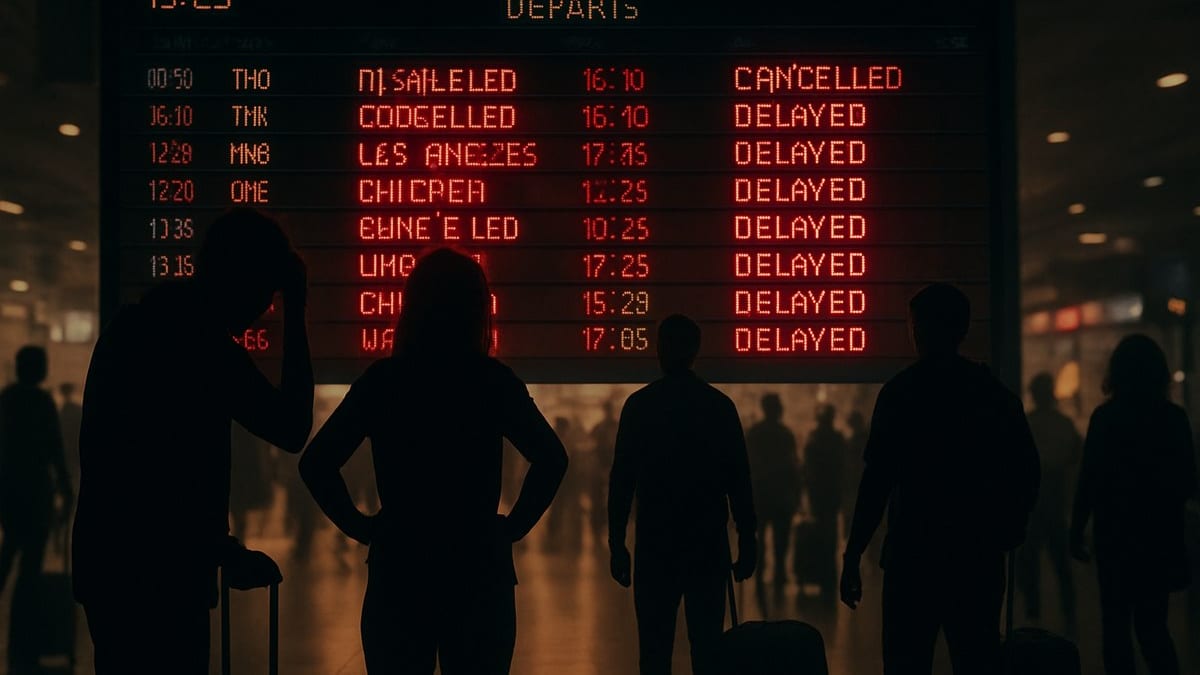
Major Hubs from Tokyo to Hong Kong Hit by Rolling Delays
Published aviation data and regional travel coverage indicate that airports in Japan, South Korea, China, Hong Kong, Singapore and the Philippines bore the brunt of today’s disruption, with several hubs reporting dozens of cancellations and hundreds of delays in a single operating day. Aggregate figures from flight-tracking platforms and industry outlets point to well over 3,000 delays and more than 150 outright cancellations across Asia, with a significant share of the total concentrated at a core group of major international gateways.
Tokyo Haneda, Tokyo Narita, Seoul Incheon, Hong Kong International and Singapore Changi collectively accounted for hundreds of delayed departures and arrivals, affecting a mix of regional and long haul services. Additional disruption at Guangzhou, Shenzhen, Beijing Capital, Beijing Daxing, Hangzhou, Kunming, Manila and other large Chinese and Southeast Asian airports added to what regional travel media described as one of the most severe single day interruptions to Asian air traffic this month.
Carriers impacted span the full spectrum of the market, from full service airlines to low cost operators. Reports highlight delays and cancellations for Japanese, Korean, Chinese and Southeast Asian brands, alongside knock on effects for airlines from the Middle East and Europe operating into these hubs as part of longer intercontinental routes.
While the total scale of disruption runs into the thousands of individual flights, industry tallies show that more than 600 of those services experienced significant schedule changes, ranging from long ground holds to full cancellations that forced passengers to rebook on later departures or rerouted itineraries.
Weather, Airspace Restrictions and Capacity Cuts Converge
The latest wave of flight problems comes against a backdrop of overlapping stresses on Asia’s aviation network. Recent weeks have seen a combination of adverse weather patterns, lingering infrastructure constraints and conflict related airspace closures affecting long haul corridors that connect Asia with Europe, the Middle East and North America. Publicly available analysis from aviation data providers notes that when weather or congestion slows traffic at a single major hub, the resulting ripple effects can quickly cascade through airline schedules across several countries.
Separate reporting on airspace restrictions around the Middle East highlights how detours and rerouted flights have lengthened block times between South and Southeast Asia and destinations in Europe and North America. The extra flying time consumes aircraft and crew capacity, leaving airlines with less flexibility to absorb unexpected bottlenecks in East Asian hubs on busy travel days. Gulf and South Asian carriers have also scaled back some frequencies or temporarily suspended selected routes in response to higher fuel costs and operational uncertainty.
In parallel, some Asian operators are adjusting fleet deployment and trimming schedules into mid April, which can tighten available seat supply even before day of operations delays set in. Announcements from airlines in the Gulf and South Asia in recent days point to grounded wide bodies and suspended services on certain Asia routes, which in turn pushes more connecting traffic onto remaining flights and increases vulnerability to disruption when things go wrong.
These structural pressures mean that even routine weather related slowdown at airports in Japan, China or Southeast Asia can trigger outsized disruption. Once a handful of early wave flights are delayed, aircraft and crew rotations fall out of position, leading to rolling pushbacks, missed connections and, ultimately, cancellations later in the day as airlines reset their operations.
Knock On Effects for Long Haul and Transit Passengers
The concentration of delays at key Asian hubs today has had particular consequences for long haul travelers using Tokyo, Seoul, Hong Kong, Singapore and major Chinese cities as transit points between regions. Travel industry reports note that many of the affected flights form part of multi segment itineraries linking North America and Europe with destinations across Southeast Asia and Oceania, as well as intra Asian connections between South Asia, Northeast Asia and the Pacific.
With departure banks running late and arrival flows backed up, minimum connection times at several hubs were effectively breached for large numbers of passengers, forcing rebookings onto later services and, in some cases, overnight stays when final legs departed without delayed inbound travelers. Even where flights ultimately operated, extended time on the tarmac and gate holds created additional strain on airport resources, including parking stands and ground handling teams.
Regional carriers have already been operating under tight capacity constraints into early April, as previously reported adjustments to schedules and the gradual recovery of traffic through the Gulf region limit alternative routing options. This means passengers who miss connections due to today’s delays may find fewer same day alternatives than in earlier years, particularly on popular routes linking South and Southeast Asia with Europe via East Asian hubs.
For business travelers and those connecting to cruises, tour departures or major events, the disruption raises the risk of cascading itinerary changes that extend well beyond a single missed flight. Insurers and travel management companies have been warning for months that complex, multi stop trips across Asia and the Middle East carry heightened disruption risk under current operating conditions.
Traveler Impact: Queues, Misplaced Bags and Rising Costs
Scenes reported from several airports today depict crowded check in halls, long security lines and heavily congested transfer zones as passengers attempt to rebook or obtain updated information on their flights. Extended delays can also lead to a buildup of aircraft on the ground, which puts pressure on baggage handling systems and increases the risk of bags failing to make tight connections even when passengers are reprotected on later services.
Airline and airport customer service channels have faced heavy demand, with call centers, messaging apps and ticket counters handling large volumes of rebooking and refund requests. Passenger advocacy groups and travel forums have reiterated the importance of monitoring flight status in real time, arriving at the airport early on disruption prone days and understanding compensation and care entitlements where applicable under local regulations.
The financial impact on travelers is also mounting. With hotel availability near major hubs already tight on peak days, last minute overnight stays prompted by missed connections can be expensive, especially when families or larger groups are involved. Rebooked itineraries may route passengers through alternative hubs or require upgraded fare classes if lower buckets are sold out, increasing out of pocket costs for those not fully covered by flexible tickets or robust travel insurance policies.
For airlines, widespread disruption adds to operational expenses through overtime, crew repositioning, fuel burn from extended taxi and holding patterns, and customer care obligations. Industry analysts have cautioned that a series of such high disruption days across Asia could weigh on first half financial performance, particularly for carriers already contending with elevated fuel prices and currency volatility.
What Today’s Chaos Signals for Asia’s Peak Travel Season
Today’s widespread disruption comes just as Asia enters a busy spring and early summer travel period, with school holidays and major festivals set to drive higher passenger volumes through April and May. Aviation analysts note that the combination of tight capacity, volatile weather and ongoing geopolitical uncertainty around key air corridors increases the likelihood of further high impact disruption days in the months ahead.
Published forecasts suggest that while overall seat capacity across Asia Pacific is edging closer to pre pandemic levels, the system’s resilience remains weaker than headline numbers imply. Many airlines are operating with limited spare aircraft and constrained staffing buffers, meaning that any shock to the system, from storms to airspace closures, can have outsized effects.
For travelers planning trips through Asian hubs, industry guidance continues to emphasize practical risk mitigation rather than avoidance. Recommendations include allowing longer connection times, favoring earlier flights in the day where possible, and building in contingency time before critical events or onward ground travel. Flexible fares, refundable hotel bookings and comprehensive travel insurance are also being framed as increasingly important tools for managing the financial and logistical fallout of disruption.
Today’s events underline that Asia’s aviation recovery, while substantial in terms of traffic growth, remains exposed to a complex mix of operational, economic and geopolitical pressures. As airlines and airports adjust schedules and invest in resilience, passengers are being urged to treat long haul and multi stop journeys through the region with a level of contingency planning that reflects this new reality.