

More news on this day
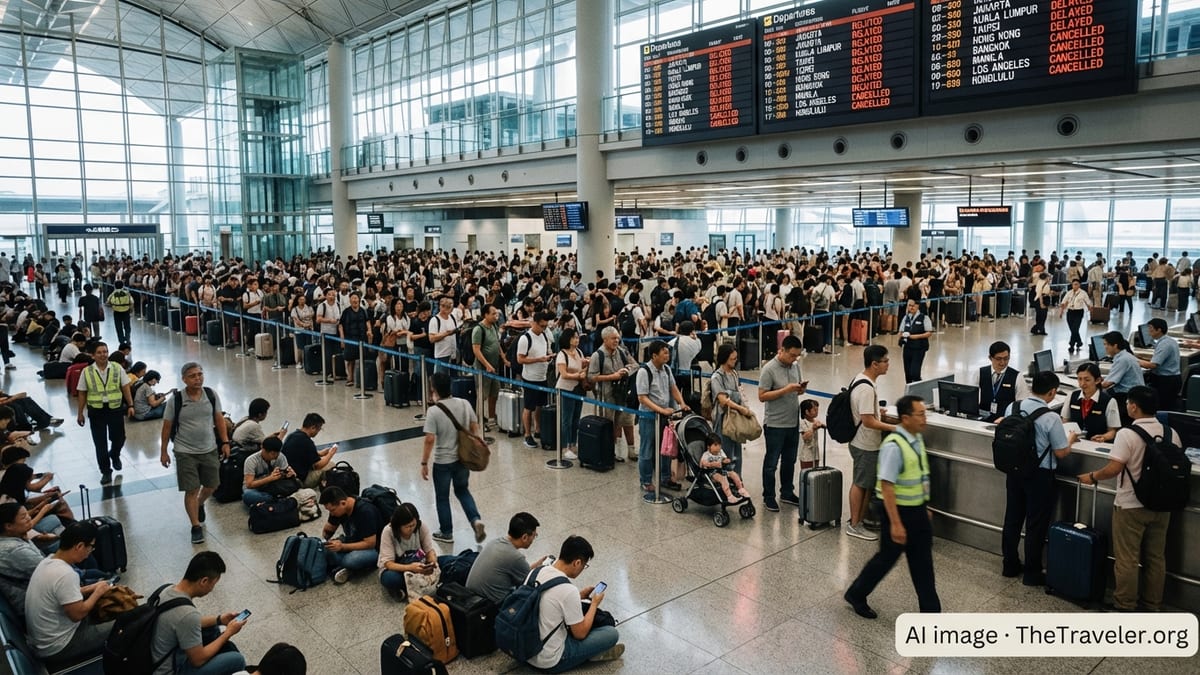
Asia’s airlines and airports are scrambling to contain a fast-moving jet fuel supply shock, as the war in the Middle East chokes vital oil shipping lanes, drives up aviation fuel prices and pushes carriers across the region to hike fares, trim schedules and rethink how they keep aircraft supplied.
Get the latest news straight to your inbox!
War-Driven Fuel Squeeze Ripples Through Asian Skies
The latest disruption is rooted in the 2026 Strait of Hormuz crisis, which has sharply curtailed oil and refined product flows from the Persian Gulf. Analysts describe it as one of the largest energy supply shocks in decades, with benchmark Brent crude briefly surging well above 100 dollars a barrel in early March and jet fuel prices climbing even faster.
Industry data compiled in recent weeks shows Asia’s spot jet fuel prices more than doubling from around 85 to 90 dollars a barrel in February to as high as 150 to 200 dollars by late March. The rapid escalation has outpaced typical fuel hedging strategies and left many carriers exposed to volatile daily price moves.
Reports from regional business media indicate that on some Asia–Europe routes, particularly those already affected by conflict-related airspace closures, one-way economy fares briefly spiked to several times their usual levels in early March as both higher fuel costs and longer routings fed through to ticket prices.
Airlines based in major Asian hubs such as Singapore, Hong Kong and Seoul are among the most directly affected because their networks depend heavily on long-haul services that are more sensitive to fuel costs. Publicly available information shows that fuel already accounts for roughly a quarter to a third of operating expenses for many full-service carriers in the region, magnifying the impact of the current spike.
Fares Climb and Capacity Tightens Across the Region
Recent coverage from regional outlets indicates that airlines across Asia have begun rolling out fare increases and fuel surcharges in response to the surge in jet fuel prices. In Southeast Asia, Thai Airways is reported to be lifting fares by about 10 to 15 percent, citing a combination of strong demand and sharply higher fuel costs.
Low-cost carriers, which operate on slimmer margins, appear to be passing on a larger share of the increase directly to customers. Travel industry observers note that budget airlines in markets such as Malaysia, Thailand and the Philippines have raised base fares and ancillary charges, eroding the traditional price gap between low-cost and full-service operators on some routes.
At the same time, evidence is emerging of targeted capacity reductions. Aviation reports from Vietnam describe plans to trim selected domestic flights where jet fuel supply is tight, prioritising core trunk routes and minimizing low-yield frequencies. In parts of the Pacific and South Asia, some carriers have quietly reduced marginal services or upgauged aircraft to concentrate capacity on fewer departures.
For travellers, the result is a more constrained seat supply just as demand remains robust. Booking platforms active in Asian markets are signalling higher average fares for late spring and early summer departures, especially on long-haul services to Europe and North America that require more fuel and, in some cases, detours around conflict zones.
Airports and Fuel Suppliers Race to Protect Operations
Airports and fuel suppliers around Asia are moving to shore up inventories and avoid on-the-ground disruptions. In South Asia, publicly available information from Sri Lanka indicates that aviation authorities have secured jet fuel stocks covering roughly two months of expected demand, with additional cargoes scheduled to arrive in early April to reinforce that buffer.
In the Philippines, national media report that the country’s flag carrier has arranged enough fuel supply to maintain scheduled operations at least through the end of April, even as the broader domestic energy market grapples with rising import costs and tighter availability. Officials there have acknowledged a reduction in days of overall oil stock cover since the Middle East conflict escalated.
Some Asian refineries and governments have introduced export restrictions on aviation fuel in an effort to prioritise domestic needs. Financial and energy industry coverage from China, South Korea and Thailand points to curbs on jet fuel exports that are intended to protect local airlines but that also tighten the regional pool of available supply, especially for carriers that rely on uplift at third-country hubs.
Operators of major international airports, particularly in Singapore and Northeast Asia, are understood to be reviewing contingency plans that include more frequent monitoring of fuel stock levels, closer coordination with suppliers and, where necessary, advising airlines to tanker additional fuel from other ports to ensure schedule integrity.
Structural Vulnerabilities and Limited Relief From Green Fuels
The crisis is exposing how heavily Asia’s aviation sector depends on imported fossil fuel that moves through a handful of maritime chokepoints. Studies by energy consultancies show that a large share of the crude and refined products feeding Asian refineries transits the Strait of Hormuz, leaving airlines and airports vulnerable to geopolitical shocks beyond their control.
Industry briefings circulating in recent weeks highlight that sustainable aviation fuel, often promoted as a long-term solution, remains a marginal part of the current energy mix. Data presented by the International Air Transport Association indicates that global sustainable aviation fuel output in 2025 amounted to less than 1 percent of total jet fuel consumption, far too little to offset a sudden disruption in conventional fuel supply.
Asia is nevertheless moving ahead with plans to expand cleaner fuel capacity. Singapore has announced a levy on departing passengers from October to help fund purchases of sustainable aviation fuel, part of a broader strategy that includes building a large new production facility aimed at serving the regional market later this decade. Thailand, Malaysia, Vietnam and Indonesia are also backing new or expanded plants.
In the near term, however, these initiatives do little to cushion the current price shock. Sustainable aviation fuel remains significantly more expensive than conventional jet fuel, and current availability is limited. As a result, most airlines are focusing on more immediate levers such as adjusting schedules, deploying more fuel-efficient aircraft where possible and refining hedging strategies.
What Travelers Should Expect in the Months Ahead
For now, travel demand in Asia remains resilient despite rising ticket prices. Experience from previous fuel spikes suggests that many passengers continue with planned trips, especially on routes connecting families, business hubs and key tourism destinations, even as discretionary or marginal itineraries are delayed.
Sector outlooks published by aviation analysts in recent days point to a likely period of elevated and more volatile fares through at least the northern summer season. The trajectory will depend largely on developments in the Middle East, any further restrictions on oil and product exports, and how quickly alternative shipping arrangements can be scaled up.
Travellers planning trips to or within Asia in the coming months are likely to see higher base fares, increased fuel surcharges and fewer ultra-low promotional deals than in 2024 and early 2025. On some routes, particularly long-haul connections between Asia and Europe, the combination of longer flight times and higher fuel costs could keep prices significantly above pre-crisis levels.
Airports and airlines across the region are signalling that maintaining operational continuity is the overriding priority. While widespread fuel-related cancellations have so far been limited, the experience of recent weeks shows that schedules can change quickly when supplies tighten. Passengers may benefit from booking earlier, monitoring itineraries closely and remaining flexible about dates and routings as Asia continues to navigate an uncertain jet fuel landscape.