

More news on this day
Major Asian carriers are reshaping flight schedules and ticket prices as a sharp spike in jet fuel costs, linked to the widening conflict in the Middle East and supply bottlenecks around the Strait of Hormuz, ripples through regional air travel.
Get the latest news straight to your inbox!
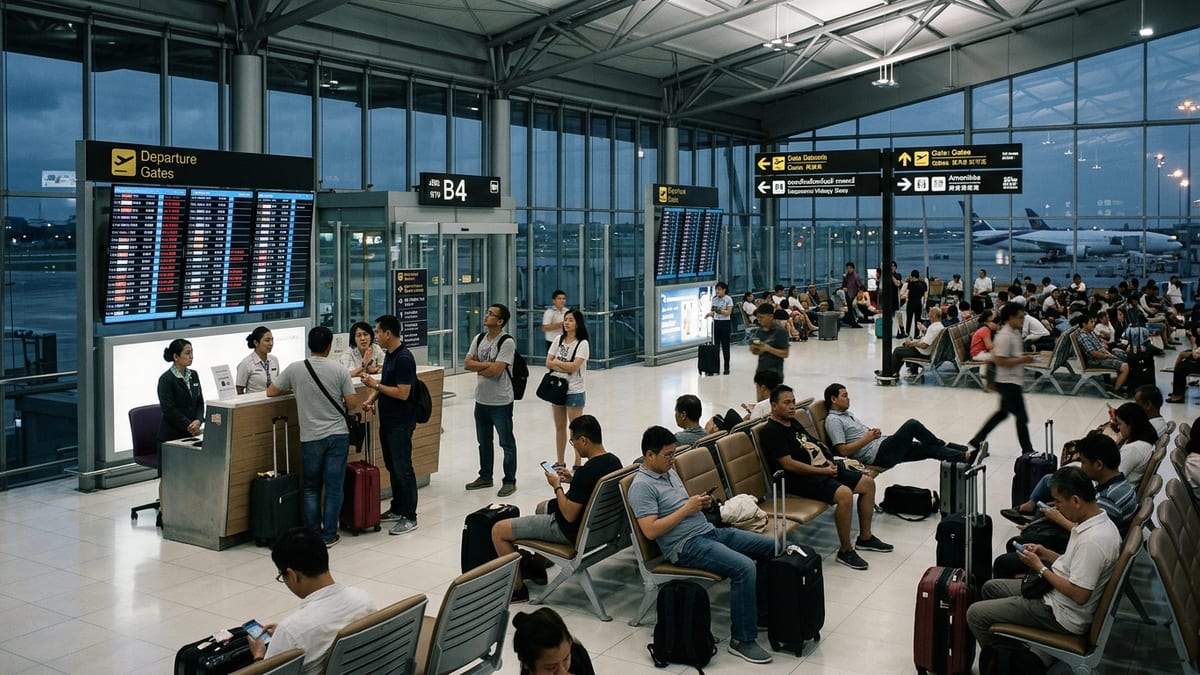
Vietnam Airlines Leads Wave of Capacity Cuts
Vietnam’s flag carrier has become one of the most visible examples of how soaring fuel prices are reshaping Asian aviation. Publicly available documents and local media coverage indicate that Vietnam Airlines is preparing to cut between 10 and 20 percent of its flights from April, equivalent to hundreds of round-trip services per month, if jet fuel benchmarks remain in the 160 to 200 dollar per barrel range during the second quarter of 2026.
Guidance from the Civil Aviation Authority of Vietnam shows that all major Vietnamese airlines are adjusting their flight networks and capacity from April to cope with rising Jet A-1 prices. Regulators have warned carriers to prepare for sustained reductions after key suppliers in China and Thailand curtailed jet fuel exports, citing heightened tensions in the Middle East and associated risks along critical shipping lanes.
Domestic routes are bearing the brunt of these changes. Reports from Vietnamese business outlets describe a combination of outright route suspensions and frequency cuts beginning on 1 April, with some secondary city pairs temporarily halted as airlines concentrate scarce fuel and aircraft time on core trunk routes such as Hanoi–Ho Chi Minh City. Analysts in Vietnam characterize the situation as the industry’s most severe cost shock since the pandemic.
At the same time, regulators in Hanoi are considering temporary policy adjustments to help carriers absorb the spike in costs. Proposals under discussion include allowing more flexible fuel surcharges on domestic economy tickets beyond existing price caps for a limited period, as well as extending reductions to selected fees, mirroring relief measures used during the health crisis.
AirAsia X Raises Fuel Surcharges on Long-Haul Network
Across the South China Sea, medium and long-haul specialist AirAsia X is taking a different approach by preserving much of its schedule while making tickets more expensive. Information released through aviation-focused publications indicates that the Malaysia-based carrier is increasing fares and effectively doubling fuel surcharges across key routes, including links between Australia and Southeast Asia.
The move is framed as a direct response to a rapid escalation in jet fuel prices since late February, which some industry trackers attribute to the Iran-related conflict and disruptions in regional oil flows. Data cited by airline executives and analysts shows benchmark jet fuel costs climbing from around 85 dollars per barrel in January to more than 200 dollars per barrel by the end of March, placing intense pressure on the economics of long-haul low-cost services.
AirAsia X’s strategy relies on passing a larger share of fuel costs to passengers while attempting to keep aircraft in the air and maintain valuable airport slots. This contrasts with the deeper capacity reductions being pursued in Vietnam, reflecting differences in fleet structure, route profiles and regulatory environments. Some observers suggest that if fuel prices stay elevated, even carriers focused on surcharges rather than schedule cuts may ultimately be forced to trim weaker routes.
The changes at AirAsia X come as other Asia-Pacific airlines, including full-service competitors, have already raised base fares or added new surcharges on international itineraries. Industry bodies have warned that long-haul leisure markets are particularly vulnerable, with customers likely to face higher prices and fewer discounted seats across 2026.
Batik Air Malaysia Trims Frequencies to Conserve Cash
Another Malaysian carrier, Batik Air Malaysia, is opting for sizeable short-term schedule reductions to manage costs. Local news coverage from Kuala Lumpur indicates that the airline plans to cut around 35 percent of its scheduled flights during the first half of April, positioning the move as a temporary measure intended to navigate the immediate fuel price shock.
These reductions affect a mixture of domestic and regional services, with some frequencies consolidated and off-peak rotations removed entirely. By reducing flying hours, Batik Air can conserve cash outlays on aviation turbine fuel and war risk insurance at a time when operating margins are under strain. Commentators in Malaysia note that the scale of the cutback is notable for a carrier of Batik Air’s size, underlining the severity of the current spike in operating costs.
Malaysian policymakers have described the situation as a crisis for transport operators, with the war in the Middle East amplifying the impact of pre-existing supply stresses. Public statements from the transport ministry emphasize that the schedule changes are expected to be temporary, but no firm timeline has been given for restoring full capacity, which will depend largely on how quickly fuel markets stabilize.
For travelers, the Batik Air adjustments mean reduced choice on some popular routes in the short term, as well as pressure on remaining seat inventory. Industry analysts suggest that higher load factors on the flights that remain could translate into higher average fares, even before accounting for any new surcharges that may be introduced later in the year.
Air India Expands Fuel Surcharges Amid Routing Challenges
In South Asia, Air India is responding to the surge in fuel costs by widening the use of fuel surcharges across its network. A recent public statement from the airline group outlines a phased expansion of these charges on both domestic and international sectors, citing aviation turbine fuel’s large share of total operating expenses.
Airlines serving India have been hit not only by more expensive fuel but also by complex airspace restrictions affecting routes to the Middle East and Europe. Since 2025, a combination of Pakistani airspace limitations and, more recently, the Iran-related conflict and security concerns around the Strait of Hormuz have forced carriers to operate longer routings or reduce capacity on certain sectors. Industry reports indicate that Indian airlines, including Air India, face hundreds of millions of dollars in additional annual costs if current constraints persist.
Rather than cutting large numbers of flights immediately, Air India is initially focusing on price-based measures. The expanded fuel surcharge regime applies to new tickets issued from March 2026 on a wide range of routes, with specific amounts varying by distance and cabin. Travel trade publications note that the carrier has left open the possibility of further adjustments, upward or downward, depending on future fuel price movements.
Passengers booking flights to and from India in the coming months are therefore likely to encounter higher final ticket prices, even where base fares remain unchanged. While business travel demand on key trunk routes remains relatively resilient, some analysts warn that sustained surcharges could dampen price-sensitive leisure segments, particularly on longer-haul itineraries to Europe and North America.
Regional Travelers Face Higher Fares and Thinner Networks
Across Asia, the combined effect of surging jet fuel prices, conflict-linked route disruptions and national policy responses is reshaping the travel landscape for 2026. Industry data collated by energy market monitors and airline associations shows average jet fuel prices up sharply since the latest Middle East crisis escalated in late February, prompting airlines in multiple regions to either raise prices, cut capacity or pursue a mix of both strategies.
For travelers in Vietnam, Malaysia and India, the most immediate impact is visible in higher airfares and reduced flight options on selected routes. In Vietnam, economy tickets on busy domestic corridors have risen significantly compared with earlier in the year, with additional increases possible if regulators approve broader fuel surcharge mechanisms. In Malaysia, Batik Air’s temporary retrenchment comes on top of existing surcharge adjustments by other carriers, while in India, Air India’s revised fee structure is feeding through to retail prices.
At the same time, airspace restrictions and conflict-related risk assessments are forcing some Asian airlines to reroute or suspend services that would ordinarily transit the Middle East. Industry observers point out that longer detours consume more fuel, compounding the effect of higher prices and creating a feedback loop that further strains airline balance sheets. This dynamic has already prompted tens of thousands of global flight cancellations and reroutings, particularly on Europe–Asia and Australia–Europe corridors.
How long these disruptions will last remains uncertain, hinging on developments in the Middle East and the stability of oil supply chains through key chokepoints. For now, carriers such as Vietnam Airlines, AirAsia X, Batik Air Malaysia and Air India are signaling that schedule and pricing adjustments are likely to remain fluid, and travelers planning trips across Asia are being encouraged by travel agents and industry guides to check schedules frequently and budget for higher fuel-related surcharges through at least the coming quarter.