

More news on this day
Major Asian airlines are extending flight cancellations and diversions across the Middle East, deepening an aviation crisis that is disrupting key Europe–Asia corridors and stranding travelers as the region’s conflict escalates into March 2026.
Get the latest news straight to your inbox!
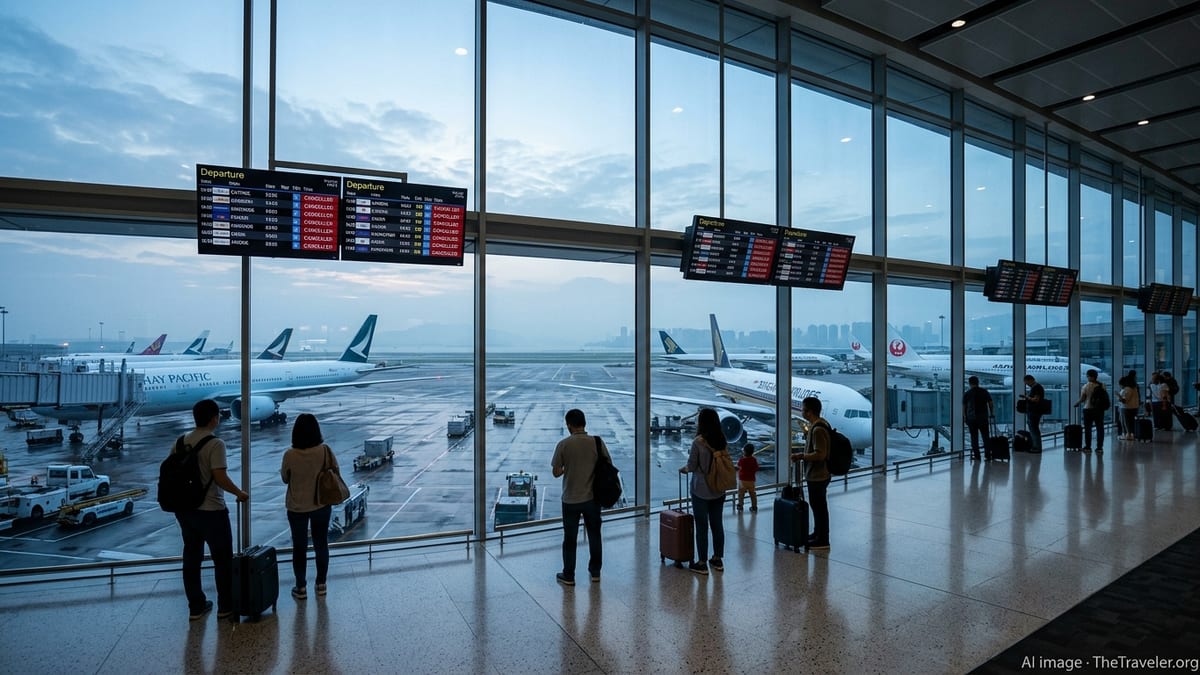
Escalating Conflict Forces Prolonged Flight Cuts
Publicly available flight tracking data and industry advisories show that since late February 2026, airspace closures and restrictions over parts of Iran, Iraq and the Gulf have sharply reduced civilian traffic, forcing Asian carriers to cancel or reroute large parts of their Middle East networks.
Reports from regional media and aviation specialists indicate that missile and drone activity linked to the widening Iran war has prompted rolling shutdowns and capacity limits at key hubs, including periods of heavily constrained operations at airports in Qatar, Kuwait and Israel. Travel advisories circulating in early March describe a patchwork of restricted air corridors, with operators warned that sections of Gulf airspace may close at short notice.
The result has been a steady extension of initial 24 to 48 hour suspensions into longer, multiweek schedule cuts by several Asian airlines. Routes once considered routine links between South and Southeast Asia and the Gulf are now subject to repeated cancellations, last minute timing changes and, in some cases, indefinite suspension notices.
Industry analysts note that this disruption comes on top of existing constraints on certain routes through Pakistani airspace, compounding route planning challenges for airlines trying to connect Asia with Europe and the Middle East while avoiding multiple conflict zones.
Asian Carriers Trim Gulf and Levant Networks
According to published coverage from regional outlets and aviation monitoring services, airlines based in India, Southeast Asia and Northeast Asia have sharply reduced flying into the Gulf and Levant since February 28. Public advisories shared with passengers highlight widespread cancellations to destinations such as the United Arab Emirates, Qatar, Saudi Arabia and Israel, along with schedule cuts to Kuwait and Iraq.
Indian carriers have been particularly exposed, as many of their most profitable international routes run to Gulf labor and transit markets. Local reports from early March describe near blanket cancellations on some days to Doha, Dubai and Riyadh, with operators offering full refunds or fee free rebooking windows that now stretch to the end of March 2026.
Travel forums and airline statements indicate that some Southeast Asian airlines, including major network carriers based in Singapore, Bangkok and Kuala Lumpur, are selectively operating to certain Gulf hubs while suspending or consolidating services to more exposed destinations. Flights that remain in operation often run with extended block times to allow for detours around higher risk airspace.
Northeast Asian airlines with extensive Europe networks are focusing on maintaining long haul connectivity via safer northern corridors, even as they scale back certain Middle East frequencies. Schedules show that some carriers have swapped nonstop flights for one stop routings further west, trading efficiency for perceived safety.
Rerouting Adds Hours and Costs on Europe–Asia Corridors
The conflict driven disruptions in the Middle East have quickly spilled over to broader Europe–Asia traffic flows. With traditional great circle routings over Iran and neighboring airspace constrained, airlines have shifted more long haul services onto northerly tracks or complex detours that avoid the region altogether.
Operational bulletins and traveler accounts describe widebody flights from South Asia to Europe making technical stops in southern Europe to refuel on paths that steer clear of conflict areas. These extra landings add hours to journeys and put additional pressure on already busy hubs in cities such as Rome and Athens.
For passengers, the changes translate into longer travel times, missed connections and frequent last minute rebookings. For airlines, the rerouting means higher fuel burn, increased crew and maintenance costs, and tighter aircraft utilization. Analysts warn that if current conditions persist, higher operating expenses could push fares up on some Europe–Asia routes, even as demand remains volatile.
Cargo flows are also affected. With many Asian airlines relying on bellyhold space in passenger aircraft to move high value freight between Asia, the Middle East and Europe, extended cancellations and detours are reducing available capacity and complicating supply chain planning for shippers.
Authorities Issue Warnings as Travelers Face Uncertainty
Civil aviation authorities across Asia are now publishing travel advisories that flag the risk of sudden operational disruptions on routes touching the Middle East. A recent advisory from Malaysia, for example, highlighted the potential for delays, cancellations and schedule changes on flights operating through affected airspace, urging travelers to monitor airline communications closely.
Private security and risk consultancies are circulating March updates that describe elevated missile and drone activity across parts of the Gulf, as well as intermittent interruptions at major airports. These assessments recommend that corporate travel managers build in greater schedule flexibility for staff transiting via the region, or temporarily route travelers through alternative hubs in East and Southeast Asia when feasible.
Published coverage of airport operations in the region points to a pattern of short notice closures, partial reopenings and tightly controlled arrival and departure slots. Even when airports remain technically open, airlines often choose to limit or postpone flights in response to shifting insurance, safety and overflight permission considerations.
For individual travelers, the fragmentation of schedules has increased the risk of being stranded mid journey. Consumer advocates advise passengers to check flight status repeatedly in the 24 hours before departure, allow additional connection time, and understand the conditions of airline waivers and rebooking policies before heading to the airport.
Outlook: Prolonged Volatility Likely Across Spring 2026
With no clear diplomatic off ramp yet visible in the Iran centered conflict, aviation analysts increasingly expect a protracted period of route instability for Asian airlines operating in and around the Middle East. Industry commentary suggests that carriers are planning schedules on conservative assumptions through at least the end of March, with contingency plans ready for further extensions if airspace risks persist.
Network planners are reportedly modeling alternative patterns that lean more heavily on hubs in South and Southeast Asia for connections between Europe, Africa and the Pacific, while reducing dependency on Gulf stopovers. Some observers believe that if the crisis stretches into the northern summer, it could accelerate a broader rebalancing of long haul traffic flows away from traditional Middle East crossroads.
For now, passengers across Asia face a travel environment defined by rolling notices, rapidly changing routings and crowded call centers. While airlines continue to emphasize safety and regulatory compliance in their public messaging, the commercial and operational strains of extended cancellations are mounting, with knock on effects likely to ripple through global aviation well beyond the Middle East itself.