

More news on this day
Escalating conflict and sweeping airspace closures across the Middle East are forcing Asian travelers to shelve plans for Gulf stopovers and pilgrimages, redirecting demand toward shorter-haul, perceived safer destinations within Asia and the wider Asia Pacific region.
Get the latest news straight to your inbox!
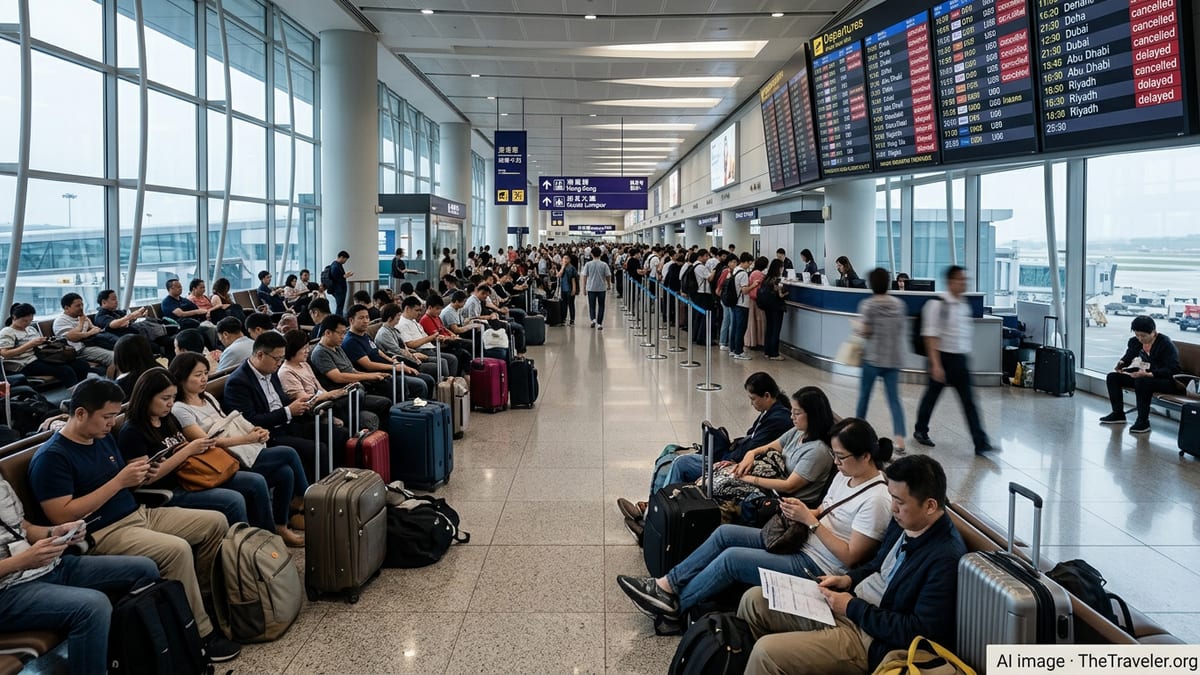
Middle East routes stall as conflict deepens
The latest phase of the Iran conflict has effectively emptied large swathes of Middle East airspace of civilian aircraft, disrupting both point-to-point travel and the hub networks that connect Asia with Europe, Africa and the Americas. Publicly available aviation tracking and industry analyses indicate that many commercial flights across the Gulf region remain suspended or heavily restricted, with some governments advising citizens to leave affected countries as security risks mount.
Industry data compiled by aviation analysts and reported in sector publications show that Middle East airline capacity fell by more than half in March 2026 compared with a year earlier, with some Gulf hubs operating at a fraction of normal traffic. Hundreds of weekly Asia-linked frequencies have been removed from schedules, while those that do operate often require lengthy detours to avoid conflict zones, driving up costs and journey times.
Travel-focused outlets report that lost tourism spending in the region is now running into hundreds of millions of euros per day, as inbound visitor numbers plunge and transit traffic via key Gulf airports evaporates. Forecasts from economic consultancies suggest that if airspace restrictions and security concerns extend into the second quarter of 2026, the Middle East could lose tens of millions of visitors this year and face structural shifts in long-haul routing patterns.
For Asian travelers, the impact is immediate and practical. Pilgrimage journeys, leisure trips to popular Gulf city-break destinations, and multi-stop itineraries linking Europe and Asia via Middle Eastern hubs have become harder to plan and more expensive to insure. Many travelers are opting to defer such trips, while others are looking for alternative destinations and routings that keep them within Asia.
Rising fares and longer journeys push travelers closer to home
Beyond concerns over safety and stability, higher prices are playing a central role in reshaping travel decisions. With jet fuel prices spiking on the back of disrupted supplies, airlines serving Asia are introducing steep surcharges on long-haul tickets. Aviation trade reports in recent days have highlighted surcharges of the equivalent of tens of dollars per sector on some routes, in addition to underlying fare increases triggered by reduced capacity.
Detours around closed airspace are further eroding the appeal of itineraries that traverse the Middle East. Rerouted services between Asia, Europe and Africa now often require an extra one to three hours of flying, according to schedule analyses, raising fuel burn and narrowing the price gap between traditional hub connections and emerging nonstop alternatives. Some carriers are trimming frequencies on chronically delayed or unprofitable routes, compounding seat shortages during key holiday periods.
Industry forecasts from regional tourism organizations already anticipated that Asia Pacific would reclaim and eventually exceed pre-pandemic arrival volumes by 2027. The latest geopolitical shock is accelerating the relative appeal of intra-Asian travel by adding new friction and cost to long-haul journeys that depend on Middle Eastern hubs. As airlines shift capacity into resilient regional markets, consumers are increasingly confronted with a choice between expensive, complex trips through a volatile corridor and more straightforward holidays closer to home.
Online travel platforms tracking booking patterns across India, Southeast Asia and North Asia report rising interest in short- and medium-haul flights within the region, supported by gradually easing visa regimes and expanded low-cost carrier networks. For budget-conscious travelers and families, the ability to avoid war-risk surcharges and transit uncertainties is becoming as important as headline ticket prices.
Southeast Asia emerges as a safety valve for pent-up demand
Destinations across Southeast Asia appear to be among the earliest beneficiaries of the redirected demand. Recent analyses by regional tourism publications point to Thailand, Indonesia, Malaysia and Singapore as key recipients of travelers who might otherwise have combined European or Middle Eastern stays with onward connections, but who are now rebooking to beach resorts and city breaks within the Association of Southeast Asian Nations area.
A report from a leading Asia-focused tourism news outlet this week highlighted concerns within Thailand’s Ministry of Tourism and Sports that a prolonged Middle East conflict could cut millions of international arrivals in 2026 and wipe billions of dollars from projected tourism receipts. At the same time, industry groups in Bangkok stress that resurgent demand from China and other Asian source markets is helping to cushion the blow, with travel agents redirecting incentive groups, meetings and events that previously looked to the Gulf.
In Indonesia, officials speaking at a travel trade fair in Bali in late March outlined a short-term strategy to prioritize Asian source markets over longer-haul visitors from Europe and North America, noting that disruptions at Gulf transit hubs threaten to reduce arrivals to the archipelago. National marketing efforts are being recalibrated to court travelers from neighboring countries and major Asian economies that can access Indonesia via direct or one-stop routes within the region.
Singapore, which functions as both a destination and a critical aviation hub, is also adapting to the new landscape. Coverage from travel industry outlets notes that the city-state continues to leverage its strong connectivity, but airlines based there are recalculating schedules to avoid conflict zones and manage fuel costs. While this is moderating the pace of recovery from some long-haul markets, it is also reinforcing Singapore’s role as a gateway for multi-stop itineraries that stay entirely within Asia Pacific.
Shifting patterns from China, India and emerging Asian markets
Structural changes in outbound travel from Asia’s largest markets are amplifying the pivot away from the Middle East. Sector analyses of 2026 trends underline that China, India and the wider Asian outbound belt will largely determine how global tourist flows are redistributed over the coming years. Even before the latest conflict, many travelers in these markets were displaying a preference for destinations seen as familiar, good value and easily accessible by direct flight.
Reports on India’s outbound sector in 2025 documented rapid growth in trips to Southeast Asian countries as visa requirements eased and low-cost carriers expanded routes. That trend appears to be continuing into 2026, with booking data from regional platforms pointing to strong interest in established hotspots such as Thailand and Malaysia, as well as emerging niches from the Philippines to Pacific island states. With traditional pilgrimage and shopping trips to Gulf countries now subject to uncertainty, a portion of this demand is expected to be absorbed by closer religious, wellness and retail destinations in Asia.
For Chinese travelers, geopolitical tensions in multiple directions have already complicated long-haul travel planning. Travel advisories and diplomatic spats have affected flows to parts of North Asia and Europe, while the Middle East conflict has dimmed the near-term appeal of new cultural and leisure corridors that Gulf states had been building with China and other Asian partners. Tourism economists note that when outbound demand from China returns strongly on a route, it can quickly reshape airline revenue management and product offerings, meaning any sustained diversion away from the Gulf could lock in new patterns.
Smaller but fast-growing markets in Southeast and Central Asia are also playing a role. As consumer confidence improves and disposable incomes rise, travelers from Vietnam, Indonesia, the Philippines and Kazakhstan are increasingly taking international leisure trips. Many of these first-time or infrequent travelers are opting for destinations reachable within a single short- or medium-haul flight, a preference that aligns with industry moves to concentrate capacity in intra-Asian corridors while Middle Eastern routes remain disrupted.
Tourism boards pivot marketing while watching risks
The rapid pivot in demand is prompting tourism authorities and private-sector marketers across Asia to rethink strategy. Public statements and trade show presentations from officials in Indonesia, Thailand and other destinations in recent weeks emphasize a desire to secure more regional visitors to offset potential losses from Europe and the Middle East. Campaigns are being localized into Asian languages, and travel trade partnerships are being deepened with airlines and online platforms that can channel short-haul traffic.
Hotel groups and destination management companies are also rebalancing their portfolios. Industry bulletins note that major brands continue to invest heavily in new properties in markets such as China and Malaysia, betting that medium-term growth in domestic and intra-Asian travel will more than compensate for volatility on long-haul segments. Operators are tailoring products toward smaller groups, families and digital nomads, targeting travelers who can adjust plans quickly if external shocks affect particular corridors.
At the same time, analysts caution that Asia is not insulated from broader geopolitical and economic risks. Forecasts from regional travel and hospitality associations point to rising hotel prices across much of Asia in the first half of 2026, along with higher tourist taxes and infrastructure pressures in popular cities and resort areas. Travelers seeking respite from conflict-related headlines may encounter crowding, price increases and new regulations in their chosen alternatives.
For now, however, the overriding trend is clear: as Middle East travel remains constrained by conflict, Asian travelers and the industry that serves them are recalibrating toward nearer, more flexible options. Whether these shifts prove temporary or crystallize into a new long-term geography of Asian travel will depend on how long the current crisis endures and how quickly airlines, governments and destinations can restore confidence in the once-booming Gulf corridor.