

More news on this day
Asian travelers are showing a growing preference for accommodations with in-room kitchens, with new Agoda data indicating that Taiwanese, Vietnamese and South Korean guests are at the forefront of a regional shift toward more flexible, food-centered travel.
Get the latest news straight to your inbox!
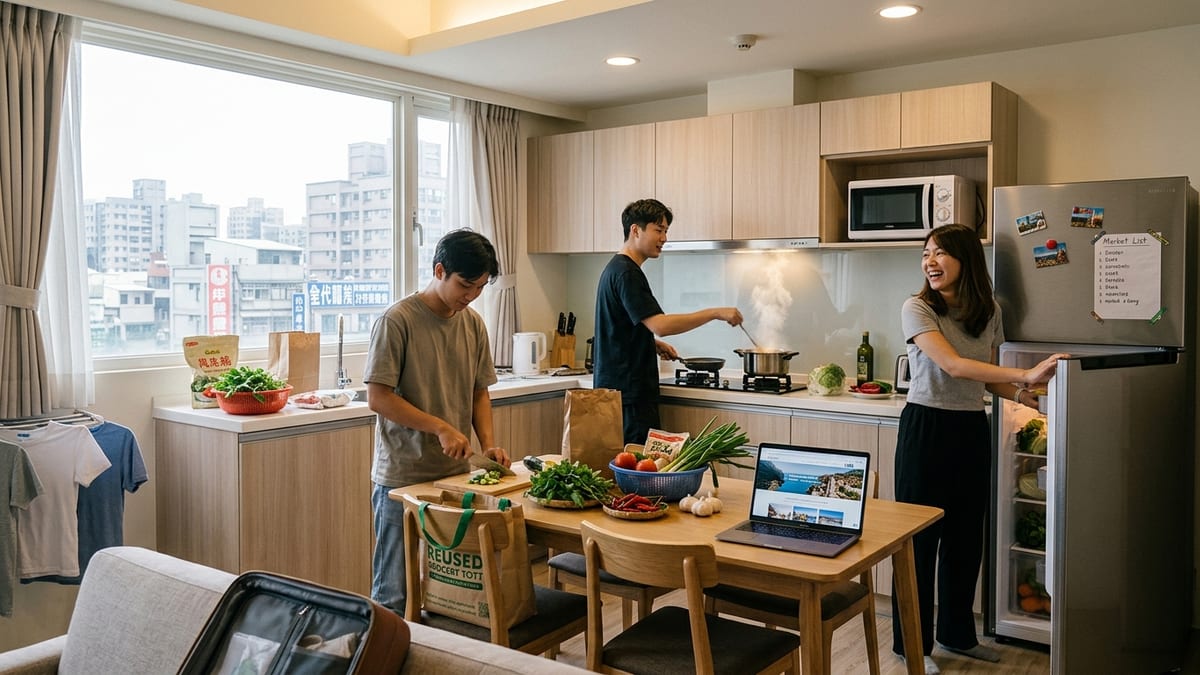
Kitchen Facilities Become a Key Booking Filter
Recent data published by Agoda highlights that an increasing share of its Asian customer base now filters for kitchen or kitchenette facilities when searching for accommodation. The pattern is most pronounced among travelers from Taiwan, Vietnam and South Korea, who are more likely than the regional average to prioritize cooking amenities alongside price and location.
Publicly available insights from Agoda’s travel outlook reporting for Asia suggest that practical considerations, such as managing trip costs and enabling longer stays, are driving this behavior. Stays that include at least basic cooking equipment, a refrigerator and storage space are gaining favor among travelers who want the option to prepare some meals themselves rather than relying entirely on restaurants.
The trend aligns with broader industry observations that alternative accommodations, serviced apartments and extended-stay hotels across Asia are increasing their share of bookings. Properties that advertise kitchen access, from compact studio setups to full apartment-style layouts, are seeing higher visibility in search results and stronger conversion among price-sensitive and experience-driven travelers.
Taiwanese, Vietnamese and South Korean Travelers Lead the Shift
Within Asia, Taiwanese travelers emerge as some of the most food-motivated guests, with Agoda-linked market research describing culinary experiences as a leading reason for trips abroad and domestically. That interest in food is now converging with a preference for more functional spaces, including accommodations that allow travelers to store local produce, cook simple dishes and experiment with regional ingredients picked up at markets.
Vietnamese travelers, according to regional travel behavior reports, also show a relatively high propensity to cook or prepare meals when staying in holiday homes or apartment-style rentals. This complements a growing appetite for longer, more immersive trips in which visitors use kitchens to balance street food exploration with home-style meals, group cooking sessions and budget-conscious dining.
South Korean travelers, long associated with strong food culture and a preference for familiar flavors on the road, are similarly overrepresented among those selecting properties with cooking facilities. Industry observers note that kitchens are particularly attractive to younger South Korean travelers and small groups, who value the combination of social space, late-night flexibility and the ability to adjust meals to personal tastes or dietary needs.
Food-Centered Travel Redefines “Eating In”
The rise in kitchen-equipped stays is not simply about saving money. Travel and hospitality reporting across the region indicates that many Asian travelers see cooking on the road as an extension of their culinary curiosity, using local supermarkets, fresh markets and specialty shops as part of the sightseeing experience.
For Taiwanese travelers, whose top trip motivations increasingly include culinary discovery, accommodations with kitchens provide a base for exploring local ingredients in depth, from seasonal produce to regional sauces and condiments. Cooking in their own space allows guests to revisit favorite flavors discovered in restaurants or night markets, as well as prepare comfort foods from home when traveling for longer periods.
Among Vietnamese and South Korean guests, group cooking is emerging as a core part of the trip experience. Reports on Asia Pacific travel behaviors point to travelers using kitchens for shared hotpot-style meals, late-night snacks and simple breakfasts before heading out for the day. This pattern turns accommodation into a social hub, shifting some key travel moments from restaurants back into private or semi-private spaces.
Budget Control and Longer Stays Drive Kitchen Demand
Economic factors are also reinforcing the kitchen trend. With living costs and dining prices rising in many major Asian cities, publicly available travel surveys consistently show that travelers are looking for ways to stretch their budgets without sacrificing experience. Kitchens offer a straightforward lever: guests can cook some meals in, reserve restaurants for special occasions and better control overall spending.
For digital nomads, remote workers and families planning multi-week stays, the presence of a kitchen can be a deciding factor between a traditional hotel room and an apartment-style rental. Industry data from Asia Pacific reports notes that travelers on longer itineraries are more likely to cook, and therefore more likely to book properties that clearly advertise cooking amenities, cookware and refrigeration.
Agoda’s data on booking behavior suggests that destinations popular with these longer-stay segments, including urban centers and secondary cities across Taiwan, Vietnam and South Korea, are seeing growing interest in serviced apartments, aparthotels and vacation rentals. These options often incorporate full kitchens, laundry facilities and separate living areas, blurring the line between residential and tourist accommodation.
Hospitality Players Respond With More Flexible Spaces
As traveler preferences shift, accommodation providers across Asia are adjusting their offerings to meet demand for kitchens and food-friendly layouts. Some urban hotels are converting a portion of their inventory into rooms with kitchenettes or expanding existing extended-stay wings. Others are promoting shared kitchens and communal dining spaces as added-value amenities for budget-conscious and social guests.
In markets where culinary tourism is already a strong draw, such as Taiwan and Vietnam, property listings now emphasize proximity to markets and supermarkets alongside transit access and tourist attractions. Descriptions increasingly highlight features like induction cooktops, microwaves, basic cookware and full-sized refrigerators, reflecting the role of kitchen details in influencing booking decisions.
Travel industry commentary across Asia indicates that platforms and properties able to clearly communicate kitchen quality, available equipment and cleanliness are likely to capture more of this emerging demand. As more Taiwanese, Vietnamese and South Korean travelers structure their trips around food experiences and practical flexibility, accommodations that feel like temporary homes, rather than just places to sleep, appear set to gain an even larger foothold in the region’s travel landscape.