

More news on this day
Asia’s air pollution crisis is intensifying in 2025, with fresh global monitoring data showing record fine particle concentrations across key economies while only a small group of countries worldwide are achieving the World Health Organization’s safe air quality guidelines.
Get the latest news straight to your inbox!
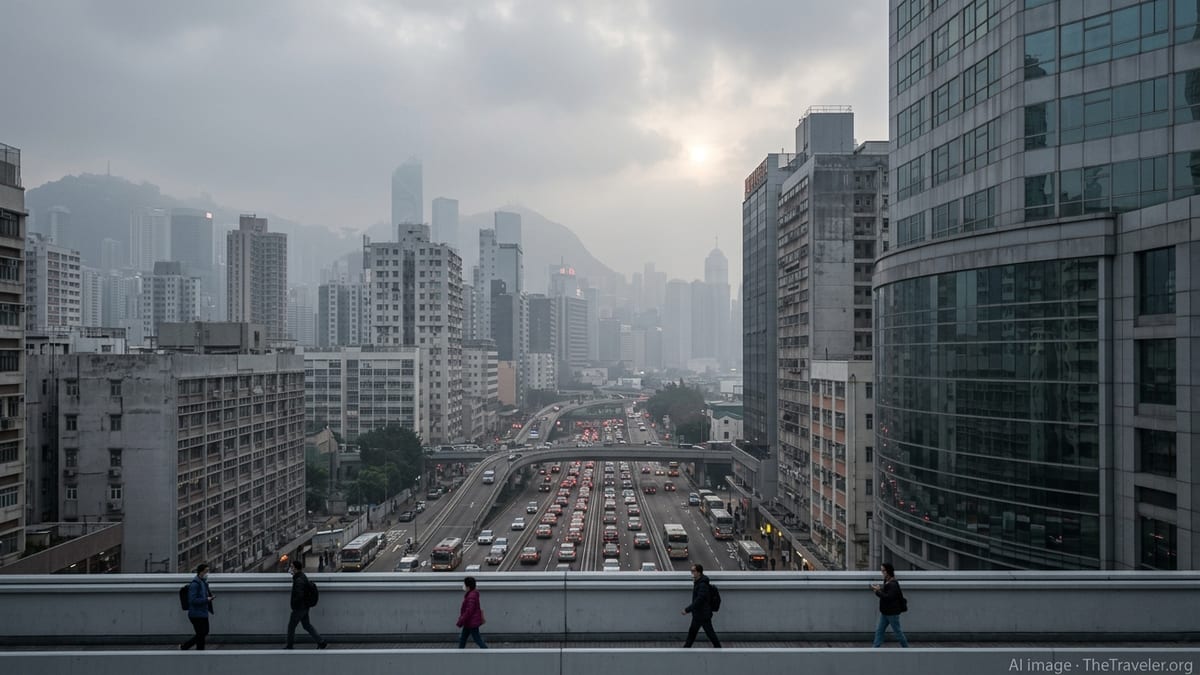
New 2025 Data Highlight a Stark Global Divide
According to the newly released 2025 World Air Quality Report from Swiss-based monitoring company IQAir, only 13 countries, regions and territories worldwide now record annual average concentrations of fine particulate matter, or PM2.5, at or below the World Health Organization’s guideline value of 5 micrograms per cubic metre. The latest figures underscore how rare truly clean air has become, even as awareness of pollution-related health risks has grown.
The report draws on data from more than 9,000 cities across over 140 countries and territories, providing one of the most comprehensive snapshots of global air quality currently available. While some high-income countries and remote island states are among those meeting the guideline, most of the world’s population still lives with air considered unsafe under WHO standards.
Researchers describe PM2.5 as one of the most dangerous forms of air pollution because these microscopic particles can penetrate deep into the lungs and bloodstream. Long-term exposure is associated with increased risks of heart disease, stroke, lung cancer and respiratory illness, and global health assessments increasingly link ambient air pollution to millions of premature deaths each year.
The latest data suggest a widening gap between relatively clean-air countries and rapidly urbanising, industrialising regions. That divide is most visible in Asia, where economic growth, fossil fuel dependence and land-use practices are combining to produce some of the highest annual averages on record.
Asia Dominates Global Pollution Rankings
Recent analyses of the IQAir data and other regional studies indicate that Central and South Asia continue to host the world’s most polluted countries by average PM2.5 levels. Bangladesh and Pakistan, followed closely by India, have repeatedly appeared at or near the top of global rankings, with annual particle concentrations many times higher than the WHO guideline.
Visualizations of 2024 and early 2025 readings show a dense cluster of heavily polluted cities stretching from northern India and Pakistan through parts of Nepal and into the Indo-Gangetic Plain, an area where winter smog episodes now routinely push air quality indices into hazardous territory. Events such as the late-2024 smog outbreaks in northern India and Pakistan, which recorded unprecedented hourly PM2.5 spikes, underline how quickly conditions can deteriorate during stagnant weather patterns.
East and Southeast Asia also feature prominently in global pollution maps. Cities in northern China, industrial hubs in Vietnam, and fast-growing urban corridors in Indonesia and Thailand continue to experience annual averages that exceed WHO recommendations by several multiples, even where long-term emission control programs have led to gradual improvements.
Regional overviews compiled by media outlets and research groups note that Asia not only records some of the world’s highest city-level PM2.5 values, but also has the lowest share of urban areas meeting WHO standards. In some datasets, fewer than one percent of monitored Asian cities achieve the 5 microgram threshold, a figure that highlights how exceptional clean air has become across the continent.
Health Burden Mounts as PM2.5 Peaks
Parallel to the monitoring data, health-focused assessments such as the State of Global Air reports point to a steep and persistent disease burden tied to fine particulate pollution. Publicly available estimates indicate that a large majority of deaths globally attributable to PM2.5 exposure occur in Asia, reflecting both population size and the intensity of pollution.
South Asia stands out as a particular hotspot. National and regional studies link PM2.5 exposure there to elevated rates of cardiovascular disease, chronic respiratory conditions and adverse birth outcomes. UNICEF reporting during recent smog seasons in India and Pakistan has warned of significant risks to children, who are more vulnerable to long-term developmental and respiratory impacts.
Urban centres across East and Southeast Asia are also grappling with the health implications of persistent haze. In megacities such as Seoul and Bangkok, recent monitoring campaigns show annual PM2.5 averages several times higher than the WHO guideline, with episodic spikes during winter or dry-season burning pushing conditions into ranges that medical organisations describe as particularly harmful for older adults, pregnant people and those with pre-existing conditions.
Researchers emphasise that there is no known safe threshold for PM2.5 exposure. Even modest reductions in annual averages can translate into measurable public health gains, but the latest data suggest many Asian countries remain far from levels where those benefits would be fully realised.
Drivers: Fossil Fuels, Burning and Rapid Urbanisation
Studies and policy reports consistently identify fossil fuel combustion as a dominant source of PM2.5 across Asia, with coal-fired power generation, heavy industry and diesel transport all contributing to regional haze. Recent coverage of energy trends in Asia notes that some countries have increased coal use in response to volatile global gas markets, raising concerns that short-term energy security strategies could lock in years of dirtier air.
In South and Southeast Asia, seasonal agricultural burning adds another dimension to the crisis. Satellite-based fire monitoring and ground-level observations show large spikes in PM2.5 during post-harvest burning seasons, when smoke from crop residue fires can drift hundreds of kilometres and blanket entire metropolitan regions. These plumes often mix with urban and industrial emissions, driving some of the highest readings of the year.
Rapid, often poorly regulated urbanisation compounds the problem. Construction dust, informal waste burning and traffic congestion create chronic background pollution in many growing cities. In industrial belts stretching from the outskirts of Delhi and Lahore to manufacturing zones in Vietnam and Indonesia, clusters of small and medium-sized factories frequently operate with limited emissions control technology.
Meteorological and geographic factors can intensify pollution episodes. Landlocked basins, winter temperature inversions and weak winds can trap polluted air close to the surface for days at a time. This combination of structural emissions sources and unfavourable weather means that even cities making progress on vehicle standards or industrial controls can still experience severe short-term pollution events.
Implications for Travel and Policy Responses
For travellers, worsening PM2.5 levels are becoming an important factor in planning trips across Asia. Travel advisories, health agencies and digital air quality platforms increasingly encourage visitors to check real-time air quality indices for destinations such as Delhi, Lahore, Dhaka, Bangkok or Hanoi, especially during known high-smog periods between late autumn and early spring.
Tourism and business travel operators report that recurring haze seasons can disrupt outdoor events, reduce visibility at landmarks and, at times, prompt flight delays or diversions when smoke affects major airports. In popular city destinations, hotel and tour marketing now frequently references access to cleaner-air indoor environments, high-efficiency filtration systems or seasonal timing advice as travellers seek to reduce exposure.
Asian governments and city authorities have launched a range of policy responses in recent years, from tightening national air quality standards to introducing low-emission zones, subsidising cleaner cookstoves and promoting electric vehicles and public transport. China’s multi-year program to reduce coal use in urban areas and retrofit industrial plants is often cited in research as an example of how sustained regulation and investment can gradually lower PM2.5 levels.
Nevertheless, publicly available analyses suggest that current measures in much of Asia remain insufficient to meet WHO guideline levels in the near term, particularly as energy demand and vehicle fleets expand. Experts argue that aligning air quality strategies with climate and energy transitions, phasing down coal, and tackling agricultural burning through alternative practices will be critical if the number of countries enjoying truly safe air is to grow beyond today’s small group of 13.