

More news on this day
With spring returning to the Kashmir Valley, Asia’s largest tulip garden in Srinagar is set to reopen on March 16, 2026, drawing visitors to a short but spectacular season of colour at the Indira Gandhi Memorial Tulip Garden on the banks of Dal Lake.
Get the latest news straight to your inbox!
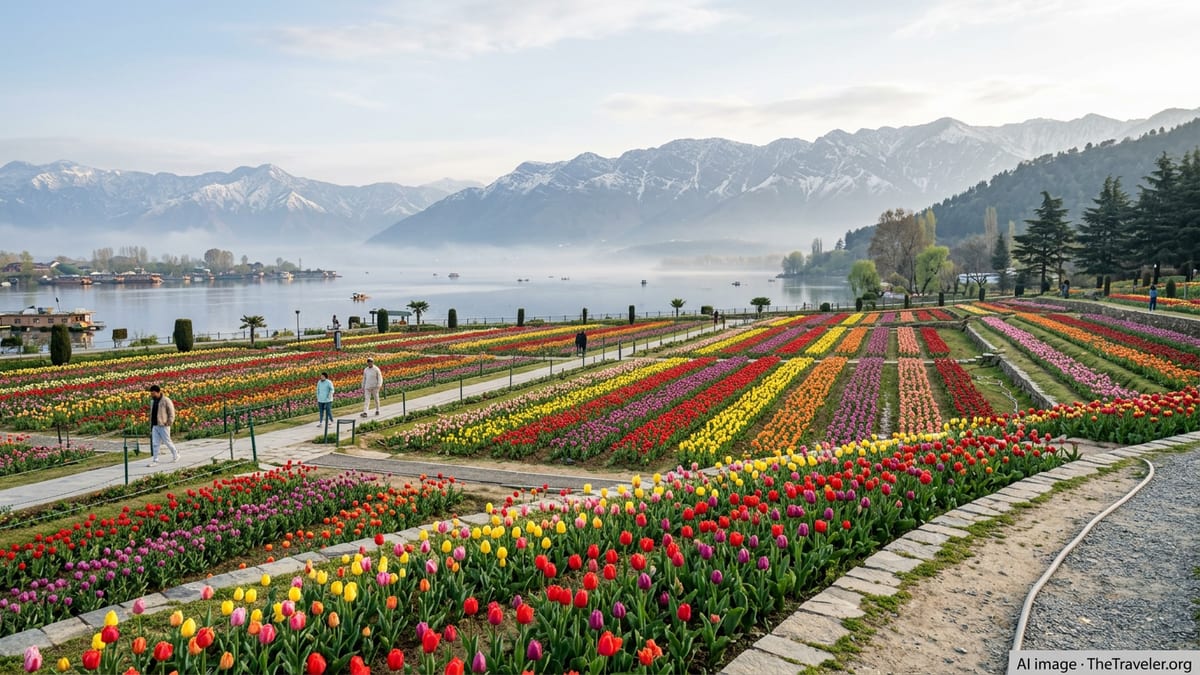
A Record-Breaking Garden at the Heart of Kashmir’s Spring
The Indira Gandhi Memorial Tulip Garden, spread across the foothills of the Zabarwan Range overlooking Dal Lake, has become one of India’s most closely watched spring attractions. Publicly available information describes it as the largest tulip garden in Asia, extending across more than 70 acres and planted with well over a million bulbs in dozens of varieties.
Recent seasons underline just how quickly interest in the tulip festival has grown. Local news coverage for 2025 reported a record season of around 855,000 visitors over roughly one month of operation, following already strong numbers in 2023 and 2024. The rising footfall has helped cement Srinagar’s position on the global spring travel map and turned the garden into a headline attraction for domestic and international tourists.
The garden, established in 2007 in the Siraj Bagh area, was conceived to both promote floriculture and extend Kashmir’s tourism calendar beyond the traditional summer peak. Since then, the annual tulip festival has evolved into a signature event that signals the start of the Valley’s main tourism season after winter.
Recognition in recent years, including listings highlighting its scale and unique setting between Dal Lake and the Zabarwan hills, has further boosted its profile. Travel operators now routinely package tulip garden visits with houseboat stays, heritage walks and excursions to the Mughal gardens, positioning Srinagar as a complete spring destination.
2026 Tulip Festival: Dates, Blooms and Visitor Expectations
For 2026, regional media reports indicate that the tulip garden will open to visitors on March 16, with the main tulip festival activities scheduled to run through the peak bloom period into April. Travel advisories and tourism-focused guides suggest that the garden is expected to remain open until around April 24, depending on weather conditions and the life cycle of the blooms.
The window to see the tulips at their best is relatively short. Early visitors in mid to late March can often view the first waves of colour across the terraces, while the first half of April is typically promoted as the prime period, when a majority of the planted varieties are in full bloom. Depending on temperature and rainfall, the intensity of the display can shift from week to week, encouraging some travellers to plan flexible itineraries.
Recent coverage highlights a steadily expanding collection of tulip types, organised in sweeping beds that showcase a range of colours, heights and petal shapes. Alongside classic reds, pinks and yellows, visitors can expect bi-coloured blooms, fringed varieties and darker tones that stand out dramatically against the lingering snow on the surrounding peaks.
Given the record-breaking footfall reported in 2025 and the strong advance promotion for the 2026 season, tourism observers anticipate another busy year. Local reports indicate that tour operators, hoteliers and transport providers have been gearing up for increased arrivals, especially from major Indian cities as well as from Southeast Asian and Middle Eastern markets that have shown growing interest in Kashmir’s spring landscapes.
What Visitors Can Experience Inside the Tulip Garden
The tulip garden is laid out on a gentle slope in multiple terraces, allowing panoramic views of flower beds cascading toward Dal Lake. Visitors enter through a main gate and typically follow paved and earthen pathways that weave between blocks of colour, with open lawns offering space to pause and take in the scene.
Beyond tulips, the site has been steadily upgraded to include complementary floral displays such as hyacinths, daffodils and other seasonal plants that extend the visual interest across the garden. Publicly available information notes ongoing work in recent years to improve railings, irrigation, pathways and seating areas, intended to make the experience smoother for the rising number of tourists.
Families, photography enthusiasts and casual walkers are all common sights during the festival weeks. Many visitors choose early morning or late afternoon for softer light and clearer views of the surrounding mountains. On high-footfall days recorded in recent seasons, the garden has seen tens of thousands of people in a single day, creating a lively but often crowded atmosphere along the main paths.
The garden’s setting also allows travellers to combine floral viewing with iconic Kashmir experiences. From the terraces, visitors can look toward Dal Lake, while short drives connect the tulip fields to the historic Mughal gardens of Nishat and Shalimar, the springs of Chashme Shahi and the old quarters of Srinagar. This clustering of attractions has helped the tulip festival evolve into a wider spring tourism circuit.
Travel Planning: Access, Timing and Practical Considerations
For those planning a trip in 2026, Srinagar is accessible by air from several major Indian cities, with the airport located roughly a 30 to 40 minute drive from the tulip garden, depending on traffic. Travel reports recommend booking flights and accommodation early for late March and early April, as demand historically increases around the festival dates.
Entry to the garden is managed via on-site ticket counters, with various travel advisories also pointing to online booking options through official platforms. Ticket prices typically differ for adults, children and foreign visitors, and may be subject to revision each season. Visitors are generally encouraged to check the latest information on timings and any crowd-management measures shortly before arrival.
Weather in March and April can be changeable, with crisp mornings, mild afternoons and occasional showers. Layered clothing, comfortable walking shoes and basic rain protection are recommended, especially for those planning extended time among the terraces. Photography enthusiasts may wish to carry lens cloths or covers to cope with light drizzle and mountain breezes.
Given the rising visitor numbers, travel writers and tourism platforms often advise avoiding peak midday hours on weekends, when local and out-of-town crowds are at their highest. Early entry on weekdays can offer a more relaxed experience and clearer views of the beds without heavy foot traffic in the frame.
Kashmir’s Broader Spring Revival Around the Festival
The tulip festival has become closely tied to broader discussions about Kashmir’s tourism recovery. Recent reporting from regional outlets describes how strong performances in the tulip season over the past three years have encouraged investment in hotels, homestays, transport services and guided experiences around Srinagar and nearby hill destinations.
As Asia’s largest tulip garden reaches new visitor milestones, the festival is increasingly promoted as a gateway to wider exploration of the Valley. Many itineraries marketed for 2026 link tulip viewing with visits to Pahalgam, Gulmarg and Sonamarg, emphasising snow-capped peaks, rivers and early wildflowers beyond the manicured beds of the garden itself.
Tourism-focused commentary also highlights the cultural dimension of a spring trip to Srinagar. Alongside the tulip festival, travellers encounter Kashmiri handicrafts, traditional cuisine and markets in the old city, which together provide a contrast to the carefully curated rows of imported and locally propagated bulbs in Siraj Bagh.
With the 2026 season about to open, the tulip garden stands as both a floral spectacle and a symbol of renewed optimism in the region’s travel sector. For visitors, it offers a concentrated few weeks in which landscape, climate and careful horticulture combine to create one of Asia’s most distinctive spring experiences.