

More news on this day
Across Asia, a new generation of scenic trains is reshaping how travelers experience mountains, forests and coastlines, with 2026 emerging as a landmark year for rail journeys that prioritize views as much as speed.
Get the latest news straight to your inbox!
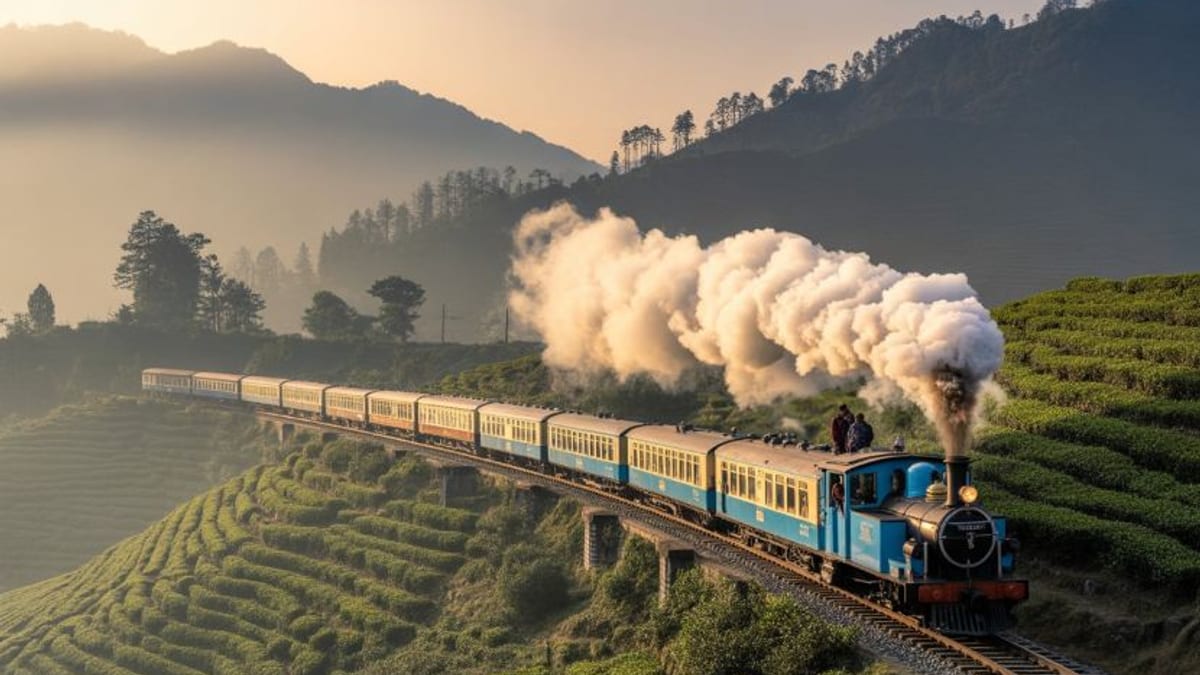
Image by Latest International Railway News, Global Rail Industry News
Darjeeling and India’s Hills Prepare for a Fresh Wave of Rail Tourism
India’s historic hill railways, long associated with slow travel and colonial era charm, are entering 2026 with a renewed focus on panoramic tourism. In Darjeeling, where narrow gauge toy trains climb through tea gardens and misty ridges, recent investment in track renewals and station upgrades is designed to make the iconic route more reliable and attractive for international visitors. Publicly available information from Indian Railways and regional media highlights a broader push to position heritage lines as headline tourist products rather than simple commuter links.
Beyond Darjeeling, similar efforts are spreading across the country’s hill states and the northeast. Vistadome coaches with wide windows and glass roofs are being introduced or revived on select routes to showcase forested valleys and river gorges, while new lines under construction in the eastern Himalayas promise dramatic scenery once they open to regular passenger services. Trial runs reported in early 2026 on new stretches in Assam and Arunachal Pradesh indicate that rail operators are increasingly marketing these projects not only as infrastructure milestones, but as future scenic journeys in their own right.
At the same time, the rapid rollout of semi high speed services within India is expected to support scenic tourism by reducing access times from major cities to hill gateways. Corridors announced or advanced in planning during the 2025–2026 budget cycle aim to shorten journeys from the plains to key junctions that connect with heritage mountain lines. For international travelers, this combination of modern access and historic branch lines is likely to make 2026 one of the most convenient years yet to build rail focused itineraries in and around Darjeeling.
Industry observers note that regional tourism boards are beginning to package these experiences together, encouraging visitors to pair classic toy train rides with newer glass roofed services and overnight express trains. The result is an emerging network of scenic options that can be stitched into longer routes across north and northeast India, mirroring the way European rail journeys combine heritage and high speed lines.
Taiwan’s Alishan Forest Railway Steps Into a New Era
Taiwan’s Alishan Forest Railway, one of Asia’s most storied mountain lines, is at the center of the region’s scenic rail resurgence. After a lengthy period of reconstruction following typhoon damage, the full route between Chiayi and the Alishan area returned to service in 2024 and 2025. Subsequent coverage from Taiwanese outlets and government agencies shows that services quickly became heavily booked, with domestic and international travelers competing for seats on trains that wind through forests, tunnels and high altitude switchbacks.
In 2026 the railway is scheduled to move beyond restoration and into reinvention. Information released by the Alishan Forest Railway and Cultural Heritage Office and reported in local media points to the launch of new premium rolling stock, including a trainset branded with contemporary interiors designed for sightseeing and cultural storytelling. A separate luxury style service, highlighted in recent travel trade reports, is planned to offer upgraded seating, curated food and beverage, and itineraries that emphasize overnight stays in the mountain resort area.
Special event and seasonal trains are adding another layer to the experience. Recent seasons have seen limited departures featuring vintage steam locomotives and themed journeys timed to maple foliage and cherry blossom periods. Reservations for these departures have been reported as selling out quickly, underscoring strong demand for rail based nature tourism in Taiwan. As new premium services join the timetable in 2026, analysts expect the Alishan line to stand as one of Asia’s most visible examples of how historic infrastructure can be repositioned for contemporary travelers.
For visitors planning ahead, publicly available booking data and travel forums suggest that advance reservations will remain essential, particularly during weekends and public holidays. However, the introduction of additional trainsets and tourism passes that bundle Alishan services with intercity rail is expected to modestly expand capacity and make it easier to combine the forest railway with broader circuits around Taiwan.
Japan Refines the Art of Luxury and Scenic Rail for 2026
Japan, already known for its blend of high speed and boutique rail experiences, is using 2026 to refresh several of its most scenic products. In Kyushu, the Seven Stars in Kyushu luxury sleeper is preparing to introduce revamped itineraries from spring 2026, according to updated information released by operator JR Kyushu and summarized by travel trade publications. The redesigned routes are expected to emphasize coastal segments, volcanic landscapes and lesser visited hot spring towns, reinforcing the train’s reputation as one of the world’s most exclusive rail journeys.
Elsewhere in the country, railway companies are continuing to roll out and upgrade sightseeing trains that prioritize views over velocity. Planned introductions of hybrid diesel multiple units in Shikoku for 2026, documented in recent industry filings, are intended to modernize regional rolling stock while maintaining access to rural lines that thread through river valleys and terraced farmland. These trains are expected to feature large windows and comfortable interiors to appeal to both local travelers and overseas visitors exploring beyond the main bullet train corridors.
Japan’s existing portfolio of luxury trains, including Train Suite Shiki Shima and Twilight Express Mizukaze, is also being marketed aggressively for travel in 2026 through tour operators and rail pass providers. Promotional materials emphasize multi day itineraries covering coastal cliffs, remote fishing villages and mountain passes that are difficult to access by road. By layering these high end products on top of an already extensive network of scenic local lines, Japan is positioning itself as a laboratory for how rail can anchor slow travel in a country best known for speed.
With international arrivals to Japan continuing to rise, travel industry analysis suggests that reservation lead times for premium scenic trains will remain long. However, the introduction of new trainsets and refined timetables in 2026 may slightly increase availability, particularly outside peak cherry blossom and autumn foliage periods. Travelers who are flexible on dates and willing to combine luxury sleepers with regional sightseeing trains are likely to find more options than in previous years.
Cross Border Rail Corridors Open New Pan Asian Scenic Routes
Beyond individual national projects, 2026 is shaping up as a pivotal year for cross border rail corridors that could reshape scenic travel across mainland Southeast Asia and southern China. The China Laos Railway, which has already carried millions of passengers since its opening, is increasingly promoted in regional tourism plans as a backbone for itineraries that connect Kunming with the mountains and river valleys of northern Laos. Reports from regional organizations and news outlets indicate that Thailand and Malaysia are working to link their own networks more closely to this corridor.
In Thailand, progress on the Bangkok to northeastern high speed project, intended to form part of a larger China Laos Thailand route, has been the subject of extensive public discussion. Official planning documents and regional briefings suggest that further phases are targeted around the mid 2020s, with full through high speed passenger service seen as a medium term goal. While construction challenges and a recent accident have underlined the complexity of the project, tourism authorities across the Mekong region continue to view a future continuous corridor as a major opportunity for rail based sightseeing and multi country journeys.
Malaysia and other Association of Southeast Asian Nations members are similarly exploring how to plug existing and planned lines into a north south spine that would eventually allow travelers to move by rail from China through Laos and Thailand to the Malay Peninsula. Policy papers and conference presentations in 2025 and early 2026 describe this as a way to diversify visitor flows beyond traditional city breaks and beach destinations, drawing attention instead to highland plateaus, river landscapes and cultural towns along the tracks.
For now, most of these transnational rail journeys require a combination of high speed segments, conventional trains and road transfers. However, the direction of travel is clear: as more sections open or are upgraded over the next few years, 2026 will likely be viewed as a turning point when the idea of continuous scenic rail across mainland Southeast Asia shifted from long term vision to tangible work in progress.
Planning a 2026 Itinerary Around Asia’s Scenic Rail Revival
Publicly available forecasts from tourism boards and rail operators point to 2026 as a year when travelers will have more options than ever to design itineraries centered on trains. In practice, this means combining classic mountain lines such as Darjeeling and Alishan with newer or upgraded services in Japan and Southeast Asia, linked by major air or high speed rail gateways. Travel agencies and independent planners are already highlighting sample routes that thread from the Himalayas to Taiwan and onward to Japan, using rail as both transport and attraction.
Analysts recommend that travelers interested in these experiences factor in booking horizons and seasonal patterns. Heritage and luxury trains across Asia often open reservations months in advance, and peak foliage or blossom seasons can sell out quickly. At the same time, shoulder periods may offer clearer views, lower prices and slightly easier access to coveted seats, particularly on lines where extra capacity is being introduced in 2026.
Practical considerations such as luggage, altitude and weather remain important on routes that climb steep gradients or pass through remote terrain. Information from existing operators suggests that many scenic trains emphasize comfort but still rely on modest platforms and older station infrastructure, especially on historic narrow gauge lines. Travelers planning multi country journeys that stitch together services in India, Taiwan, Japan and mainland Southeast Asia are advised by guidebooks and travel advisories to build in buffer days for transfers and potential disruptions.
Even with these logistical challenges, industry observers widely expect that 2026 will be remembered as a breakout year for rail focused travel in Asia. With heritage lines restored, premium trains entering service and cross border corridors steadily expanding, journeys that once required imagination are quickly becoming bookable realities for rail enthusiasts and casual sightseers alike.