

More news on this day
Across Asia, a new kind of journey is taking hold, trading whirlwind checklists and short stays for long rail rides, river journeys, and village stopovers that encourage travelers to slow down and stay longer. From India’s themed tourist trains to Laos’s rail-linked river routes and Japan’s expanding network of scenic lines, slow travel is emerging as one of the region’s most powerful responses to overtourism and climate concerns, and it is beginning to change how visitors experience the continent.
Get the latest news straight to your inbox!
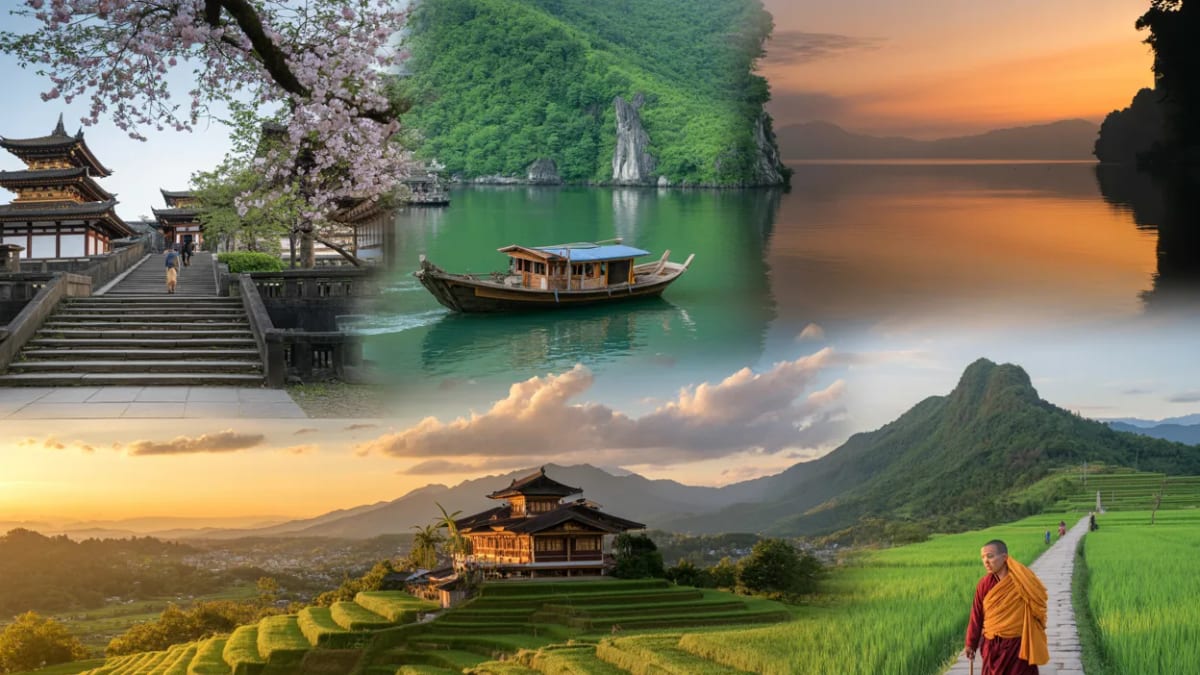
Image by Travel And Tour World
From High-Speed Links to Slow Lanes in Mainland Southeast Asia
In mainland Southeast Asia, infrastructure that once symbolized speed is now quietly enabling slower, more immersive trips. The China–Laos railway, which connects Kunming to Vientiane, has shortened overland travel times across the region and is expected to carry the bulk of its passengers for tourism. Publicly available information on the route indicates that it is being positioned as a backbone for multi-country journeys that combine trains with traditional river and road travel, rather than a point-to-point dash between cities.
Travel coverage on Laos highlights how this shift is playing out on the ground. The new rail line now sits alongside classic slow routes such as the two-day Mekong boat journey between the Thai border at Huay Xai and Luang Prabang, a trip that emphasizes village stops and river life rather than speed. Reports indicate that many visitors are stitching the old and new together, arriving by high-speed train and then spending several days on boats, buses, and bicycles to explore smaller towns and rural landscapes that previously saw few international tourists.
Tourism authorities in Thailand have also begun leaning into this overland renaissance. Coverage of cross-border travel notes that the China–Laos rail link is expected to increase the number of visitors entering Thailand by land, especially from China, and that promotional efforts now spotlight road-trip itineraries and lesser-known provinces. In practice, that means more travelers reaching the northeast and border regions, and more itineraries that stretch to two or three weeks instead of a handful of days in Bangkok and the islands.
Together, these developments suggest that Southeast Asia’s new train lines are not just about getting somewhere faster. They are creating corridors where travelers can slow down, break journeys into segments, and reintroduce the kind of meandering, cross-border routes that once defined backpacker travel, but with more comfort and far greater reach.
India Turns Rail Heritage into Long-Stay Experiences
India has become one of the region’s most ambitious testbeds for rail-based slow travel. Government documents and industry reports describe the Bharat Gaurav tourist train scheme, launched in late 2021, as a program designed to showcase the country’s cultural and spiritual heritage through theme-based rail circuits. These trains run multi-day itineraries that link pilgrimage sites, historic cities, and UNESCO-listed monuments, bundling onboard accommodation with guided excursions and local transport at each stop.
Data cited in Indian media show that Bharat Gaurav trains operated more than 170 trips in 2023, carrying tens of thousands of passengers on routes that often last a week or longer. The format encourages travelers to spend full days in each destination and to visit clusters of smaller towns around major sites, supporting local economies that rarely see tour groups. New circuits announced in late 2024 and early 2025, including routes focused on temple towns in Tamil Nadu and Kerala and pilgrim centers in western India, continue this emphasis on slower, themed exploration.
India’s long-established luxury trains are also seeing renewed attention as part of the slow travel narrative. The Maharajas’ Express, operated by the Indian Railway Catering and Tourism Corporation, has repeatedly been recognized at global tourism awards as a leading luxury train, while the Deccan Odyssey in western India has been named Asia’s leading luxury train multiple times. Both operate weeklong circuits that prioritize leisurely sightseeing, onboard dining, and overnight journeys between regions rather than quick transfers by air.
These services sit alongside a wider expansion of rail capacity, from semi-high-speed intercity services to overnight expresses, but it is the curated, multi-night itineraries that align most closely with global slow travel trends. They offer an alternative to domestic flights, reduce the number of hotel changes, and frame distance as part of the experience rather than an obstacle, which is attracting older travelers and family groups who might once have opted for packaged coach tours.
Japan Refines Slow Journeys in a Hyper-Efficient Network
Japan’s rail system is often associated with high-speed bullet trains and tight timetables, yet recent developments show the country placing more emphasis on experiential routes and overnight travel. Coverage of new services notes that JR companies are expanding sightseeing and sleeper options, including a planned overnight express announced for launch in 2027 that will link Tokyo with the rural landscapes of northern Tohoku. Such routes are marketed not simply as transport, but as moving hotels with private cabins, lounges, and large windows that emphasize scenery.
At the same time, extensions to existing high-speed lines are being used to disperse visitors into less-visited regions for longer stays. Travel industry reporting on the Hokuriku Shinkansen extension highlights how faster access from Tokyo to coastal prefectures on the Japan Sea is opening up hot spring towns, fishing villages, and smaller cities that historically saw fewer international arrivals. Tourism boards in these areas have responded with rail-inclusive passes and campaigns encouraging multi-night stays and off-season visits.
Japan’s experiment with luxury and sightseeing trains, from the Shiki-shima in eastern Honshu to regional services such as Hanaakari in western Japan, underlines a broader shift in mindset. Many of these trains run at moderate speeds on secondary lines, dedicating time to onboard dining, cultural programming, and curated off-train excursions. Publicly available schedules and marketing materials present them as a way to savor rural scenery and local cuisine rather than race between major urban centers.
For international travelers, the effect is a reframing of what it means to use Japan’s famed rail network. Rather than treating the Shinkansen as a tool for rapid-fire city hopping, more visitors are using a mix of high-speed segments and slower, regional lines to construct itineraries that linger in countryside areas, follow seasonal food trails, or track cherry blossom and autumn foliage over several weeks.
River Cruises, Homestays, and Community-Led Tourism Gain Momentum
Beyond the tracks, Asia’s slow travel revolution is unfolding on rivers, farms, and village streets. In Laos, Cambodia, and Vietnam, long-stay river cruises and multi-day Mekong journeys are being reimagined for a new generation of travelers who are increasingly conscious of their environmental impact. Regional travel features describe itineraries that combine overnight riverboats with homestays on islands or in stilt-house communities, allowing guests to spend more time in a smaller geographic area while contributing directly to local incomes.
In countries such as Thailand and Indonesia, community-based tourism initiatives are expanding under national and provincial programs that encourage visitors to stay in rural homestays, join farm activities, and participate in traditional crafts. Public policy documents and destination marketing materials emphasize these schemes as tools to spread tourism benefits beyond crowded resort areas and to extend average length of stay. Packages often include train or coach travel to reach small towns, reinforcing the link between low-impact transport and locally rooted experiences.
The pattern is similar in parts of South Asia. Sri Lanka has seen growing interest in its scenic highland rail line between Kandy and Ella, with many travelers now breaking the journey into multiple nights in tea country guesthouses instead of riding directly through. Nepal’s trekking regions, meanwhile, are leaning into slower, lodge-based itineraries and off-season walking routes that encourage repeat visits and longer stays rather than single, bucket-list climbs.
These experiments share common themes: fewer internal flights, longer stopovers, and closer engagement with host communities. They also align with the priorities of younger travelers and remote workers, who are seeking trips that justify long-haul emissions by maximizing time spent in one region, often measured in weeks or months rather than days.
Why Slow Travel in Asia Is Reshaping Global Expectations
The cumulative effect of these shifts is substantial. Rail and river initiatives across Asia are giving travelers viable alternatives to short domestic flights, while curated itineraries and community-based tourism are turning what used to be transit days into core parts of the experience. Industry analysis suggests that longer average stays, higher per-trip spending, and more geographically dispersed tourism flows are now central objectives for many Asian destinations.
For visitors, the practical implications are just as significant. Trips that once involved four or five countries in ten days are being replaced by deep dives into one or two regions, often centered on a single rail corridor or river basin. Travelers are beginning to accept that they may see fewer iconic landmarks in a single journey, but they are likely to spend more time in each place, return to destinations in different seasons, and build personal connections with local hosts.
As Asia refines and scales its slow travel offerings, it is also influencing global perceptions of what responsible tourism looks like. The region’s blend of cutting-edge transport infrastructure and centuries-old cultural routes provides a template in which efficiency serves slowness, not the other way around. For many who experience these new journeys, the measure of a successful trip is becoming less about distance covered and more about how fully a single landscape, culture, or community can be explored when the pace is allowed to drop.