

More news on this day
Passengers on an NJ Transit train along the Jersey Shore were left stranded for hours after a conductor was assaulted during a fare dispute, forcing the train to halt near Bradley Beach and disrupting Friday travel for coastal commuters.
Get the latest news straight to your inbox!
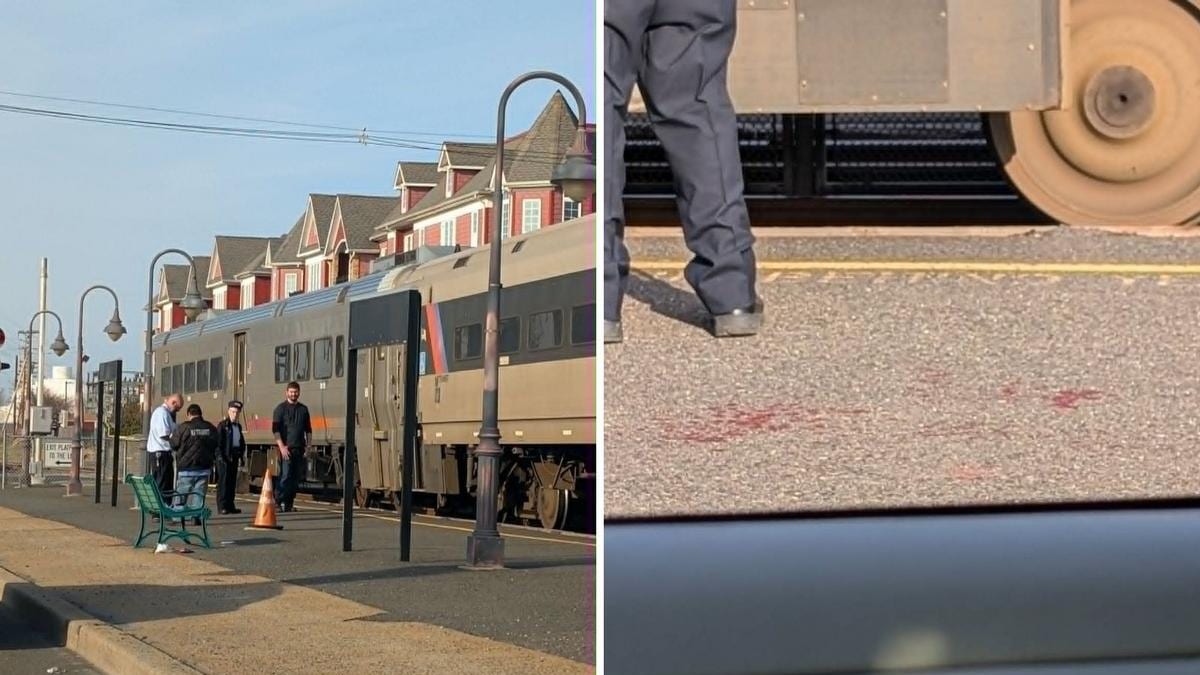
Fare dispute turns violent on North Jersey Coast Line
According to published coverage, the incident occurred on Friday, April 3, when a passenger allegedly attacked a conductor on an NJ Transit North Jersey Coast Line train traveling through Monmouth County. The confrontation reportedly began as a disagreement over fare payment and escalated into a physical assault inside one of the rail cars.
Reports indicate that the train came to an unplanned stop near the Bradley Beach station after the conductor was injured. Images shared by local outlets showed one train standing still on the tracks as another approached at slow speed, underscoring the extent of the disruption on a busy commuter corridor that links coastal communities with Newark and New York City.
The injured crew member was removed from service for medical evaluation, leaving the train temporarily without a key safety role required for passenger operations. As a result, the railcar doors remained closed and the train could not continue its scheduled run until replacement staff and law enforcement completed their responses.
Publicly available information shows that the incident is under investigation and that the assailant fled the train. No arrests had been announced in initial reporting, and NJ Transit had not yet released detailed information about the conductor’s condition beyond acknowledging that an assault occurred.
Passengers stranded between shore towns and connections
The halted train quickly created a cascade of delays for riders heading to and from shore destinations in Monmouth and Ocean counties. Passengers reported sitting in their seats for an extended period while the train remained motionless on the tracks, with limited information about when service might resume.
According to commuter accounts cited in local coverage, some travelers decided to abandon their rail journeys altogether. Many turned to ride share services to complete their trips to Ocean County and other points south, adding unexpected costs on top of the time lost in transit. Others opted to wait on board in hopes that a rescue train or a crew change would allow the journey to continue.
The disruption was particularly challenging for riders who had planned tight connections to other NJ Transit lines or to intercity services later in the day. With the North Jersey Coast Line serving both daily commuters and weekend leisure travelers, the assault rippled beyond a single train’s manifest and affected subsequent departures along the route.
For some passengers, the incident reinforced a perception that travel on already crowded peak and shoulder periods can be vulnerable to sudden breakdowns in service, whether from equipment failures, weather events, or conflicts between riders and staff.
Safety concerns for front-line rail workers and riders
The attack near Bradley Beach comes amid ongoing concerns about safety for front-line rail employees in the New York and New Jersey region. Recent cases involving assaults on subway and commuter rail staff in nearby systems have drawn attention to the risks faced by conductors, engineers, and train operators while enforcing fares and rules of carriage.
Transit advocates note that conductors often serve multiple roles at once, including ticket inspection, crowd management, and emergency coordination. When a dispute over payment or seating becomes physical, the impact is felt not only by the employee involved but also by everyone on board who is relying on that person for guidance and safe operation of the train.
Published information from rider forums and previous incidents on NJ Transit highlights that verbal confrontations over fares are not unusual, particularly during busy periods when trains are standing room only and passengers are under time pressure. However, physical assaults remain a serious escalation that can quickly trigger shutdowns, police responses, and long delays across the network.
In response to prior episodes of violence, rail agencies in the region have emphasized the presence of posted signage warning that assaulting transit crew members is a criminal offense that can carry significant penalties. Despite these warnings, the latest incident suggests that enforcement and deterrence remain ongoing challenges.
Operational ripple effects along the Jersey Shore corridor
From an operational standpoint, an in-service train that must be abruptly removed from the schedule presents complex logistical hurdles. Dispatchers may need to hold or reroute following trains, and crews can be displaced from later assignments, leading to additional gaps in service even after the immediate emergency is resolved.
Reports from the scene indicate that the assaulted conductor’s train remained stationary while another NJ Transit train approached cautiously from behind on the same line. That second train appeared to be moving at restricted speed, a standard safety measure when a stopped train is ahead, which in turn contributed to slower running and potential delays for subsequent departures.
For the wider North Jersey Coast Line, the timing of the assault on a Friday heightened its impact. The route typically carries a mix of daily commuters heading home from work and early weekend travelers bound for shore towns, meaning that disruptions can affect both regular riders and occasional visitors trying to make evening plans.
Travelers relying on the line for airport connections or transfers to Amtrak at Newark and New York Penn Station could face particular challenges when an incident halts a train between stations. Without clear communication about alternative options, riders may be left to improvise, as many did by arranging shared rides or calling friends and family for pickup at unfamiliar intermediate stops.
Calls for stronger protections and clearer communication
The Bradley Beach assault is likely to feed into broader conversations about how to better protect transit personnel and passengers while maintaining reliable service. Public comments circulating in regional media and online forums reflect frustration not only with the violence itself but also with the length of resulting delays and the scarcity of timely updates.
Advocates for riders have previously urged NJ Transit and other agencies to invest in more visible security measures on trains and at stations, including increased patrols by transit police, improved camera coverage inside railcars, and faster reporting channels for passengers who witness escalating disputes. Some have also called for additional de-escalation training and staffing support so that conductors are not left to handle confrontational situations alone.
On the communication side, passengers often emphasize the value of frequent announcements and accurate real-time updates to help them make decisions about whether to stay aboard or seek alternative transportation. When incidents like the Bradley Beach assault occur, timely information about expected delays, rescue trains, or bus substitutions can lessen the sense of being stranded between stations.
As investigations proceed, the episode adds to a growing catalog of rail and subway worker assaults in the wider New York metropolitan area, renewing attention to the human and operational toll such incidents impose on a transit system that millions rely on to travel safely every week.