

More news on this day
Arizona State University alumnus Bhavya Pandya is turning streams of aircraft and operations data into practical tools that help airlines spot trouble earlier and keep more flights running on time.
Get the latest news straight to your inbox!
From ASU classroom to real-world aviation challenges
Recent coverage from Arizona State University highlights how Pandya, who completed a master’s degree in data science in 2025 through the Ira A. Fulton Schools of Engineering, has moved from academic projects to a front-line role in the aviation industry. Publicly available information shows that he now works as a data scientist employed by GRAero and assigned to Envoy Air, a regional carrier in the American Airlines Group portfolio.
At ASU, Pandya studied in the School of Computing and Augmented Intelligence, an academic unit that emphasizes large-scale analytics, machine learning and applied problem-solving. Reports on the program describe a focus on working with complex, high-volume data and on translating technical models into decisions that organizations can use in real time.
That combination of theory and application has proved directly relevant to aviation, where delays often emerge from subtle patterns that are hard to see without statistical tools. By learning how to design scalable analytics systems and communicate findings across technical and nontechnical teams, Pandya built a foundation for the kind of cross-disciplinary work that modern airlines increasingly rely on.
The move reflects a broader trend at research institutions such as ASU, which has expanded its portfolio of data-centric degrees alongside long-standing strengths in transportation and logistics. University materials note that ASU has invested heavily in applied computing and high-impact research, an environment that can accelerate alumni entry into sectors such as air travel operations.
Turning raw aircraft data into early warning systems
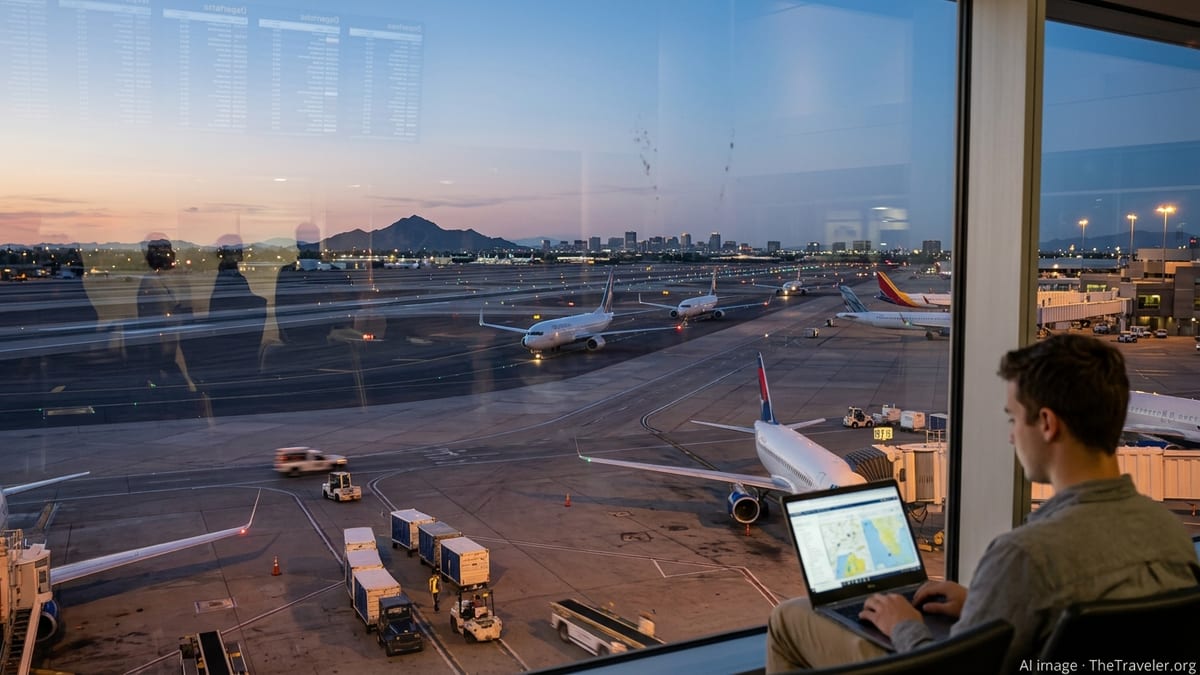
In commercial aviation, every flight generates extensive data, from aircraft sensor readings and maintenance records to crew schedules and turnaround times at the gate. On their own, these data streams can be difficult to interpret. The work highlighted in ASU’s recent profile shows Pandya building dashboards and predictive models that connect those pieces and surface actionable signals before they become operational problems.
According to that coverage, his responsibilities include tracking how aircraft components perform across fleets, monitoring patterns in unscheduled maintenance and helping operations teams assess where bottlenecks may form. By combining historical records with live operational feeds, the models aim to flag trends that correlate with late departures, missed connections or extended time on the ground.
When such systems are effective, the impact for travelers can be significant but largely invisible. Earlier insights can allow maintenance crews to address emerging issues before an aircraft is scheduled to depart, or help schedulers adjust equipment and staffing to avoid last-minute aircraft swaps. Instead of passengers learning about problems at the gate, many disruptions can be prevented before they reach the departure board.
This type of work mirrors developments across aviation analytics, where research communities are applying machine learning and time-series modeling to predict delays and isolate the factors that matter most. Publicly available studies have examined influences ranging from weather and congestion to airport infrastructure, showing how data-driven approaches can support more reliable timetables.
Data science steps into the heart of airline decision-making
The ASU profile on Pandya emphasizes that his role is situated at the intersection of data science, engineering and day-to-day operations. Rather than generating reports after flights are completed, the goal is to embed analytics into routine decision-making, from maintenance planning to network scheduling.
Industry research indicates that this shift from retrospective analysis to predictive and preventive tools is reshaping how airlines view their data. Models that once served mainly as forecasting aids for long-term planning are now being adapted to provide near real-time recommendations, narrowing the window between detection of a risk and action to mitigate it.
Pandya’s path illustrates how that evolution depends on skills beyond coding and statistics. Reports on ASU’s data science curriculum note an emphasis on structured problem-solving, documentation and clear communication with nontechnical stakeholders. In aviation, where flight crews, mechanics and operations managers must all work from the same information, the value of any model is tied to how understandable and trustworthy it appears to the people using it.
As more carriers experiment with advanced analytics, roles like Pandya’s are likely to grow in importance. The ability to translate large, noisy data sets into concise, operationally relevant insights can help airlines navigate a landscape where travelers expect both safety and punctuality, even as traffic volumes and regulatory demands increase.
ASU’s growing footprint in air travel and mobility
Pandya’s work is one example within a broader portfolio of air travel and transportation initiatives associated with Arizona State University. University coverage in recent years has highlighted research on flight disruptions, social media reactions to delays and strategies for strengthening the resilience of aviation networks.
Faculty and alumni have examined how travelers respond to prolonged waits and cancellations, how airports manage surges in congestion and how new technologies can support both safety and efficiency. Separate reporting on ASU’s aviation and air transportation management programs has pointed to continuing interest in preparing students for careers that sit at the junction of operations, policy and technology.
In parallel, global studies on flight-delay prediction using machine learning methods continue to grow. These projects often draw on public data from transportation agencies to develop models that estimate the likelihood and severity of disruptions, suggesting new tools that airlines and regulators may adopt over time. The presence of ASU-trained data scientists in industry settings links this research activity to the practical challenges of daily airline operations.
Together, these developments position the university’s alumni, including Pandya, within a network of efforts aimed at making air travel more predictable for passengers. While delays cannot be eliminated entirely, better use of data can help airlines understand where vulnerability is highest and where targeted interventions will yield the greatest gains.
What fewer delays could mean for travelers
Flight reliability has direct consequences for passengers, airlines and airports alike. Missed connections and cascading delays can raise operating costs, strain crews and disrupt travel plans across entire networks. Public analyses from transportation and aviation organizations routinely link improved on-time performance to stronger customer satisfaction and more efficient use of aircraft and infrastructure.
By focusing on early detection of risk factors, the type of data science work described in ASU’s coverage of Pandya aims to reduce the frequency and duration of such disruptions. When predictive tools correctly identify aircraft or routes that are at higher risk, operations teams can reassign equipment, adjust schedules or bolster staffing before problems escalate.
For individual travelers, these behind-the-scenes changes may show up only as a departure board that lists more flights as on time. For airports and airlines dealing with constrained capacity, even small improvements in punctuality can free resources for additional flights or smoother peak operations.
As carriers and researchers continue to refine their models, the experience of data-focused alumni such as Pandya underscores how specialized training in analytics can translate into tangible benefits for the flying public. Each incremental reduction in delays represents not just saved minutes, but a demonstration of how data science is reshaping one of the most complex transportation systems in the world.