

More news on this day
Athens is moving ahead with a new generation of electric buses, expanding its low-emission fleet and launching an electric bus network that aims to ease congestion, cut pollution and create smoother journeys for residents and visitors across the Greek capital.
Get the latest news straight to your inbox!
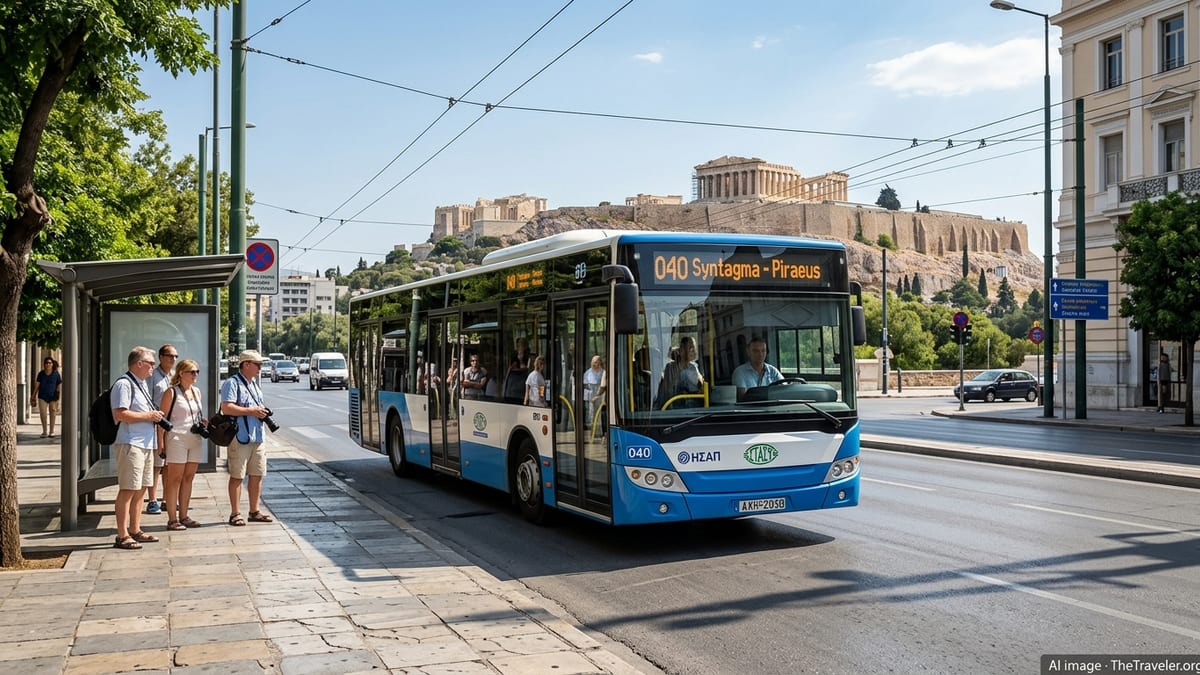
New Electric Fleet Reshapes the Athens Bus Network
Publicly available information shows that Athens is in the midst of a major overhaul of its urban bus operations, centered on the introduction of electric vehicles on key corridors across the city. Recent sustainable development reporting from the Athens Urban Transport Organization’s operating group indicates that 140 battery-electric buses are being added to the fleet as part of a broader renewal program, alongside new compressed natural gas vehicles that are gradually replacing older diesel buses.
Technical documentation from European transport projects focused on Athens describes how the capital is now treating electric buses not as a pilot but as a core part of the regular network. The buses are being woven into existing routes rather than running as stand-alone demonstration lines, with planners concentrating first on high-demand corridors that link dense residential areas, business districts and major interchanges.
The shift to electric operation is supported by new charging infrastructure at depots and along selected routes. Reports on Athens’ electric bus integration highlight the use of both slow overnight charging at depots and opportunity charging solutions where required, allowing vehicles to cover full daily schedules while limiting downtime for recharging.
Planning studies note that the electric buses will ultimately operate across dozens of the 280 bus lines managed in the wider Attica region, with an emphasis on services within the Municipality of Athens. These core lines connect the historic center, central neighborhoods and transport hubs, ensuring that the new vehicles are visible and accessible to a large share of daily passengers.
eBRT Corridor Connects City Center With the Athens Riviera
Alongside standard bus routes, Athens is deploying an electric bus rapid transit style corridor that aims to improve capacity and reliability on one of the city’s busiest axes. A recent fact sheet from a European eBRT initiative outlines an Athens demonstration along Syggrou Avenue, the four‑kilometer corridor that links the Fix metro station near the city center with the Stavros Niarchos Cultural Center by the coast.
According to this published material, the Syggrou project combines articulated electric buses with a hybrid charging concept that makes use of the existing trolleybus overhead network as well as depot charging. Vehicles can connect to the overhead lines at designated sections for in‑motion charging, reducing reliance on battery capacity alone and limiting the need for extensive new physical infrastructure along the route.
The corridor functions as a high-capacity spine between metro, tram and bus services, improving multimodal access to cultural venues and the seafront, an area increasingly branded as the Athens Riviera. Project documentation notes objectives such as cutting carbon dioxide emissions along the corridor by around half, increasing passenger capacity by at least 30 percent and reducing travel times through priority measures and digitally optimized operations.
Real-time fleet management, passenger counting and dynamic scheduling tools are also being tested on this electric corridor. These systems are designed to adjust frequency and stop patterns in response to demand and traffic conditions, with the aim of shortening waits at stops and making services more predictable for both Athenians and tourists.
Digital Upgrades and Charging Network Underpin Urban Mobility Shift
The rollout of electric buses in Athens is tied to a broader modernization of urban mobility, combining low-emission vehicles with digital ticketing and expanded charging infrastructure. Recent corporate announcements and transport sector reporting describe the introduction of contactless payment across the city’s public transport network, allowing passengers to tap bank cards or mobile devices on buses, trolleys, metro and tram services.
This move toward open-loop fare collection is framed in public communications as a step that simplifies boarding, reduces queues at ticket machines and aligns Athens with other European capitals that have adopted similar systems. For visitors, it allows direct access to buses and other modes without having to first navigate unfamiliar ticketing products, potentially making the new electric fleet more attractive and easier to use.
At the same time, national recovery and resilience plans for Greece highlight targeted funding for electric mobility, including thousands of charging points and the replacement of hundreds of urban buses in Athens and Thessaloniki with electric vehicles. Policy papers on sustainable mobility in Greece note that these investments are designed to support national climate goals, complement stricter rules on vehicle emissions in major cities and provide a framework for further electrification of public and private transport.
These initiatives converge with local plans to extend late-night and high-frequency public transport services. Updated public transport summaries for Athens indicate that select bus and rail lines now operate overnight at weekends, adding flexibility for people moving between nightlife areas, hotels and residential neighborhoods and reinforcing the role of public transit as a viable alternative to private cars at all hours.
Cleaner Air and Quieter Streets for Residents and Visitors
Transport and environmental assessments point to significant potential benefits from Athens’ electric bus expansion for both residents and the city’s growing number of visitors. Replacing older diesel vehicles with battery-electric buses can substantially reduce greenhouse gas emissions and tailpipe pollutants on congested corridors, contributing to better air quality in neighborhoods that have long struggled with traffic-related smog.
Electric buses also operate more quietly than conventional buses, particularly during acceleration and at stops. For central districts lined with cafes, archaeological sites and residential buildings, this reduction in engine noise can alter the character of busy streets, making them more comfortable for pedestrians and outdoor dining, while improving the overall soundscape around popular landmarks.
Reports on Athens’ trolleybus and electric fleet underline these advantages, noting that electrically powered vehicles not only cut direct emissions but also reduce fine particulate matter associated with diesel combustion. This aligns with wider public health and climate strategies at the city and national levels, which emphasize both greenhouse gas reductions and improvements in daily living conditions in dense urban areas.
For tourism, the combination of cleaner air, quieter streets and more efficient public transport supports Athens’ positioning as a modern, livable destination. Travel industry commentary frequently highlights the importance of easy, reliable and low-stress mobility for city-break travelers, and Athens’ new electric bus network is emerging as a visible symbol of that shift.
Tourism Connectivity to Cultural Sites and Coastal Attractions
The way Athens is deploying electric buses has clear implications for how visitors move between its historic core, cultural venues and coastal attractions. Planning documents and project descriptions emphasize that electric vehicles are being concentrated on routes that traverse the city center, link major metro and tram stations and connect inland neighborhoods with the seafront.
The Syggrou corridor eBRT demonstration is a notable example, running between a central metro station and the Stavros Niarchos Cultural Center close to the waterfront. This axis serves both daily commuters and tourists heading to museums, performance venues and the promenade, and it illustrates how high-capacity electric bus lines can complement fixed-rail services to improve access to key sites.
More broadly, the integration of electric buses into the wider network supports easier connections to emerging developments along the Athens Riviera and to future transport hubs such as the planned new intercity bus terminal at Eleonas. As these projects progress, the electric fleet is expected to provide lower-emission links between long-distance services, airport and port connections, and the monuments and neighborhoods that form the backbone of the city’s visitor economy.
For travelers, these changes translate into more straightforward journey planning: frequent services on recognizable corridors, modern vehicles equipped with passenger information systems and fare payment options that mirror those in other European capitals. As Athens continues to refine routes, expand charging capacity and coordinate with national mobility programs, its electric bus network is poised to play a central role in how both residents and tourists experience the city.