

More news on this day
In a city where new hotels compete to outdo each other with rooftop pools and Acropolis views, Okupa in Athens has spent its first year carving out a different identity, positioning itself as a hub for experimental design, creative communities and travelers seeking an alternative to the city’s polished mainstream stays.
Get the latest news straight to your inbox!
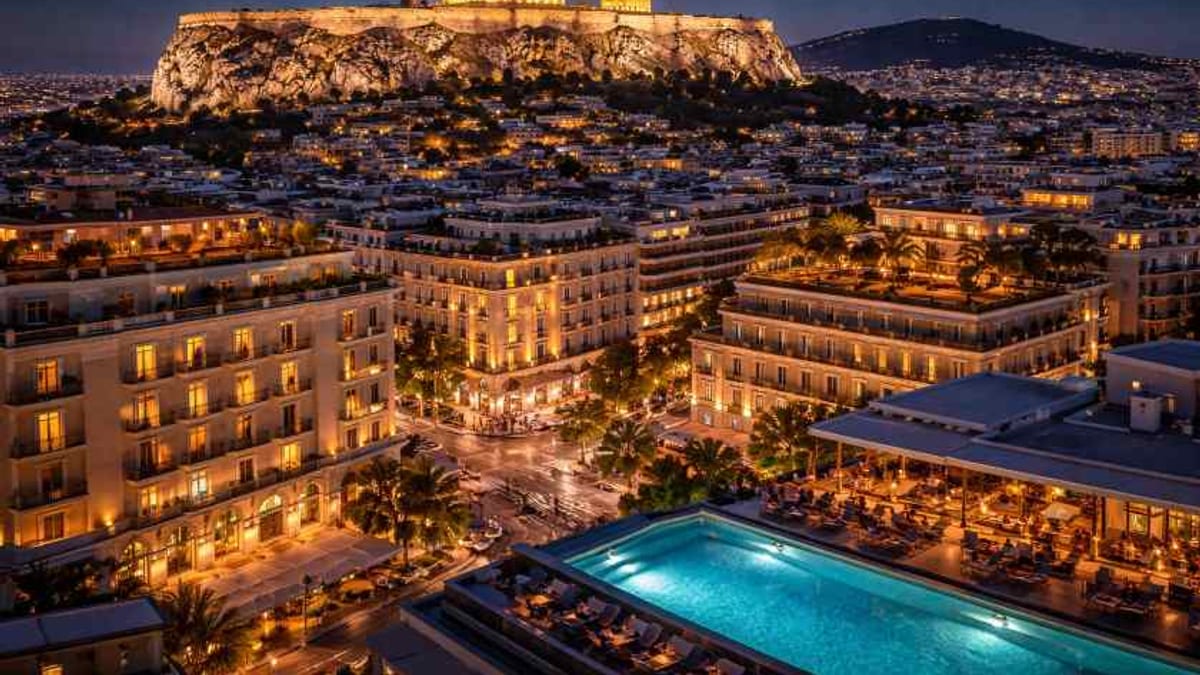
Image by International Hotels News, Hotel Industry & Hospitality News
A Year On, an Anti-Generic Hotel Concept Finds Its Audience
Located on the edge of Exarcheia, one of central Athens’ most politicized and artistically charged neighborhoods, Okupa opened in 2024 with the ambition of reimagining what an affordable city hotel can be. Publicly available information describes the project as a cross between a design-forward guesthouse and an urban living room, aimed at visitors who want to plug into the local creative scene rather than watch it from a distance.
Over its first year of operation, Okupa has come to stand out in a crowded market by leaning into its offbeat character. Instead of muted palettes and generic lobby art, the property favors bold color, repurposed materials and rotating installations that blur the line between guest space and gallery. Reports on Athens’ hospitality landscape indicate that this kind of characterful, low- to mid-priced accommodation is increasingly in demand among younger visitors, especially those extending their stays to work remotely.
The hotel’s name, which echoes the language of urban occupation and reclaimed spaces, hints at its broader positioning. While it operates as a fully legal hospitality business, its aesthetic draws on the visual codes of squats, independent art venues and do-it-yourself cultural spaces that have long been part of Exarcheia’s identity. That distinction has helped Okupa secure a niche alongside more conventional boutique hotels clustering around Syntagma and Monastiraki.
Design Language Rooted in Reuse and Artistic Experimentation
Okupa’s interiors are a deliberate break from the polished marble minimalism associated with Athens’ new crop of luxury openings. Public descriptions of the project highlight a design approach built around reclaimed furniture, visible traces of the building’s earlier life and interventions by local artists, from murals and light installations to ad hoc sculptural elements.
This emphasis on reuse aligns with a broader shift in European urban hospitality, where adaptive reuse and low-impact materials are increasingly treated as both an aesthetic and an ethical choice. By keeping original surfaces exposed, layering them with color and texture instead of hiding them behind drywall, the hotel positions itself as part of a new wave of “honest” interiors that celebrate imperfection.
The rooms themselves are compact but intentionally flexible, with a mix of private doubles, shared configurations and studio-style spaces that can accommodate extended stays. Design details such as open storage, movable lighting and simple work-friendly surfaces speak to the needs of guests who treat the hotel as a base for projects or residencies rather than a brief overnight stop.
From Bed for the Night to Neighborhood Living Room
One of the most distinctive aspects of Okupa’s first year has been its emphasis on programming. Rather than reserving social areas exclusively for paying guests, the hotel has made select spaces available as a platform for neighborhood activity, hosting events that range from listening sessions and zine launches to small exhibitions and workshops, according to published coverage on Athens’ independent cultural calendar.
This approach reflects a broader movement in hospitality, where lobbies and lounges increasingly double as semi-public cultural venues. In Okupa’s case, the effect is to blur the boundary between visitor and local, with travelers sharing long communal tables and terrace seating with Athenians dropping in for an event, a drink or a meeting.
For the surrounding district, this kind of hybrid space provides an extra node in a network of independent bookshops, bars, record stores and galleries that have long made Exarcheia a magnet for students and artists. For guests, it translates into the possibility of encountering local projects and collaborators without leaving the building, an appealing proposition for those who seek out “creative city” experiences rather than landmark checklists.
Positioning Within Athens’ Rapidly Evolving Hotel Scene
The timing of Okupa’s one-year milestone coincides with a broader acceleration of hotel development across Athens. Industry reports point to a wave of openings spanning global luxury brands along the Riviera, renovated heritage properties in the historic center and a growing number of lifestyle concepts aimed at younger travelers.
Within that context, Okupa’s scale and pricing keep it far from the city’s five-star competition, but its positioning reinforces Athens’ reputation for diverse, locally rooted stays. While large operators highlight spa facilities, rooftop restaurants and branded beach clubs, smaller projects like Okupa emphasize walkable neighborhoods, informal communal spaces and cultural proximity over conventional luxury markers.
Travel analysts suggest that this diversity is a strength for the Greek capital, giving visitors a wider spectrum of choices at a time when demand stretches from short city breaks to month-long workations. Okupa’s first year of trading underscores how even a compact property can contribute to that mix by cultivating a distinct identity that reflects not just Athens as a destination, but a specific district and its creative communities.
Looking Ahead: Creative Hospitality as a Long-Term Strategy
As Okupa moves beyond its inaugural year, the project’s next challenge will be to sustain the freshness that has defined its early phase. Maintaining a rotating slate of cultural programming, keeping interiors in active dialogue with local artists and avoiding the drift toward generic decor are likely to be priorities for any team intent on preserving a sense of experimentation.
The hotel’s model also points toward potential collaborations with festivals, art schools and independent organizers interested in alternative venues. Athens already hosts a busy calendar of cultural events, and properties that can flexibly host talks, screenings or pop-up shows are well positioned to become partners rather than passive backdrops.
For travelers, the continued evolution of Okupa will be worth watching as an indicator of where “creative hospitality” in Athens might be headed. If the hotel can balance financial sustainability with its current edge, its second year may confirm its status as one of the city’s coolest options for visitors who treat a hotel stay as much as an artistic and social encounter as a place to sleep.