

The ferry crossing from Athens to Paros is one of the most popular routes in the Cyclades, connecting the Greek capital with one of the Aegean’s most beloved islands. With multiple departures daily in high season, a mix of conventional and high speed vessels, and a wide price range, it is a route that rewards a bit of planning.
Understanding the Athens to Paros Ferry Route
Paros is served almost exclusively by ferries departing from two of the three ports of Athens: Piraeus and Rafina. Piraeus, on the southwestern side of Athens, is the main commercial port of Greece and offers year round connections to Paros.
Rafina, on the northeastern coast of Attica and closer to Athens International Airport, has strong seasonal connections to Paros, especially from April to October, but generally no winter service.
The sea distance from Piraeus to Paros is roughly 90 nautical miles, while from Rafina it is slightly shorter. Conventional ferries typically make the crossing from Piraeus in about 4 to 5 hours. High speed catamarans and fast ferries can cut that travel time to around 2 hours 45 minutes to 3 hours 30 minutes, depending on the specific vessel, weather conditions and intermediate island stops.
Several major Greek ferry operators serve the Athens to Paros route, including Blue Star Ferries and Seajets from Piraeus, and Seajets, Golden Star Ferries and Fast Ferries from Rafina in season.
Schedules and exact travel times vary month by month, with the densest network in July and August and a slimmed down but reliable service in winter. Because ferry timetables can change due to weather or labor actions, always recheck departure times in the 24 hours before you travel.
Ports in Athens: Piraeus vs Rafina
For most travelers, the choice of port is the first big decision. Piraeus is the default option because it is the largest port, offers daily year round departures to Paros, and is well connected to central Athens by metro, suburban rail and buses.
From Syntagma or Monastiraki, the metro trip to Piraeus usually takes 25 to 30 minutes, followed by a short walk or shuttle within the port to your specific gate.
Rafina, by contrast, is often more convenient for those arriving or departing by plane. It lies northeast of Athens and can be reached from Athens International Airport in about 30 to 45 minutes by taxi under typical traffic conditions. In high season, when Rafina has daily ferries to Paros, using this port can save you the time and cost of heading into central Athens, especially if you are connecting directly from a flight to a ferry.
Each port has a different feel. Piraeus is busy, urban and sprawling, with multiple gates and dozens of ships docking and departing throughout the day. It can be confusing if you arrive last minute, so it is wise to build in extra time to find your vessel.
Rafina is more compact, with ferries lined along a single main quay and a small town center moments from the boarding areas. For travelers who prefer a calmer boarding experience, Rafina is often the more relaxed choice during the shoulder months of April, May, September and October.
Ferry Types, Companies and Onboard Experience
The Athens to Paros route is served by two broad categories of vessels: conventional ferries and high speed catamarans or fast ferries. Conventional ferries, such as those operated by Blue Star Ferries from Piraeus, are large, stable ships that carry passengers, cars and trucks. They are generally slower, with crossing times in the 4 to 5 hour range from Piraeus, but tend to offer lower base fares and more open deck space.
High speed ferries, including vessels from Seajets, Golden Star Ferries and some Fast Ferries services, are more modern catamarans or monohulls designed for fast crossings, shaving the trip down to roughly 2 hours 45 minutes to 3 hours 30 minutes. These ships usually have assigned indoor seating, fewer open decks and more pronounced motion in rough seas.
They are popular with travelers on tight schedules but typically cost more than conventional ferries and may be more vulnerable to cancellations during strong meltemi winds.
On board, most ferries on the Athens to Paros route offer a choice of economy seating, reserved numbered seats, business or club lounges and cabins on selected conventional ships. Cafes and snack bars are standard, serving coffee, drinks and simple meals, while larger ferries may also have restaurants, children’s play areas and small shops.
Wi fi is often available for a fee, though the connection can be patchy mid sea. Overall, the onboard experience is informal and relaxed, with travelers moving freely between indoor lounges and outdoor decks on conventional ferries.
Schedules and Seasonality: What to Expect by Month
From Piraeus, ferries to Paros run throughout the year. Current aggregate timetable data indicate that in the low winter months of January and February there are typically daily departures, often centered on one or two conventional ferries per day, with journey times around 4 hours 10 minutes and starting fares in the low 40 euro range for an economy seat. Frequency remains strong in March, with similar durations and pricing, making spring an attractive period for quieter, dependable crossings.
As the season advances into April, May and June, more options appear. April usually brings a mix of conventional and the first high speed connections, lowering minimum travel times on some sailings to around 3 hours 45 minutes.
By May and June, there is daily service with the fastest crossings of about 2 hours 45 minutes on the quickest high speed vessels, and a rise in starting fares to around 50 euros for the shortest journeys. With longer daylight hours and milder winds than peak summer, late spring can be one of the most comfortable periods for ferry travel.
July and August represent the peak season, with multiple departures per day from Piraeus and daily service from Rafina. High speed options dominate many of the most sought after time slots, especially morning and early afternoon departures.
Although minimum crossing times remain around 2 hours 45 minutes, it is common for sailings that include stops at other Cycladic islands to stretch to 3 or 4 hours. In September and early October, schedules gradually thin but still offer daily choice, after which winter timetables return, especially from November through February.
From Rafina, ferry connections to Paros generally operate from April through October. In early and late season, there is at least one daily departure, often taking about 3 hours 15 minutes to 3 hours 20 minutes. In mid summer, departures become more frequent, with several sailings per day at similar durations. Outside this April to October window, Rafina usually has no direct ferries to Paros, so winter travelers should plan to use Piraeus instead.
Ticket Prices, Seat Classes and Vehicle Costs
Ticket prices on the Athens to Paros route vary by season, ferry type, travel class and how early you book. For foot passengers, recent fare data show that the lowest economy tickets from Piraeus to Paros on conventional ferries generally start in the 30 to 40 euro range in the off season, rising to around 40 to 50 euros in spring and summer.
High speed ferries command higher prices, with many economy fares between roughly 50 and 85 euros in peak months, depending on how flexible or promotional the ticket is.
On high speed vessels and on some conventional ships, you can pay extra for numbered airplane style seats, business class lounges or VIP sections that offer more space, quieter surroundings and sometimes priority boarding.
The price difference between standard economy and a more premium seat can range from about 10 to 30 euros per person each way, depending on operator and season. For most travelers, regular economy is sufficient for this length of journey, but upgrading can be worthwhile if you need to work, rest or avoid crowds in August.
If you plan to take a car, motorbike or campervan, the cost increases significantly. Current indicative rates for a standard car on the Athens to Paros route usually fall between 80 and 130 euros one way, depending on vehicle length, company and season. High speed ferries carrying vehicles may be at the upper end of this bracket. Because vehicle spaces are limited, especially on smaller or faster ships, it is highly advisable to book several weeks or even months ahead for July and August travel.
Discounts are commonly available for children, students with valid identification, large families under Greek policy schemes, and occasionally for seniors, though the exact age threshold and discount percentage differ by company. Infants often travel either free or for a nominal fee but may still require a ticket.
Promotional campaigns can also offer early booking deals or off peak price reductions, particularly in spring and autumn. Always check fare conditions carefully to understand refund policies, change fees and whether your ticket is open or tied to a specific sailing.
Booking Strategies, Strikes and Weather Disruptions
Demand for the Athens to Paros ferries is highly seasonal. In July and August, and around Greek public holidays in late spring and early autumn, sailings can sell out days or weeks in advance, especially high speed departures and those at convenient times.
If you are traveling in peak season, a prudent strategy is to book your ferry tickets as soon as you finalize your accommodation, particularly if you are bringing a vehicle or need to coordinate with flight or train arrivals.
In shoulder months like May, June, September and October, same week booking is often feasible for foot passengers, although it is still wise to secure the exact departure you want ahead of time.
In winter, same day bookings are normally possible, but weather patterns, including strong northerly meltemi winds and storms, can lead to schedule changes. Greek ferry operators publish real time updates on their websites and through port authorities when adverse conditions require delays, route adjustments or cancellations.
Travelers should be aware that occasional strikes by maritime unions can also disrupt services, sometimes with short notice. When this happens, companies typically alter itineraries, shift departures by a day, or combine routes, and provide options for rebooking. It is good practice to monitor Greek news outlets and check with your ticket provider in the week leading up to travel, especially in late September and early October when union actions are more common.
To minimize stress, build buffer time into your itinerary. If you have an intercontinental flight from Athens, avoid planning to arrive on a same day ferry in high season or during unsettled weather. Instead, schedule your return from Paros at least a day before your flight and stay overnight in Athens.
Similarly, if you are connecting from a morning flight to an afternoon ferry, allow for possible delays at passport control and baggage claim. A flexible, well spaced timetable is the best protection against disruption.
Practical Tips for a Smooth Crossing
Once you have chosen your port, company and sailing, a few simple practices can make your Athens to Paros crossing far more comfortable. Aim to arrive at the port 60 to 90 minutes before departure in high season, especially at Piraeus, which can be congested with traffic, taxis and passengers. This window gives you time to locate the correct gate, print or collect tickets if necessary, and board in a relaxed manner.
Pack a small day bag with essentials such as travel documents, any ferry tickets or QR codes, water, snacks, sunscreen, a light jacket and any medications. Even in summer, air conditioned indoor lounges can feel cool, and winds on open decks can be strong. If you are prone to seasickness, consult a healthcare professional before travel and consider taking motion sickness remedies in advance, since Aegean seas can be choppy when the meltemi blows.
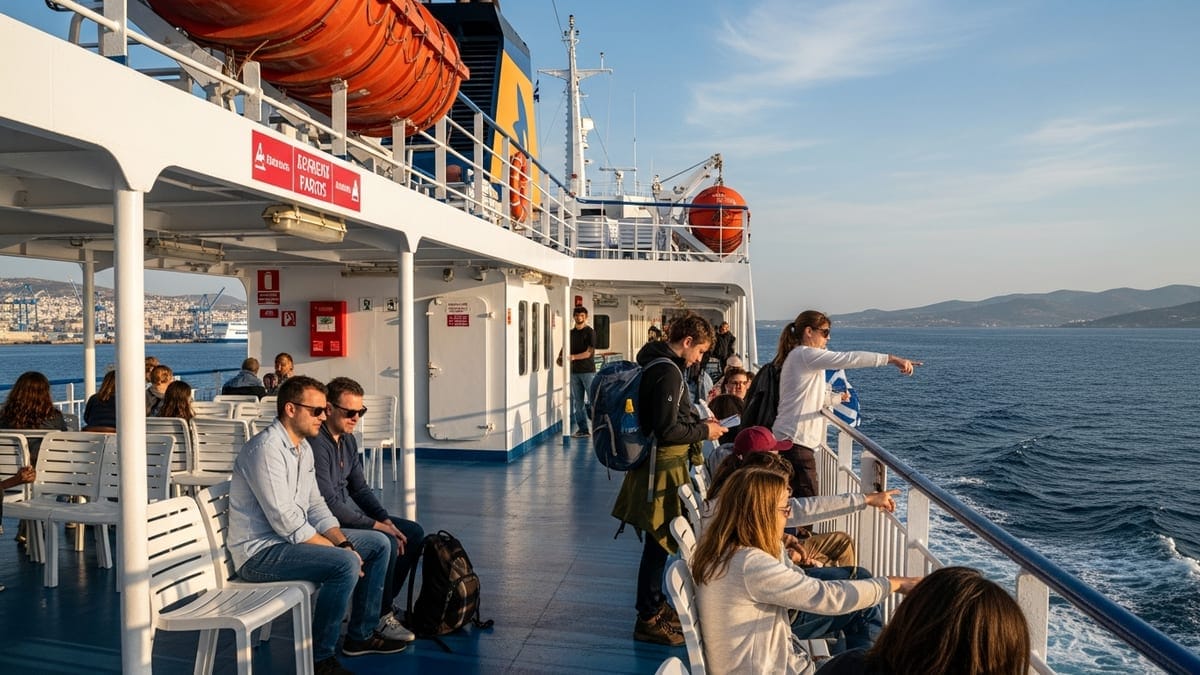
On conventional ferries, many passengers like to spend part of the journey on the open decks, enjoying views of the Saronic Gulf, the open Aegean and the neighboring Cycladic islands. If you want an outdoor seat or a table near a window, boarding early helps.
On high speed catamarans, seating is usually fixed and indoors, so your comfort will depend more on the seat type you booked. Noise‑canceling headphones, a book, downloaded films or music can make the journey pass more quickly, especially on evening sailings.
When traveling with a vehicle, follow crew instructions precisely on embarkation and disembarkation. You will usually be asked to park in a designated lane and leave your car deck once the ship is underway for safety reasons.
It is important to take anything you need from the vehicle before departure, as access to the car deck is generally not permitted during the voyage. At arrival in Paros, wait in the indicated passenger areas until the crew signals that it is safe to return to your vehicle or disembark on foot.
The Takeaway
The ferry journey from Athens to Paros is more than just a means of transportation. It is the moment your Greek island holiday truly begins, with the skyline of Athens receding behind you and the Cyclades gradually unfolding ahead.
By understanding the differences between Piraeus and Rafina, conventional and high speed ships, winter and summer timetables, and the range of ticket prices and classes, you can tailor the crossing to your preferences and budget.
Whether you choose a leisurely half day on a classic blue and white ferry or a swift dash across the Aegean on a modern catamaran, careful planning goes a long way. Book early in peak months, build flexibility into your wider itinerary, keep an eye on weather and strike information, and arrive at the port with time to spare.
With these practical steps in place, the ferry to Paros becomes a highlight in its own right, setting the tone for the beaches, villages and landscapes that await on one of Greece’s most enchanting islands.
FAQ
Q1. How long does the ferry from Athens to Paros take?
The fastest high speed ferries from Piraeus or Rafina to Paros usually take around 2 hours 45 minutes to 3 hours 30 minutes, while conventional ferries from Piraeus generally need about 4 to 5 hours, depending on the specific vessel, intermediate stops and sea conditions.
Q2. How much does a ferry ticket from Athens to Paros cost?
For foot passengers, economy tickets on conventional ferries typically start around 30 to 40 euros in low season and about 40 to 50 euros in high season. High speed ferries are more expensive, with many fares ranging from roughly 50 to 85 euros, depending on the company, date and how early you book.
Q3. Which Athens port is better for traveling to Paros, Piraeus or Rafina?
Piraeus is the main port with year round service, more daily departures and very good connections to central Athens, making it the default choice for most travelers. Rafina is particularly convenient if you are flying into or out of Athens International Airport and visiting Paros between April and October, when it offers daily seasonal connections.
Q4. Can I take my car on the ferry to Paros?
Yes, many ferries on the Athens to Paros route carry vehicles, including conventional ships and some high speed ferries. Car tickets usually cost between about 80 and 130 euros one way, depending on vehicle size, season and operator, and should be booked well in advance, especially for July and August departures.
Q5. How early should I arrive at the port before departure?
In high season or when traveling with a vehicle, plan to arrive at Piraeus or Rafina 60 to 90 minutes before departure to allow for traffic, ticket collection, finding the correct gate and boarding. In quieter months, 45 to 60 minutes can be sufficient, but extra time is always advisable if you are unfamiliar with the port layout.
Q6. Are there direct ferries from Athens Airport to Paros?
There are no ferries from the airport itself. You must travel from the airport to either Piraeus or Rafina by taxi, bus or a combination of metro and bus, then board a ferry from one of those ports. Rafina is geographically closer to the airport, while Piraeus has more frequent and year round connections to Paros.
Q7. Do ferries from Athens to Paros operate in winter?
Yes, ferries from Piraeus to Paros operate throughout the winter with at least one daily departure in most months, primarily on conventional vessels. Rafina typically does not have direct service to Paros from November through March, so winter travelers should plan to sail from Piraeus instead.
Q8. How likely are delays or cancellations due to weather?
Delays and cancellations are relatively uncommon but can occur, especially in periods of strong meltemi winds or storms, which are more frequent in mid to late summer and during unsettled autumn or winter weather. When authorities impose safety restrictions, companies may adjust sailing times, change routes or cancel specific departures and offer rebooking options.
Q9. Is it better to book ferry tickets in advance or at the port?
For July, August and holiday periods, it is strongly recommended to book in advance, particularly for high speed ferries, popular time slots and any sailing where you need to transport a vehicle. In shoulder and low seasons, it is often possible to buy tickets closer to departure, but advance booking still offers security and a better choice of times and seat classes.
Q10. What should I pack for the ferry ride to Paros?
Pack your tickets or digital boarding passes, identification, any required travel documents, a light jacket or sweater, sunscreen, sunglasses, water, snacks and any medicines you might need. If you are sensitive to motion, consider approved seasickness remedies. A book, headphones or downloaded entertainment can make the journey more enjoyable, whether you are on a fast catamaran or a slower conventional ferry.