

More news on this day
In a quiet corner between Kerameikos and Psyrri, Okupa has emerged as one of Athens’ most talked-about new stays, a hybrid urban hub that blurs the line between hotel, neighborhood living room and cultural venue for globally minded travelers.
Get the latest news straight to your inbox!
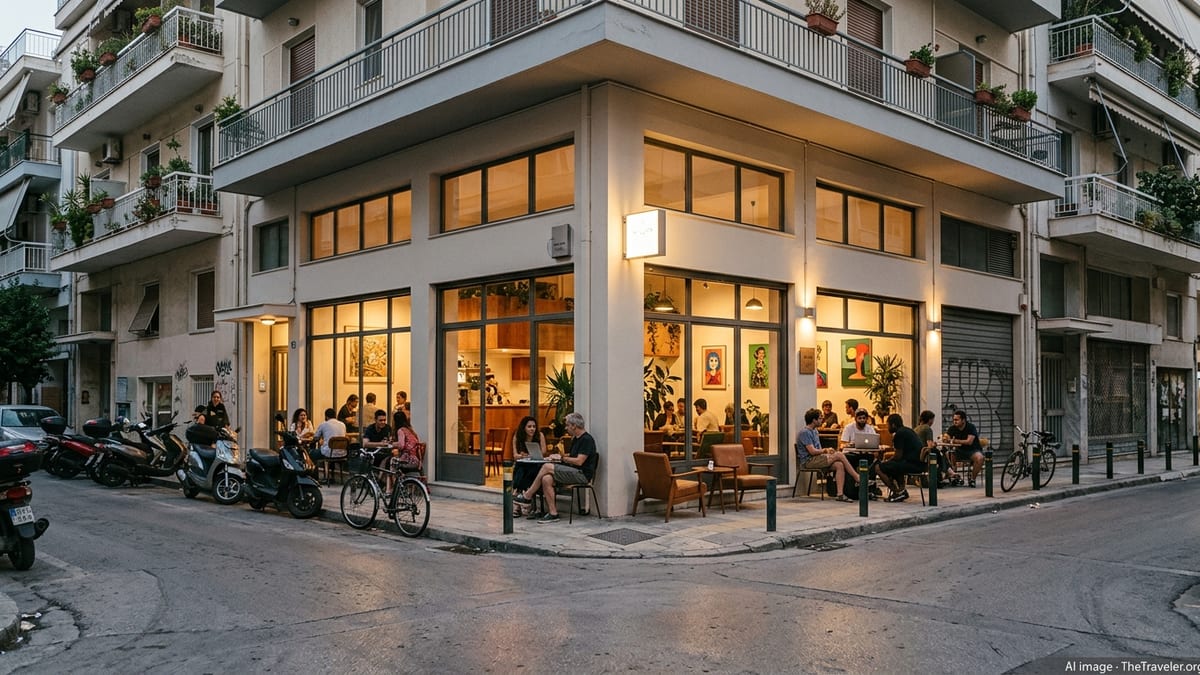
Athens’ New Urban Hospitality Flagship
Okupa opened recently in a converted industrial building on Psaromiligkou Street, positioning itself at the crossroads of some of central Athens’ most dynamic districts. Publicly available information describes it as a multi-purpose destination rather than a conventional hotel, inviting residents and visitors to move fluidly between sleeping, working, socializing and cultural discovery within the same address.
The project sits at the edge of Kerameikos, with its industrial heritage and emerging creative spaces, and Psyrri, long known for nightlife, small workshops and performance venues. This location places Okupa within walking distance of key archaeological sites and transit connections, while still rooted in a lived-in neighborhood that reflects the city’s evolving urban character.
Reports indicate that Okupa presents itself as an “urban hub” where anyone can drop in, whether or not they are overnight guests. The intent is to make hospitality porous, turning the ground floors into a social commons for locals, remote workers and cultural travelers who seek a more embedded experience of Athens than that offered by traditional tourist districts.
The arrival of such a hybrid concept underscores how Athens is repositioning itself from a stopover for island-hopping to a year-round city break destination with its own creative and cultural scene at the forefront.
From Industrial Shell to Social Living Room
Architecturally, Okupa occupies a corner property that once served industrial functions, now reworked into a contemporary residence-style building. Coverage of the project highlights a design language that mixes clean, modern lines with flashes of color and playful details, signaling a departure from both corporate minimalism and nostalgic neoclassical references.
Inside, the main social area acts as the heart of the property. Open-plan lounges, dining corners, bar service and music-focused zones bleed into each other, encouraging guests to linger through the day rather than retreat to their rooms. Descriptions emphasize that these spaces are programmed for flexibility, accommodating laptop work in the morning, listening sessions or small gatherings in the afternoon, and more atmospheric, music-led evenings.
Design reporting notes a blend of vintage and custom-made furniture, including pieces attributed to mid-century designers, combined with contemporary seating and lighting. This mix is complemented by works from local artists installed throughout the building, framing Okupa not only as a place to stay but as an informal gallery of current Athenian creativity.
A small garden and open-air corners expand the social space outdoors, offering a quieter counterpoint to the dense streetscape around Psyrri. Together, these elements position Okupa as a kind of urban living room, where material choices and layout are calibrated less for spectacle and more for everyday, repeat use by residents and visitors alike.
Reinventing the Idea of “Occupying” the City
The name Okupa references the Spanish term historically associated with squatting and grassroots community spaces, but here it is reframed as an ethos of inclusive, intentional use of urban space. According to published commentary, the project’s founders interpret “occupy” as a call to rethink how buildings can host multiple communities under one roof, without the hard boundaries that often separate locals from tourists.
This philosophy is reflected in the way Okupa encourages non-guests to treat the property as a place to read, work or meet friends, effectively dissolving the distinction between hotel lobby, café and cultural venue. Events, listening sessions and informal gatherings are designed to bring different groups into contact, from digital nomads to neighborhood regulars and visiting artists.
Observers of Athens’ urban change note that this approach aligns with a broader shift in European city hospitality, where hybrid venues function as co-working spaces, nightlife spots and creative platforms in addition to offering rooms. In the Athenian context, where debates over touristification and access to housing are ongoing, Okupa’s model highlights both the potential and the tensions of embedding hospitality deeply into residential districts.
By choosing a name and identity that explicitly reference the politics of space, Okupa participates in a wider conversation about who gets to use the city’s buildings and how culture, tourism and everyday life intersect within them.
Athens’ Creative Hotel Landscape Evolves
Okupa’s arrival coincides with a wider transformation in central Athens, where new and reimagined hotels are positioning themselves as cultural anchors rather than standalone properties. Industry reports point to a pipeline of design-led, lifestyle and luxury openings through 2026 and beyond, reflecting growing confidence in Athens as a city break and creative hub.
Recent coverage of the local hospitality sector notes that historic properties are being overhauled with an emphasis on art, gastronomy and public programming, while new builds seek to connect with surrounding neighborhoods through collaborations with local designers, musicians and curators. In this context, Okupa’s focus on community access and cultural content places it squarely within an emerging category of “urban hubs” rather than classic tourist hotels.
Travel and design publications increasingly spotlight Athens for its independent galleries, music venues and experimental restaurants, often citing hybrid hotels as key entry points into this scene. The concentration of such projects around areas like Psyrri, Kerameikos and Metaxourgio reinforces the image of a creative corridor stretching just beyond the main archaeological zone.
For visitors, this evolution translates into more opportunities to engage with contemporary Athens, whether by attending a listening event in a hotel bar, browsing a lobby concept store featuring local makers or joining residents for coffee in spaces that deliberately avoid feeling exclusive or gated.
Implications for Cultural Travelers and the City
For cultural travelers, Okupa’s model offers a blueprint for how to experience Athens as both guest and temporary local. With shared spaces designed for working, lingering and socializing, travelers can structure days that move between museum visits, neighborhood walks and time spent observing everyday Athenian life unfolding around them inside the hub itself.
At the same time, urban researchers and local commentators emphasize that projects like Okupa sit within a complex landscape shaped by rising visitor numbers, short-term rentals and debates about public space. Hybrid venues that welcome non-guests can foster inclusion and cross-cultural exchange, but they also raise questions about affordability, access and long-term neighborhood change.
Publicly available urban studies have documented how central Athens has been reshaped by tourism over the past decade, with traditional residential stock shifting toward visitor accommodation. In this environment, Okupa’s language of community and openness will likely be assessed over time by how it engages with local networks, supports nearby businesses and navigates the balance between global visibility and neighborhood continuity.
As Athens continues to recast itself as a modern cultural capital, Okupa stands as one of the clearest examples of a new urban hospitality era: one in which the hotel is no longer just a place to sleep, but a stage on which the city’s creative, social and everyday stories are played out in full view of residents and travelers alike.