

More news on this day
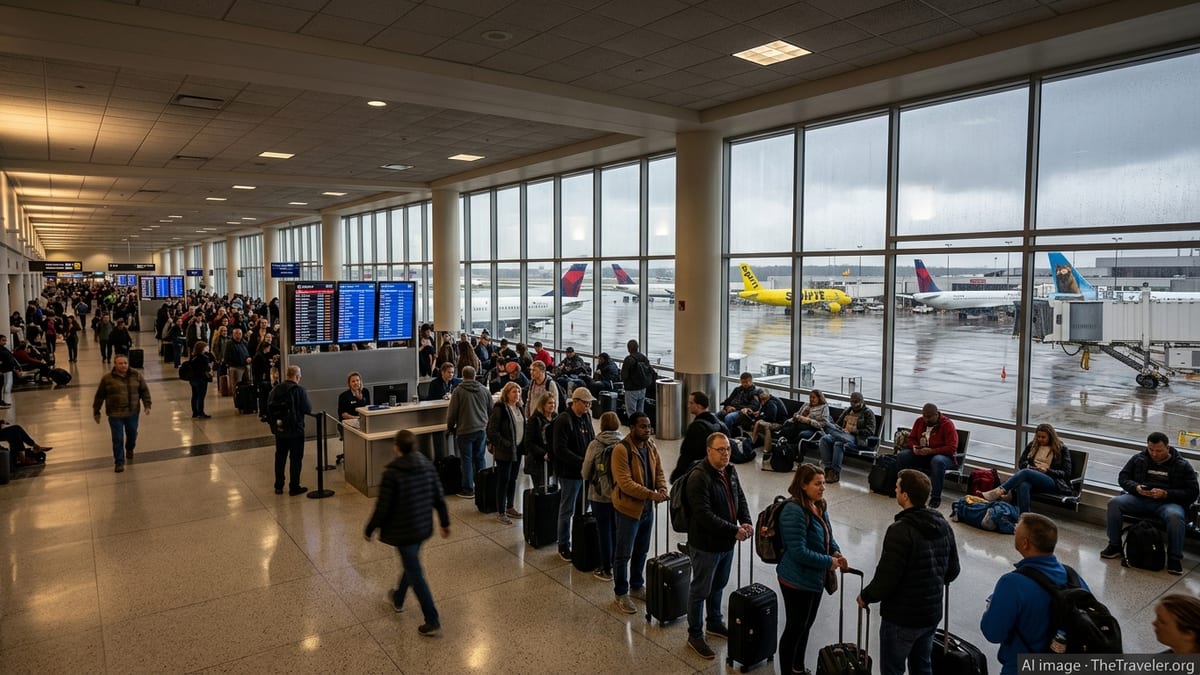
Passengers at Hartsfield-Jackson Atlanta International Airport faced a bruising travel day as Delta Air Lines, Spirit Airlines, and Frontier Airlines together logged 245 flight delays and at least 10 cancellations on routes to New York, Toronto, Chicago, and other major North American cities, according to flight-tracking data and airport operations reports on Friday.
Get the latest news straight to your inbox!
Severe Weather and Air Traffic Programs Snarl Departures
Operational data and published coverage indicate that a combination of strong thunderstorms around Atlanta and federal air traffic control programs triggered cascading delays through the morning and into the afternoon. A recent ground delay program affecting Hartsfield-Jackson led to average departure holds of more than an hour for some carriers, as flights within roughly 1,000 nautical miles of Atlanta were assigned later takeoff times.
Reports from travelers and aviation tracking services describe a patchwork of ground stops and rolling schedule adjustments that forced airlines to push back departures repeatedly. In several cases, aircraft boarded and then deplaned before flights were ultimately scrubbed, further magnifying disruption for passengers trying to reach key hubs such as New York’s LaGuardia and JFK airports, Chicago O’Hare, and Toronto Pearson.
The interruptions come during an already volatile period for U.S. air travel in early 2026, with carriers still working through the aftershocks of major winter storms earlier in the year. Those weather events created backlogs in aircraft positioning and crew scheduling, leaving networks more vulnerable when new rounds of thunderstorms or system constraints arise.
Lines Build as Hundreds of Delta, Spirit, and Frontier Travelers Wait
The largest share of today’s disruption at Atlanta involved Delta, by far the dominant carrier at Hartsfield-Jackson, but low-cost operators Spirit and Frontier also reported significant schedule impacts. Publicly available departure boards showed dozens of flights from the three airlines posting delays ranging from 30 minutes to more than three hours, with a smaller number cancelled outright.
Passengers described crowded concourses and long customer service queues as they waited to be rebooked. At some gates, rolling delay notices for flights to New York and Chicago saw departure times drift from morning into late afternoon. Travelers headed to Toronto and other Canadian destinations also encountered knock-on effects as aircraft arriving late into Atlanta created tight or missed connections.
Check-in areas remained congested through the midday peak as new waves of passengers arrived to find their flights already pushed back. While some later departures left more or less on time as weather conditions improved, many travelers starting their journeys in Atlanta reported extended stays in the terminal while airlines reshuffled aircraft and crews.
Network Ripple Effects Stretch Across the U.S. and Canada
The impact of the Atlanta disruption extended well beyond Georgia. Because Hartsfield-Jackson functions as a central hub for connections across Delta’s domestic and transborder networks, delays on key trunk routes quickly propagated to other cities. Flights from Atlanta to New York, Chicago, and Toronto feed onward connections to destinations throughout the Northeast, Midwest, and Canada.
As early departures from Atlanta slipped, afternoon services out of New York and Chicago began showing knock-on delays, particularly for aircraft scheduled to turn quickly back to the Southeast. Travelers connecting from Atlanta through those hubs to secondary cities such as Buffalo, Rochester, Cleveland, Indianapolis, and Ottawa encountered tighter connection windows and, in some cases, missed flights as terminals struggled to absorb late-arriving passengers.
Ultra-low-cost carriers Spirit and Frontier, which operate smaller fleets than the legacy airlines, appeared especially vulnerable to network ripple effects. With fewer spare aircraft available, a delay or cancellation on one Atlanta route could tie up a plane needed hours later on an unrelated leg elsewhere in the network, leading to compounding schedule problems into the evening.
Airlines Offer Rebooking and Warn of Ongoing Disruptions
In response to the operational strain, Delta, Spirit, and Frontier activated flexible rebooking options through their apps and customer service channels, allowing some travelers to move to later same-day flights without additional fees. Publicly available advisories encouraged passengers to monitor their reservations closely and to arrive at the airport early, citing ongoing weather and air traffic constraints.
However, with many Atlanta departures already heavily subscribed at the start of the day, same-day alternatives proved limited for some routes. Passengers bound for New York and Chicago reported being offered next-day or even multi-stop routings when nonstop services filled up. For Canadian routes, limited daily frequencies meant that a single cancelled flight could strand travelers overnight or force long detours through other hubs.
Travel industry analysts note that, while airlines have invested in new technology and scheduling tools since past meltdowns, the combination of severe weather, staffing tightness, and densely scheduled hub operations can still overwhelm even modern systems. As carriers look toward the busy spring and summer period, today’s events at Hartsfield-Jackson serve as a reminder that a single day of storms in a key hub can reverberate throughout the continent’s air travel network.
What Passengers Can Expect in the Coming Days
Based on recent patterns, operations at Atlanta are likely to stabilize gradually as aircraft and crew rotations reset, but travelers connecting through the hub in the next 24 to 48 hours may still encounter residual delays. Published flight-tracking data from previous disruption days at Hartsfield-Jackson shows that schedule reliability typically improves by the second day, though some early-morning flights can remain at risk if aircraft overnight in cities affected by storms or congestion.
Passenger advocates recommend that travelers departing in the near term build extra time into itineraries involving connections through Atlanta, New York, Chicago, or Toronto, where today’s delays were concentrated. They also point to the value of real-time flight alerts and terminal displays, which can provide earlier warnings of schedule changes than airport announcements alone.
With airlines and airports under close public scrutiny following several high-profile travel disruptions over the past year, the latest round of delays at Hartsfield-Jackson is likely to renew debate over system resilience in the face of increasingly volatile weather. For the thousands of passengers caught up in today’s 245 delays and 10 cancellations, the priority remains more immediate: getting out of Atlanta and back on course to their destinations across the United States and Canada.