

More news on this day
Hartsfield-Jackson Atlanta International Airport is facing another day of significant disruption, with publicly available data indicating 177 flight delays and 34 cancellations affecting major domestic and international routes.
Get the latest news straight to your inbox!
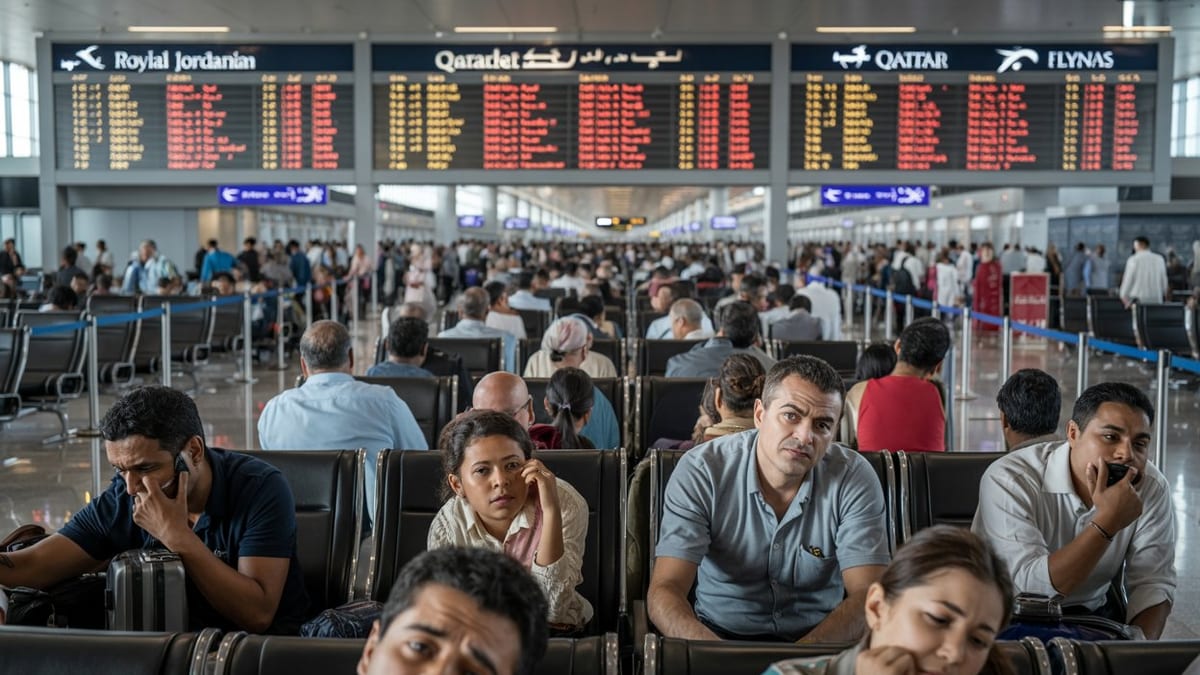
Major Carriers Hit Across Domestic and International Networks
The latest operational figures place Hartsfield-Jackson among the most affected U.S. hubs, as delays and cancellations ripple across airline networks. Published coverage of national flight activity shows Atlanta bearing a heavy share of systemwide disruption, with 177 delayed departures and arrivals and 34 flights cancelled at the airport within a single operating day. These figures put pressure on both local origin-and-destination traffic and on Atlanta’s extensive connecting flows.
Delta Air Lines, which relies on Hartsfield-Jackson as its primary hub, is among the hardest hit, with substantial numbers of late and cancelled services feeding into and out of Atlanta. Other large U.S. carriers, including American Airlines and Spirit Airlines, are also reporting ongoing schedule issues involving the airport. International operators such as Lufthansa are experiencing disruption as well, underscoring how quickly local congestion can spill over onto transatlantic and other long haul routes.
Reports from national aviation trackers point to broad network stress across the United States, with Atlanta mentioned alongside Chicago, Los Angeles, Houston and New York as key nodes of disruption. Even where airlines have kept cancellation counts relatively contained, knock-on effects from delayed aircraft rotations and missed crew connections are contributing to longer than usual recovery times.
For travelers, the impact is translating into extended waits at gates, missed connections and last minute rebookings. With Atlanta functioning as a central hub for multiple carriers, a single cancelled or late flight often affects large numbers of passengers bound for onward destinations across the country and overseas.
Routes to New York, Los Angeles, London and Frankfurt Affected
According to publicly available flight tracking data and industry reports, disruption at Hartsfield-Jackson is impacting a mix of high demand domestic and international routes. Services linking Atlanta with New York and Los Angeles are among those affected, adding strain on some of the busiest corridors in the U.S. aviation network. These routes carry a blend of business, leisure and connecting traffic, meaning delays in Atlanta can quickly propagate to secondary destinations.
Long haul flights between Atlanta and major European hubs such as London and Frankfurt are also experiencing irregular operations. Lufthansa and other international carriers with scheduled service from Atlanta are adjusting departure times, consolidating passengers onto fewer flights or facing outright cancellations in certain time bands. For travelers heading to Europe, disruption at the departure end can lead to missed onward connections to cities across the continent.
Industry coverage notes that even a relatively small number of cancellations on long haul sectors can have an outsized effect. Widebody aircraft typically carry hundreds of passengers, and re-accommodating them on alternative services is more difficult when seat capacity is tightly managed. This is particularly evident on peak transatlantic departures from Atlanta, where spare seats to London, Frankfurt and other gateways are limited on busy travel days.
On the domestic side, repeated delays on trunk routes to New York and Los Angeles are complicating same day connections to smaller markets. Travelers connecting in Atlanta from regional cities to coastal airports are seeing itineraries unravel as late arriving aircraft miss already compressed transfer windows.
Weather, Congestion and Tight Scheduling Drive Irregular Operations
While specific causes vary by flight and carrier, a combination of weather, airspace congestion and tight scheduling continues to feature prominently in published explanations for recent disruptions. Earlier spring weather systems over key regions have already strained airline operations, and congested airspace around major hubs such as Atlanta has left little margin for recovery when delays begin to accumulate.
Analyses from aviation data providers highlight how quickly small schedule deviations can cascade at an airport of Atlanta’s scale. As aircraft and crew rotations fall behind plan, carriers face difficult choices about which flights to operate and which to cancel in order to restore balance to the network. When these decisions involve hubs with extensive connecting traffic, a single cancellation often strands passengers far from their final destinations.
Recent national roundups of U.S. flight performance have also emphasized the role of ground constraints, including security queues and ramp congestion, in amplifying disruption. At Hartsfield-Jackson, even modest slowdowns in passenger processing or aircraft turn times can lead to airborne holding patterns, gate shortages and longer ground stops for arriving flights, further extending delays.
Airline schedule density at Atlanta, particularly for hub carriers, increases sensitivity to any irregular operation. With banks of departures tightly grouped to facilitate connections, a weather cell, temporary ground stop or staffing shortfall at a critical moment can affect dozens of flights in quick succession.
Knock-On Effects for Travelers Across the United States and Abroad
The immediate consequences of Atlanta’s disruption are being felt not only by passengers departing or arriving at the airport, but by travelers across the wider U.S. and international network. Industry summaries of national operations show that when a primary hub like Hartsfield-Jackson experiences sustained delays and cancellations, connecting cities often report secondary waves of schedule irregularities hours later.
Travelers flying between other major centers, such as Chicago, Dallas, Houston, New York and Los Angeles, may encounter late arriving aircraft or last minute aircraft substitutions tied back to earlier issues in Atlanta. Internationally, passengers originating in Europe or other regions and transiting through Hartsfield-Jackson onto domestic U.S. flights are experiencing misaligned connections, unexpected overnights and baggage delays.
Some consumer advocacy and passenger rights organizations note that irregular operations of this scale are no longer isolated events, pointing to a pattern of recurring disruptions at large hubs during periods of heavy demand or challenging weather. For frequent travelers, this has reinforced the importance of monitoring flight status throughout the travel day, allowing extra connection time when routing through Atlanta, and understanding airline rebooking and compensation policies.
For now, the situation at Hartsfield-Jackson underscores how quickly operational strain at a single airport can reverberate across both domestic and international aviation networks. With 177 delays and 34 cancellations concentrated in one of the world’s busiest hubs, the repercussions are being felt well beyond Atlanta’s airfield, from gateway cities like New York and Los Angeles to long haul destinations including London and Frankfurt.