

More news on this day
Hartsfield-Jackson Atlanta International Airport is grappling with another wave of operational disruption today, with roughly 177 flights delayed and 34 cancelled, affecting major carriers and routes across the United States and overseas.
Get the latest news straight to your inbox!
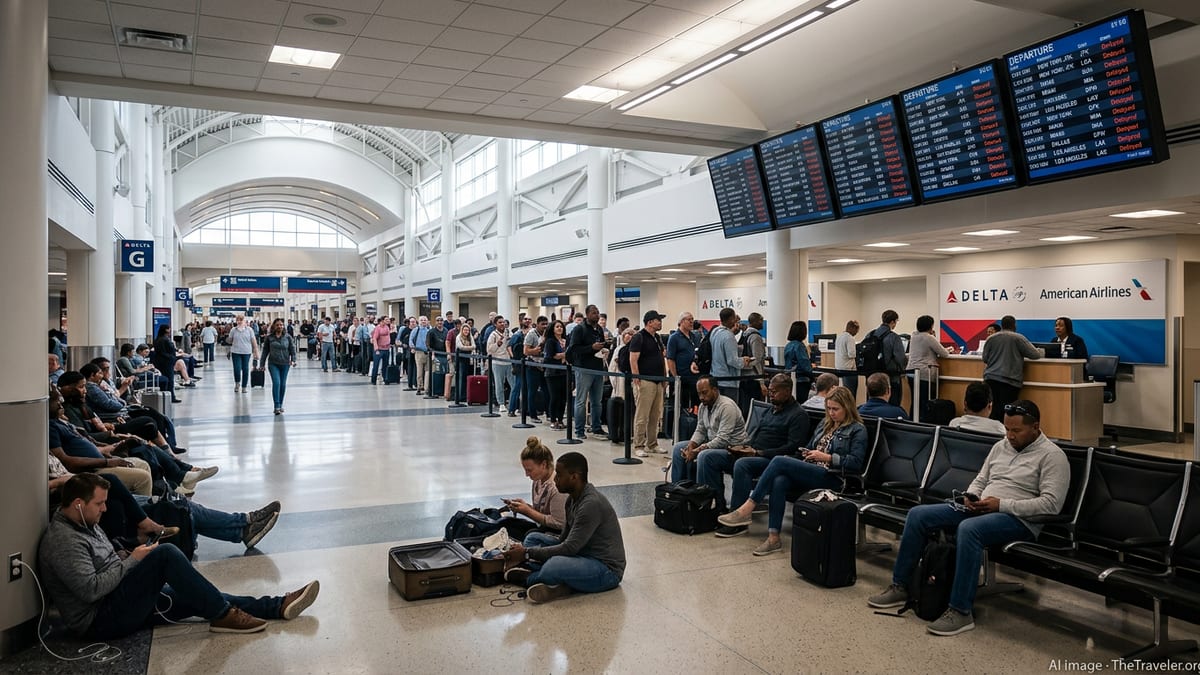
Delays and Cancellations Snarl a Critical U.S. Hub
Publicly available flight-tracking data and travel-industry coverage for April 10 indicate that Atlanta, one of the world’s busiest hubs, is again under strain, with scores of departures and arrivals running late or being scrubbed. Delta Air Lines, Spirit Airlines, Lufthansa and American Airlines are among the carriers reporting disruptions, alongside several other domestic and international operators that rely on Hartsfield-Jackson as a connecting gateway.
The current tally of around 177 delays and 34 cancellations at Atlanta sits within a broader pattern of early April turbulence for the U.S. aviation system, in which thousands of flights nationwide have been running behind schedule. Reports show that Atlanta has repeatedly featured among the most affected airports during this period, reflecting both its scale and its vulnerability when national operations are stressed.
Recent nationwide roundups from travel publications highlight Atlanta alongside other major hubs such as Chicago, Denver, Houston and New York as persistent disruption points. Those same datasets show multiple large carriers, including Delta and American, experiencing elevated levels of delays and cancellations across their networks during the same timeframe.
Although precise causes vary by flight and time of day, observers point to a familiar mix of weather constraints in key regions, airspace congestion and knock-on delays from earlier in the week that continue to ripple through tightly scheduled networks.
Major Airlines See Operations at Atlanta Slow
As Delta’s primary hub, Hartsfield-Jackson is particularly sensitive to any operational hiccup. Recent tracking information shows clusters of late-running Delta departures from Atlanta to both domestic and international destinations, with some services departing significantly behind schedule and others ultimately cancelled, forcing passengers to rebook or reroute through alternative hubs.
Low-cost carrier Spirit Airlines, which maintains a notable presence at Atlanta, has also appeared among the airlines with higher-than-normal delay counts in early April, according to aggregated U.S. flight disruption tallies. These delays tend to cascade through the day, particularly on tightly timed turns where an inbound late arrival leaves little buffer before the next scheduled departure.
American Airlines, which operates key connecting services through Atlanta even though it bases its largest hub in Dallas and Charlotte, features in several nationwide disruption summaries as one of the more heavily affected U.S. carriers this week. Public data from April 9 and 10 show American recording hundreds of delays across its network, with Atlanta among the airports experiencing schedule pressure.
Lufthansa’s transatlantic operation has not been immune either. Flight-status services indicate that Lufthansa’s Atlanta to Frankfurt service scheduled for April 10 was cancelled, while its inbound Frankfurt to Atlanta rotation continues to show elevated odds of delay compared with historical norms, underscoring how a single long-haul cancellation can disrupt connections in both directions.
Key Routes to New York, Los Angeles, London and Frankfurt Impacted
Domestically, some of the most visible disruptions are on trunk routes linking Atlanta with other major U.S. cities. Flights between Atlanta and New York area airports, including John F. Kennedy, LaGuardia and Newark, have been part of broader delay waves observed over the past two days, with national roundups listing both Atlanta and New York among the day’s top trouble spots.
Published coverage of nationwide disruptions also points to heavy strain on services linking Atlanta with major Western gateways such as Los Angeles. These coast-to-coast routes often operate at or near full capacity during spring travel peaks, so even modest schedule slips in the Southeast can translate into missed connections in California and onward disruptions for passengers heading to Asia or the Pacific.
Transatlantic links are feeling the effects as well. The cancellation of Lufthansa’s Atlanta to Frankfurt service on April 10, combined with elevated delay risk on other long-haul departures, reduces options for travelers bound for Germany and connecting onward across Europe. At the same time, flights from Atlanta to London and other major European capitals are operating within a regional environment already marked by weather and airspace constraints, leaving little margin for further disruption.
For travelers, the practical impact is longer waits at gates and in crowded departure halls, missed onward flights and, in some cases, unexpected overnight stays when the last feasible connection of the day is lost due to rolling delays.
Broader Pattern of Spring Travel Strain
The problems at Hartsfield-Jackson today follow several weeks in which Atlanta has figured prominently in accounts of U.S. aviation disruption. Social media posts and user reports in recent weeks have described extended ground stops, lengthy tarmac waits and diversion patterns when storm systems passed through the Southeast, temporarily overwhelming capacity at the airport.
National travel news outlets have also highlighted a run of early spring weather systems affecting multiple regions, from the Midwest to the East Coast, triggering flow-control measures and temporary ground stops at large hubs. In that context, Atlanta’s role as a central connecting point means any slowdown can quickly propagate through the broader U.S. domestic and international network.
Government transportation statistics from recent years show that Atlanta, while generally efficient for its size, regularly records meaningful average delay times in peak months, particularly when seasonal weather is active. Combined with sustained passenger demand following major holidays and school breaks, this can create conditions where a single operational disruption early in the day snowballs into widespread schedule challenges by evening.
Industry analyses published in the past year note that staffing, aircraft positioning and tight turn times across multiple airlines leave the system more vulnerable to shocks. When several carriers simultaneously face weather, technical or staffing issues in overlapping time windows, hub airports like Atlanta are among the first to show visible strain on their departure and arrival boards.
What Travelers Passing Through Atlanta Should Expect
For passengers transiting Hartsfield-Jackson on a day marked by 177 delays and 34 cancellations, the main recommendation emerging from travel advisories and airline communications is to build in extra time and remain vigilant about schedule changes. Many carriers are encouraging travelers to monitor their flights through mobile apps and to consider earlier departures when possible to protect tight connections.
Travel-focused outlets note that rebooking options can quickly diminish when multiple large carriers are affected on the same day, particularly on high-demand routes such as Atlanta to New York, Los Angeles, London and Frankfurt. Once mid- to late-afternoon banks start to slip, remaining evening departures often fill rapidly with displaced passengers.
Some airlines periodically introduce flexible travel policies or fee waivers for affected hubs during disruptive periods, allowing customers to adjust their plans without penalty. While the details vary by carrier and are often time-limited, travelers connecting through Atlanta on affected dates are being advised to check airline notices before heading to the airport.
As early spring continues and storm systems remain active across several U.S. regions, analysts expect that Atlanta and other major hubs may face additional bouts of disruption. For now, the latest figures from Hartsfield-Jackson underline how quickly conditions at a single central hub can reverberate across domestic and international networks, reshaping travel days for thousands of passengers in the United States and abroad.