

More news on this day
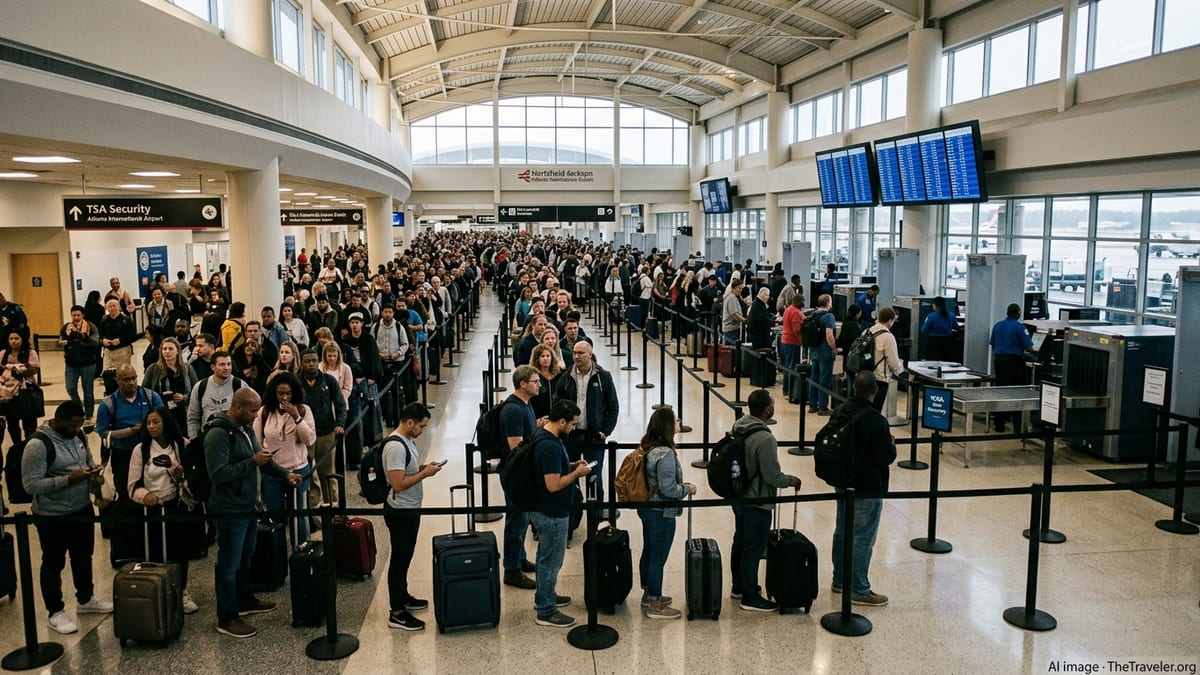
Travelers passing through Atlanta’s Hartsfield-Jackson International Airport in recent days have faced sprawling security queues, with some reporting wait times stretching close to two hours amid a perfect storm of staffing shortages, government funding turmoil and peak spring break demand.
Get the latest news straight to your inbox!
How Atlanta Became the Epicenter of TSA Delays
Hartsfield-Jackson Atlanta International Airport, the world’s busiest hub by passenger volume, often operates close to capacity even in normal times. This March, however, the pressure on its security checkpoints has intensified sharply. Reports from passengers and local coverage describe lines backing up past the central atrium and into baggage claim, with some travelers warning others to arrive three or more hours before departure.
In the week beginning March 8, 2026, a sequence of disruptions set conditions for what many flyers are calling an airport nightmare. Extended ground stops at Atlanta led to waves of delayed and rescheduled flights, pushing more passengers into the terminal at once. At the same time, a partial federal government shutdown affecting Department of Homeland Security agencies has left many Transportation Security Administration officers working without pay, fueling staffing gaps at key checkpoints.
Airport alerts and national travel coverage indicate that Atlanta has repeatedly appeared among the hardest hit U.S. airports, alongside hubs such as New Orleans, Houston and Charlotte. While not every hour of every day has seen extreme delays, the spikes have been severe enough that routine early-morning or evening departures can suddenly encounter queues measured not in minutes, but in hours.
Shutdown Fallout and a Mounting Staffing Crisis
At the heart of the current disruption is a prolonged funding lapse for the Department of Homeland Security, which oversees TSA. Publicly available information shows that TSA officers began missing full paychecks in mid-March 2026, and national reports indicate hundreds of officers have resigned since the shutdown began. Rising numbers of unscheduled absences are leaving security lanes closed or thinly staffed just as travel volume surges.
Analyses of staffing data and published commentary on the shutdown describe Atlanta as among the airports with some of the highest rates of TSA absenteeism. A reported absence rate approaching one in five officers at Hartsfield-Jackson has meant fewer open lanes, slower document checks and a heavier workload on those who remain on the job. In practice, that translates to serpentine lines that inch forward while passengers watch their boarding times loom closer.
The funding standoff comes at a particularly painful moment for TSA’s workforce. Coverage focused on officer experiences notes that many are juggling essential expenses without pay, leading some to seek temporary or permanent work elsewhere. That attrition compounds long-standing recruitment and retention challenges at large, high-cost hub airports like Atlanta, where the job is demanding and schedules are dominated by early morning and late-night peaks.
Spring Break Surge and Weather Disruptions Add to the Chaos
The staffing crisis alone might have been enough to strain Atlanta’s checkpoints, but this March the calendar and the weather have added their own complications. The current wave of delays coincides with spring break season, when families, college students and leisure travelers flock to warm-weather destinations through major connecting hubs. Passenger throughput data and travel industry reporting show that nationwide air travel is running at or above pre-pandemic levels, with Atlanta consistently near the top.
Severe storms sweeping across the eastern United States earlier in the month created widespread cancellations and delays, and Atlanta’s role as a primary connecting hub meant it absorbed a significant share of those disruptions. When flights are rescheduled into tighter windows, it can funnel thousands of extra passengers through security over short periods, overwhelming checkpoints that are already understaffed.
Local media coverage of Atlanta’s airport in mid-March describes a mix of weather-related ground stops, diversions and rolling delays that left terminals crowded well beyond typical weekend peaks. Once the weather cleared, the backlog of displaced travelers combined with regular spring break traffic, keeping the security lines long even on relatively calm operational days.
What Travelers Are Actually Experiencing at ATL
For passengers, the statistics and policy debates translate into a far more immediate reality: arriving at Hartsfield-Jackson to find security lines wrapping through the atrium and into adjacent hallways. Social media posts and traveler forums from March 15 through March 22 describe waits ranging from 50 minutes in TSA PreCheck to nearly two hours in standard lanes, with some connecting international passengers reportedly spending more than four hours moving from arrival gates to outbound screening.
Experiences can vary widely by time of day and checkpoint. Early-morning rush periods, especially between about 5 a.m. and 9 a.m., have drawn many of the longest lines as overnight staffing levels meet the first outbound wave of flights. Evening departures at the international terminal have also seen elevated waits, with intermittent closures of dedicated fast-track services contributing to congestion.
Travelers also report that the airport’s online wait-time tracker has not always reflected conditions on the ground. In some instances, posted estimates of 20 to 30 minutes were contradicted by line lengths suggesting significantly longer waits, prompting airport communications to caution that the tracker could be inaccurate and that passengers should build in extra time. The gap between official estimates and lived experience has further fueled frustration among flyers trying to plan arrival times precisely.
At peak moments, the situation has occasionally improved only when additional lanes or checkpoints were suddenly opened, drawing audible relief from those stuck in line. Yet such ad hoc fixes do little to resolve the underlying staffing challenges, leaving many travelers worried that their next trip through Atlanta could bring the same uncertainty.
How Long Will the Atlanta TSA Nightmare Last?
Looking ahead, the duration of Atlanta’s security crunch appears closely tied to the broader political dispute over Department of Homeland Security funding. As long as TSA officers continue working without pay, reports from labor groups and policy analysts suggest that resignations and absences are likely to remain elevated, limiting the agency’s capacity to restore normal staffing levels at busy hubs like Hartsfield-Jackson.
Travel industry observers note that even a swift resolution to the shutdown may not translate into an instant fix. Replacing experienced officers takes time, and training new screeners is a weeks- or months-long process. In the meantime, Atlanta will continue to juggle heavy domestic and international schedules, periodic severe weather and the upcoming summer travel surge, any of which could trigger new waves of long lines if staffing remains fragile.
For now, publicly available guidance from airlines, airport channels and national travel resources converges on similar advice for passengers using Atlanta: arrive well ahead of schedule, especially during early-morning or weekend departures; expect that TSA wait-time tools may underestimate actual queues; and be prepared for conditions that can change rapidly as lanes open or close. Until the funding dispute is resolved and staffing stabilizes, Atlanta’s airport is likely to remain a focal point of the national conversation about security lines, worker pay and the fragility of the U.S. air travel system.