

More news on this day
Travelers across the United States faced fresh disruption after operational data showed 186 delays and 24 cancelled flights at Hartsfield-Jackson Atlanta International Airport, triggering schedule knock-on effects for Spirit, Frontier, Delta and other carriers serving Fort Lauderdale, Miami, Philadelphia and additional domestic routes.
Get the latest news straight to your inbox!
Weather Turbulence And Congestion Hit The World’s Busiest Hub
The latest round of disruption at Hartsfield-Jackson Atlanta International Airport comes amid a volatile early spring travel period, with severe weather and heavy traffic repeatedly straining operations at the country’s largest hub. Recent coverage of national flight statistics indicates that storms sweeping through the Southeast have been a primary catalyst, forcing crews to slow arrivals and departures and creating bottlenecks on already full schedules.
Publicly available tracking data for the current disruption points to 186 delayed flights and 24 cancellations tied to Atlanta over the course of the day. While modest compared with some of the most extreme recent weather events, the figures are significant at a hub where tight connection banks and heavy reliance on domestic links mean that even a relatively small percentage of off-schedule flights can cascade quickly across the network.
Reports on recent operational trends at Atlanta also highlight that ground delay programs and intermittent ground stops have become more frequent in recent weeks, particularly during peak morning and evening waves. In practice, this has left some aircraft waiting for gates, crews bumping up against duty-time limits, and passengers facing long lines at security and customer service desks as airlines rework itineraries.
A combination of factors appears to be at play: lingering storm systems, air traffic control flow restrictions into the Atlanta area, and ongoing pressure on staffing, especially during busy holiday and weekend travel periods. Together, these elements have made Hartsfield-Jackson a focal point for national disruption whenever the weather or airspace picture deteriorates.
Spirit, Frontier And Delta Feel The Strain
The impact of Atlanta’s delays and cancellations has been spread across multiple airlines, but low-cost carriers Spirit and Frontier, along with hub-dominant Delta, have featured prominently in the disruption statistics. According to flight-status dashboards used by travelers and widely cited in media coverage, all three carriers registered notable numbers of late or scrubbed flights connected to Atlanta during the latest episode.
For Delta, which maintains its largest hub at Hartsfield-Jackson, even isolated schedule issues in Atlanta can quickly affect dozens of connecting markets. Operational reports over the past several weeks show that irregular operations at the airport have repeatedly translated into rolling delays, missed connections, and aircraft and crew imbalances that can take a full day or longer to untangle.
Spirit and Frontier have also faced elevated disruption levels, in part because their point-to-point models leave fewer spare aircraft and open seats to absorb shocks. When a single aircraft running a multi-leg sequence through Atlanta encounters a lengthy delay, late arrivals can propagate into subsequent departures, affecting travelers far from Georgia who may not initially realize that their schedule depends on conditions in Atlanta.
Other carriers with smaller but still important Atlanta operations have reported similar pressure, with some flights held at origin airports awaiting improved conditions or arrival slots, and others cancelled outright when recovery within legal crew and curfew limits became unlikely.
Fort Lauderdale, Miami And Philadelphia Among The Hardest-Hit Routes
The disruption centered on Atlanta has not been confined to the Southeast. Tracking data and published coverage of the latest delays point to significant ripple effects on routes linking Hartsfield-Jackson with Fort Lauderdale, Miami, Philadelphia and other popular destinations along the East Coast and in Florida.
South Florida flights have been particularly exposed. Fort Lauderdale and Miami are major bases for both low-cost and full-service airlines, and many of their northbound services operate through or alongside Atlanta corridor traffic. When storms or congestion slow operations in Georgia, departures between Atlanta and South Florida often face extended taxi times, airborne holding, or last-minute schedule adjustments as carriers attempt to sequence traffic safely through constrained airspace.
Philadelphia and other Northeastern gateways have also seen elevated disruption tied to the Atlanta slowdown. With many of these routes timed for business travelers and onward international connections, even moderate delays can result in missed long-haul departures or forced overnight stays. In recent weeks, national statistics have shown that when major hubs in the Southeast and Midwest encounter weather-related issues, mid-Atlantic and Northeast airports typically report a secondary spike in late arrivals and departures.
The pattern observed during the latest Atlanta incident is consistent with those broader trends, with passengers on routes that may never touch severe weather themselves nevertheless experiencing knock-on delays because their aircraft or crews originated in, or were scheduled to pass through, Hartsfield-Jackson.
Travelers Face Lengthy Waits And Rebooking Challenges
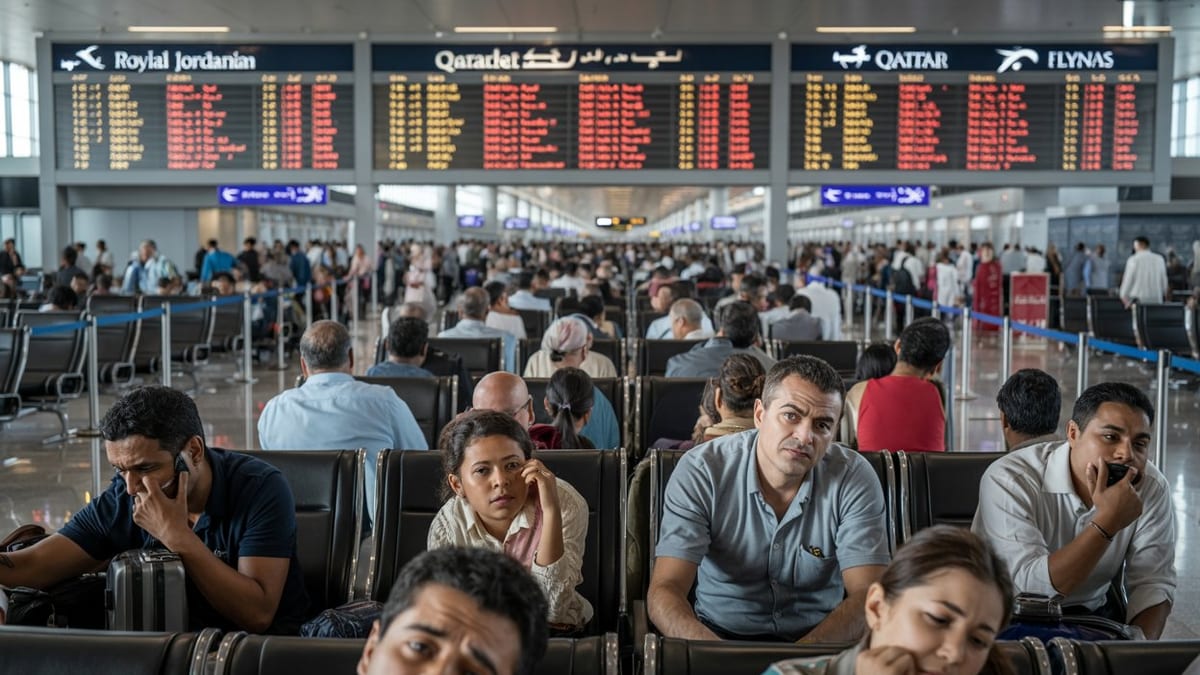
For travelers caught in the disruption, the numbers translate into crowded terminals, shifting departure boards, and difficult decisions about whether to wait out delays or seek alternative routing. Social media posts and firsthand accounts shared publicly in recent weeks from Atlanta describe passengers queueing for extended periods at rebooking counters and struggling to secure same-day seats once a connection or onward leg is cancelled.
The latest round of 186 delays and 24 cancellations adds to that strain, particularly for travelers with tight connections or fixed commitments at their destinations. At a hub where many itineraries involve relatively short layovers, even a delay of 45 to 60 minutes can mean the difference between making or missing a downstream flight.
Industry observers note that the disruption can be especially acute for travelers on ultra-low-cost carriers, where ticket rules often involve higher fees or more restrictive options for same-day changes. When irregular operations surge at a hub like Atlanta, the limited availability of flexible alternatives can leave some passengers facing overnight stays or lengthy holds on customer service lines while they seek new options.
Families, business travelers and international passengers alike are affected, with some forced to rebook connecting segments from other cities such as Dallas, Chicago or New York after Atlanta delays ripple through their original routing. These challenges underscore how central Hartsfield-Jackson remains to the broader US aviation network, and how quickly difficulties there can spill over to distant airports.
What Passengers Can Do As Disruptions Persist
With unpredictable spring weather and high travel demand expected to continue, aviation analysts suggest that passengers build more flexibility into their plans when connecting through major hubs like Atlanta. Recent travel advisories and expert commentary emphasize the importance of monitoring flight status directly through airline apps and airport information channels, as schedules can change multiple times before departure.
Booking longer connection windows, especially when traveling through weather-prone regions or during peak holiday weekends, can provide an additional buffer against missed flights if delays occur at Atlanta or other large hubs. Some travelers also opt for earlier departures in the day, when networks are generally less disrupted and there is more capacity to re-accommodate affected passengers on later flights if necessary.
Public information from airlines indicates that rebooking policies, same-day change options and waivers may be activated when disruptions reach a certain scale. In some cases, travelers may be able to switch to alternative routings that avoid the most impacted hubs, even at short notice, if seat availability allows.
While the latest figures of 186 delays and 24 cancellations at Hartsfield-Jackson Atlanta International Airport are lower than the numbers seen during the most severe recent storms, they highlight how quickly conditions can deteriorate for travelers across the United States when the nation’s busiest airport encounters operational strain.