

More news on this day
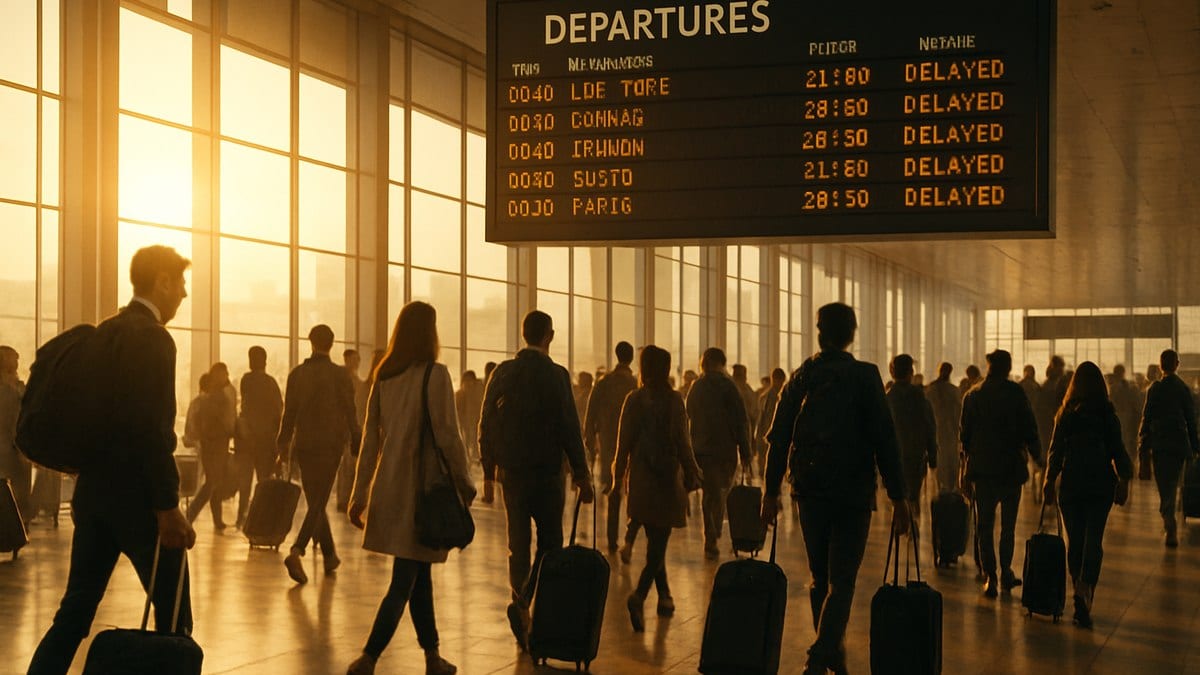
Flight disruptions radiating from Hartsfield-Jackson Atlanta International Airport in early April 2026 are rippling across airline networks, snarling connections and stranding passengers on domestic and international routes throughout the United States.
Get the latest news straight to your inbox!
Severe Weather and Volume Collide at the World’s Busiest Hub
Hartsfield-Jackson Atlanta International Airport entered April with forecasts of one of its busiest months on record, with local coverage indicating more than 8.3 million passengers expected to move through the hub over the course of the month. That surge in demand has collided with a series of spring storm systems across the eastern United States, creating a fragile operating environment where even brief weather events can trigger widespread schedule shocks.
In late March, thunderstorms and heavy rain around Atlanta produced ground stops and extended tarmac waits, leading to missed connections and overnight strandings for travelers. Regional reporting described multiple days of cascading delays as storms moved through metro Atlanta, with airlines struggling to reposition aircraft and crew. Those disruptions left many April schedules already stretched as carriers attempted to recover.
As the calendar turned to April, additional storm systems across the eastern half of the country continued to affect key hub airports, including Atlanta. Airline advisories pointed to thunderstorms across the region as a primary driver of irregular operations, with Atlanta listed prominently among affected cities. By April 7, aviation trackers and industry-focused outlets were reporting thousands of delays and hundreds of cancellations nationwide, with Atlanta among the top airports for disrupted flights.
Travel industry coverage on April 7 highlighted Atlanta’s role within this broader pattern, citing dozens of cancellations and well over two hundred delays at Hartsfield-Jackson alone. These numbers placed the airport near the top of the national disruption rankings for the day, alongside major hubs such as Los Angeles, Chicago, Orlando, and New York-area airports.
Network Effects Spread Disruptions Far Beyond Georgia
Atlanta’s status as a central connecting point means operational problems there rarely stay local. Publicly available flight data and industry reports over the first week of April show disruptions on routes touching Atlanta radiating outward to cities across the country, from Boston and New York in the Northeast to Houston, Dallas, Denver, Las Vegas, and West Coast gateways.
Travel news outlets tracking daily operations on April 6 and 7 cited thousands of delayed and canceled flights across the United States, noting that flights into and out of Atlanta were a major contributor. When departures from Atlanta run late or are scrubbed, aircraft and crews that would normally continue on to secondary and tertiary routes arrive out of position. The result is a wave of knock-on disruptions that can reach airports that never experienced adverse weather conditions themselves.
Coverage focused on Dallas Love Field over the weekend of April 5 illustrates the compounding nature of these network effects. Reports pointed to routes linking Dallas with cities such as Atlanta, Orlando, Houston, and Chicago as particularly affected, underscoring how hub-to-hub and hub-to-focus-city connections can quickly become chokepoints. When both ends of these high-traffic corridors are dealing with weather challenges or congestion, delays propagate in multiple directions.
On April 7, industry news summaries described passengers “abandoned” or stranded at airports nationwide as airlines attempted to work through backlogs. Atlanta featured prominently along with Los Angeles, Boston, Chicago, Houston, Orlando, and New York, reflecting the interconnected nature of US airline scheduling and the outsized influence of the Atlanta hub on national reliability.
Airlines Lean on Waivers and Schedule Adjustments
Airlines are responding to the turbulence by issuing travel waivers, relaxing change fees, and selectively trimming schedules on affected dates. Atlanta-based Delta Air Lines, which operates its largest hub at Hartsfield-Jackson, has implemented multiple exception policies in recent weeks tied to weather events across the eastern United States. A bulletin dated April 4 covering thunderstorms across the region specifically listed Atlanta among the cities where passengers could rebook without standard penalties if their flights were affected by the storms.
Consumer-focused coverage and traveler accounts in late March and early April also point to an “Atlanta flexibility” policy that allowed certain Delta customers departing the hub to change travel dates through April 6 without incurring rebooking fees, provided they stayed in the same cabin and route. The measure was framed as a response to surging wait times and operational strain at the airport, and indicates how carriers are increasingly using waivers as a pressure valve when operations at a key hub become unstable.
Other major US carriers, including United Airlines and American Airlines, have similarly issued temporary waivers for itineraries touching Atlanta and other storm-affected East Coast and Midwest airports in March and early April. Public advisories for those waivers referenced lines of severe thunderstorms that disrupted operations across multiple hubs, including Atlanta, over several days in mid-March.
Airlines also appear to be making tactical schedule adjustments to cope with the volatility. Reports from aviation observers and passengers point to clusters of cancellations on specific city pairs involving Atlanta, including routes to medium-size markets such as St. Louis, as carriers consolidate lightly booked flights and free up aircraft for more constrained segments. These moves can reduce same-day options for travelers, even when weather has already improved.
Staffing, Security and Infrastructure Add to the Strain
Weather has been the headline cause of disruption, but it is not the only factor. Coverage from Atlanta-based outlets and national travel media in late March detailed how heavy spring break demand exposed ongoing staffing and security challenges at Hartsfield-Jackson. At several points in March, travelers reported security lines stretching for hours, prompting airlines to caution passengers to arrive at least two and a half hours before domestic departures.
In response to surging checkpoint wait times, Atlanta-area reporting and online traveler forums noted that Delta introduced a temporary waiver for customers impacted by long Transportation Security Administration lines, effectively encouraging passengers to shift flights away from peak periods. The move suggests that even when flights are operating, bottlenecks at security can contribute to missed departures and last-minute rebookings that reverberate through the day’s schedule.
Infrastructure and airfield configuration also play a background role. Federal Aviation Administration construction impact documents for late 2025 and 2026 outline planned taxiway rehabilitation projects at Hartsfield-Jackson, with work anticipated to continue into this year. While not the primary cause of April’s disruptions, such projects can reduce operational flexibility during peak periods or adverse weather, amplifying the impact of thunderstorms or temporary ground stops.
At the same time, airlines are operating with tighter connection windows and higher average load factors than in earlier years, according to commentary from frequent travelers and aviation analysts. Shorter layovers in Atlanta leave less buffer when inbound flights are delayed, increasing the likelihood that passengers will misconnect and require rebooking, hotel accommodations, or alternate routings that further strain the system.
What April Travelers Should Expect in the Days Ahead
With April only just underway, forecasts from the National Weather Service office serving Atlanta and broader outlooks for the Southeast point to additional rounds of showers and storms over the coming weeks. Special weather briefings issued in mid-March highlighted the potential for repeated severe weather episodes into spring, suggesting that the pattern of weather-driven disruptions at hub airports could persist.
Publicly available guidance from airlines and airport authorities indicates that travelers booked through Atlanta in April should monitor conditions closely on the day of travel, watch for updated travel waivers, and build extra time into their itineraries. Advisories emphasize the importance of checking flight status frequently and considering earlier departures or longer layovers when routing through major hubs like Atlanta that are particularly sensitive to thunderstorms.
For routes that depend heavily on Atlanta connections, such as journeys from smaller Southeastern and Midwestern cities to the West Coast or international destinations, the risk of knock-on impacts remains elevated whenever storm systems approach the region. Disruptions at Atlanta can quickly affect flights to and from distant cities that never see a cloud, as aircraft and crews are shuffled to recover the schedule.
Industry analysts note that airlines are under pressure to balance strong spring and summer demand with operational resilience. The events of March and early April in Atlanta highlight how thin that margin can be at the world’s busiest airport. For now, publicly available information suggests that passengers traveling through the hub in April 2026 should be prepared for continued volatility, even on days when the weather outside the terminal appears calm.