

More news on this day
Flight disruptions centered on Atlanta’s Hartsfield Jackson International Airport on April 7 are sending delays and cancellations across airline networks in the United States, compounding weeks of strain from storms, staffing gaps and record spring travel demand.
Get the latest news straight to your inbox!
Atlanta Hub Turbulence Hits Thousands of Travelers
Published data for April 7 indicates that Atlanta is among the hardest hit US hubs, with industry trackers showing scores of cancellations and several hundred delays affecting domestic and international routes. One widely cited tally placed nationwide disruptions at more than 4,000 delayed flights and just over 200 cancellations by midday, with Atlanta appearing prominently among the top trouble spots alongside New York, Chicago, Houston, Orlando and Los Angeles.
At Hartsfield Jackson itself, travel trade coverage reports around 70 cancellations and more than 300 delayed flights tied to multiple carriers, including Delta, Southwest, American and Air France. The impact reaches far beyond Georgia, touching routes to New York, Boston, Miami, Chicago, Dallas and major European gateways as aircraft and crews fall out of position.
The problems arrive at the height of one of the busiest early spring travel periods in recent years. Airport projections published last week suggested more than 8.3 million passengers would pass through Atlanta in April, with security screening volumes expected to set new daily records. Those expectations left little margin for operational setbacks as storms, staff shortages and air traffic constraints converged.
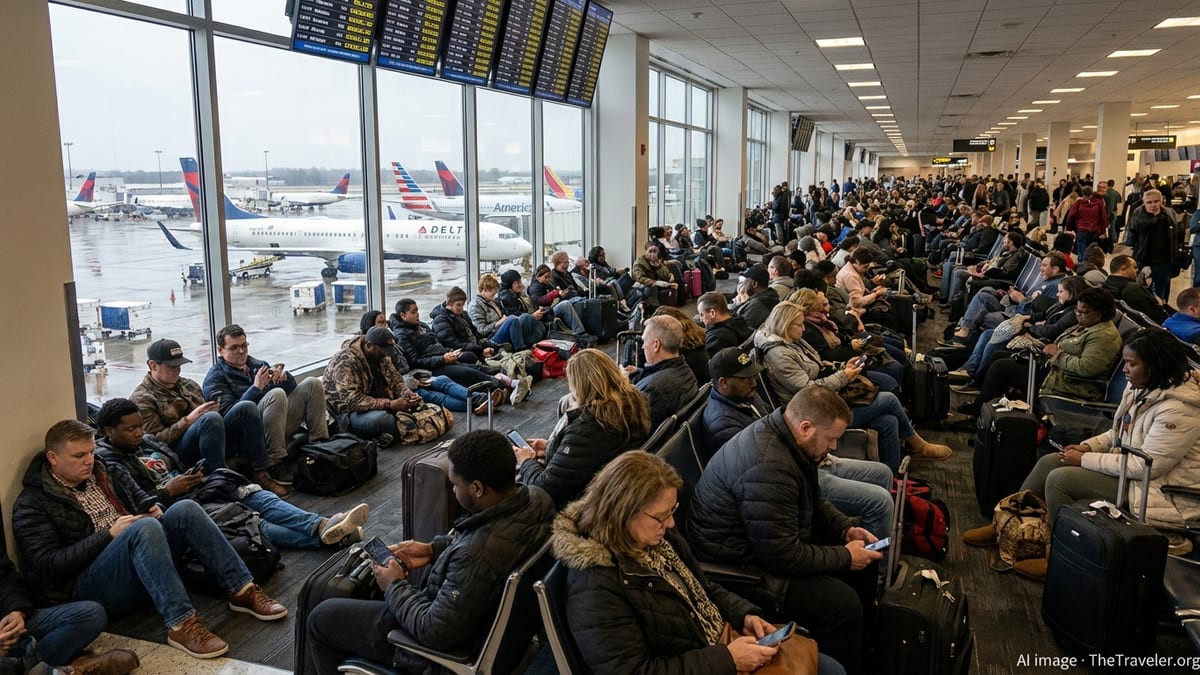
Passengers connecting through Atlanta report missed onward flights, rolling gate changes and extensive waits on the tarmac as aircraft queue for takeoff or wait for available gates. Publicly available flight data shows delays clustering in peak bank periods, particularly morning and late afternoon departures when hub traffic is densest.
Weather, Ground Stops and Staffing Strains Converge
The latest disruptions come on the heels of a turbulent six week stretch for US aviation, during which multiple winter storms triggered mass cancellations, including more than 1,000 flights scrubbed at Atlanta on January 25 during a major ice event. In mid March, a powerful blizzard and severe weather outbreak in the Midwest and Southeast resulted in thousands of cancellations and delays across major hubs, with Atlanta again among the airports affected.
On several of those days, traffic management initiatives and temporary ground stops were issued into Atlanta as storms, lightning and congestion limited safe arrivals. Travel industry reporting in mid March highlighted extended average delays on flights bound for the airport as controllers slowed inbound flows until gate space and weather conditions improved.
At the same time, chronic staffing issues across parts of the national air traffic system have resurfaced as a contributing factor to spring disruptions. Aviation policy coverage this month has described continued shortages at key facilities, prompting delayed departures and flow restrictions at large hubs from Atlanta to Los Angeles when demand outstrips available controller capacity.
Inside the terminal, long running staffing challenges at security checkpoints have also added friction for travelers. In late March, local coverage in Atlanta documented security lines stretching for hours, with some airlines urging customers to arrive four to five hours before departure to clear screening during peak periods. Those pressures can amplify the effect of any irregular operations, as late arriving passengers miss flights and rebook into already crowded banks.
Network Ripple Effects Stretch From Coast to Coast
Because Atlanta functions as a central hub in several airline networks, localized disruption there can quickly cascade throughout the United States. Operational guides and passenger rights materials published this year note that even minor delays at a core hub can propagate as aircraft assigned to later flights arrive late to downline cities, leading to rolling delays and occasional cancellations far from the original problem point.
On April 7, that pattern is visible in flight status boards and tracking data across the country, with secondary airports seeing delays on services that route through Atlanta earlier in the day. Travelers in cities such as Raleigh, Kansas City and San Antonio are reporting late morning and afternoon departures attributed to aircraft arriving late from Atlanta, even where local weather is calm.
The impact is particularly pronounced for airlines that concentrate a large share of their fleet and crews in Atlanta. When severe weather or ground constraints force waves of holds and cancellations at the hub, aircraft sequences and crew duty limits can unravel across an entire day’s schedule, creating what operations specialists describe as a rolling recovery that may extend into the following morning.
International routes are not immune. Long haul flights linking Atlanta to European and Latin American destinations are vulnerable to knock on effects when inbound aircraft arrive late or require additional maintenance following weather diversions. This can trigger last minute equipment swaps, delayed departures and missed onward connections at overseas hubs, extending the disruption to another continent.
Travelers Face Crowded Terminals and Limited Options
For passengers, the operational story translates into crowded concourses, long customer service lines and limited same day options as flights fill to capacity. Social media posts and first hand accounts describe travelers sleeping in terminal chairs, waiting on standby lists or rerouting through secondary hubs in hopes of reaching their destinations.
Published guidance from airlines and travel advisors stresses the importance of monitoring flight status through carrier apps, enabling rebooking as soon as a delay or cancellation appears. Some carriers have issued flexible travel waivers during recent surges in disruption, waiving change fees and allowing customers to shift trips to less affected days or times when seats are available.
However, when widespread disruptions ripple through multiple hubs at once, spare seats can be scarce. Analysts note that robust post pandemic demand has pushed load factors higher across many US carriers, leaving fewer empty seats to accommodate displaced passengers during irregular operations. As a result, some travelers are facing multi day delays if they insist on specific routes or times.
Airport services are also strained. Food outlets and lounges in Atlanta and other hubs have seen surging crowds during prolonged delays, while hotel inventories near major airports tighten quickly when evening cancellations rise. Consumer advocates continue to recommend that travelers retain receipts for meals, rides and lodging in case airlines provide goodwill reimbursements or vouchers under their internal policies.
Spring Travel Outlook: Busy Skies and Fragile Operations
Looking ahead, aviation analysts expect continued volatility through April as heavy passenger volumes intersect with unsettled spring weather and structural staffing challenges. Industry forecasts point to one of the busiest spring travel seasons of the decade, with Atlanta projected to remain the world’s busiest airport by passenger volume for the month.
Recent contract announcements and infrastructure investments, such as a newly extended agreement to operate and maintain Atlanta’s Plane Train people mover system, underline the scale and complexity of keeping the hub moving. Even so, the events of early 2026 have highlighted how quickly tightly scheduled operations can seize when storms, staffing gaps or system outages occur.
Travel trade publications note that airlines are working to add resilience through schedule adjustments, expanded use of larger aircraft on trunk routes and refinements to crew planning. The Federal Aviation Administration is also developing updated staffing and technology roadmaps intended to reduce bottlenecks at key facilities over the medium term.
For now, however, the experience of passengers moving through Atlanta on April 7 illustrates a reality of modern US air travel. When the country’s largest hub encounters trouble, the consequences are rarely contained to one city, instead racing along interconnected routes that reach from small regional airports to major international gateways.