

More news on this day
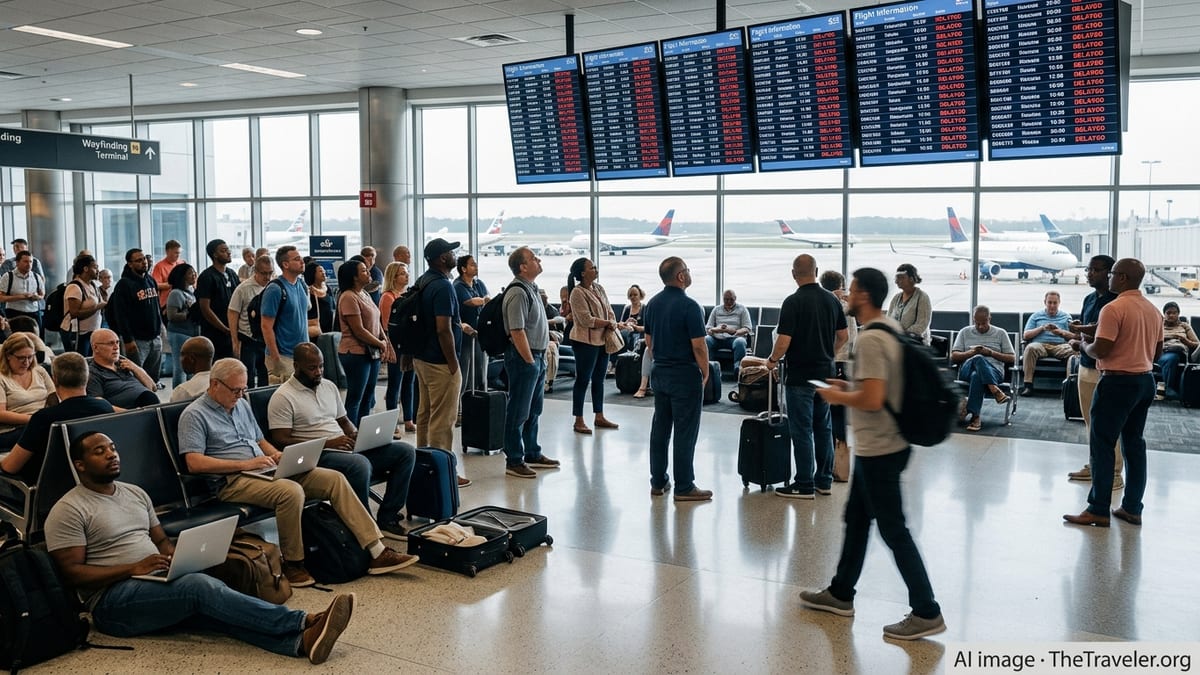
Air travelers across the United States are facing fresh disruption today as delays and cancellations concentrated at Hartsfield Jackson Atlanta International Airport ripple across heavily used routes to Newark, Fort Lauderdale, Orlando and other major hubs.
Get the latest news straight to your inbox!
Targeted Delays Hit Major U.S. Carriers
Publicly available flight tracking data for Thursday, April 9, 2026, shows a cluster of schedule problems involving several major carriers operating through Atlanta, including Delta Air Lines, Southwest Airlines, Endeavor Air and Frontier Airlines. Across these operators and a handful of smaller regional affiliates, reports indicate at least 144 delayed flights and 28 cancellations tied to Atlanta operations over the course of the day.
The disruptions are concentrated on short haul domestic routes that feed larger national networks, amplifying the impact for passengers well beyond Georgia. Delta and its regional partners, including Endeavor, appear to be bearing much of the strain as they manage high frequency services linking Atlanta with Florida, the Northeast and the Midwest. Southwest and Frontier have also recorded delays, particularly on leisure focused routes that are heavily used during the spring travel period.
While the overall number of affected flights is modest compared with nationwide totals, the concentration at the world’s busiest passenger airport means that hundreds of travelers on each rotation are encountering missed connections, long waits in terminals and last minute gate or departure time changes.
Data from broader national snapshots of U.S. aviation today also points to a strained system. Industry coverage highlights thousands of delays and dozens of cancellations across the country, with Atlanta among the airports experiencing knock on effects as airlines juggle aircraft and crew availability.
Atlanta Disruptions Spread to Newark, Fort Lauderdale and Orlando
The immediate operational issues in Atlanta are having an outsized impact on several key spokes in the domestic network, notably Newark Liberty International Airport, Fort Lauderdale Hollywood International Airport and Orlando International Airport. These airports are important destinations and connection points for both business and leisure travelers, meaning that problems on Atlanta departures and arrivals quickly translate into wider schedule instability.
Reports from aviation and travel outlets tracking today’s performance describe disrupted services on routes such as Atlanta to Orlando, Atlanta to Newark and Atlanta to Fort Lauderdale. A number of return flights from these cities back to Atlanta have also been delayed, as aircraft and crews remain out of position following earlier schedule changes.
The impact is particularly visible in Florida, where Orlando and Fort Lauderdale are already handling elevated seasonal traffic. Previous coverage this month has documented significant congestion and delay pressure at Orlando and Fort Lauderdale, and today’s Atlanta related issues are adding another layer of complexity to operations in those markets.
On the East Coast, Newark is seeing a mix of late running arrivals and pushed back departures on flights that interface with Atlanta and other Southern hubs. Combined with broader congestion around the New York area, this is contributing to longer than usual travel times for passengers attempting to connect between Southern and Northeastern cities.
Weather, Volume and Network Sensitivity Under Scrutiny
Analyses published in recent days on overall April performance in U.S. aviation point to a fragile balance between high travel demand, seasonal weather systems and airline scheduling. Severe storms and air traffic control constraints earlier in the week created large waves of delays and cancellations at multiple hubs, and the effects of that disruption are still visible in parts of the network today.
Commentary from industry focused outlets notes that Atlanta, Orlando, Miami, New York area airports and other busy hubs have experienced repeated bouts of disruption since the beginning of April. When weather or airspace restrictions slow operations at one of these nodes, airlines often require several days to fully reset their networks, especially when fleets and crews are already tightly scheduled.
Travel data specialists highlight that even relatively small schedule shocks can now ripple widely when aircraft are operating near maximum utilization. A cluster of delays involving fewer than 200 flights at a single hub can still affect thousands of passengers by triggering missed connections, forcing rebookings and reducing the number of available seats on alternative departures.
In this context, today’s 144 delays and 28 cancellations tied to Atlanta based operations reflect a broader pattern rather than an isolated incident. The experience aligns with a month in which domestic carriers have regularly dealt with knock on effects from earlier weather events, high load factors and occasional technical or crew related issues.
Passenger Experience and Limited Workarounds
For passengers, the most visible outcomes of today’s disruptions include extended waits at departure gates, longer lines at customer service desks and a higher risk of missing onward connections. Travelers moving between secondary cities via Atlanta are particularly exposed because many rely on tight connection windows that leave little room for delay.
Reports from consumer oriented travel coverage indicate that passengers on delayed flights are often offered same day alternatives only on a standby basis, given that many April departures are running close to full. Those facing cancellations may be rebooked on flights later in the day or on the following day, sometimes via different connection points such as Detroit, Chicago or Dallas, depending on seat availability.
For routes linking Atlanta with Orlando, Fort Lauderdale and Newark, options to reroute through other hubs exist but can introduce significant additional travel time. Passengers traveling to or from smaller regional airports that rely on Atlanta as their primary connection point may have fewer alternatives, increasing the likelihood of overnight stays if misconnections occur late in the day.
Travel analysts note that, while compensation for delays and cancellations within the United States is more limited than in some other regions, airlines frequently provide meal vouchers or hotel accommodation when disruptions are prolonged and attributable to operational factors rather than severe weather.
What Today’s Problems Signal for Spring Travel
Today’s problems at Atlanta come amid a broader spring travel period in which U.S. airlines are carrying high passenger volumes on tightly scheduled fleets. Industry observers suggest that this environment leaves little slack in the system to absorb unexpected shocks, increasing the likelihood that localized disruptions will continue to create nationwide ripples.
Recent overviews of April operations suggest that hubs including Atlanta, Chicago, New York, Dallas and Los Angeles are all managing waves of congestion tied to storm systems, holiday peaks and infrastructure constraints. In that context, the difficulties recorded today for Delta, Southwest, Endeavor, Frontier and other carriers at Atlanta may be an early indication of further pressure as the month progresses.
Travel publications are advising passengers with upcoming itineraries through Atlanta, Orlando, Fort Lauderdale, Newark and other busy hubs to build in extra time, monitor flight status frequently and be prepared for potential gate or schedule changes. Flexible routing and a willingness to accept alternative connection points may help minimize disruption if the pattern of rolling delays continues.
As airlines work through the backlog from this latest round of problems, focus is turning to whether operational adjustments, additional spare capacity or more cautious scheduling can reduce the scale of knock on effects from similar events later in the spring and into the busy summer travel season.