

More news on this day
Travelers across the United States faced another day of widespread flight disruptions as Hartsfield-Jackson Atlanta International Airport recorded 186 delays and 24 cancellations, snarling operations for Spirit, Frontier, Delta and other airlines and sending knock-on delays across routes to Fort Lauderdale, Miami, Philadelphia and additional cities.
Get the latest news straight to your inbox!
Atlanta’s Latest Disruption Hits a Busy Spring Travel Period
The latest disruption at Atlanta comes as the world’s busiest passenger hub moves into one of its heaviest spring travel periods, with passenger volumes already tracking above recent years. Publicly available airport planning data for April 2026 points to elevated demand, which leaves operations more vulnerable when storms or staffing gaps arise.
Flight-tracking and industry reports indicate that on the affected day Atlanta’s 186 delayed and 24 canceled departures and arrivals placed the airport among the most disrupted in the country, though not the only one experiencing strain. The figures align with a broader national pattern of high delay counts and moderate cancellation totals in early April, reflecting a fragile recovery from earlier weather systems.
Travel-focused outlets tracking same-day performance describe how even a few hours of capacity reduction in Atlanta can quickly echo outward, given the airport’s role as a primary connecting hub for Delta and an important station for low cost carriers such as Spirit and Frontier. Once aircraft and crews fall out of position, later flights often face rolling delays even after local conditions improve.
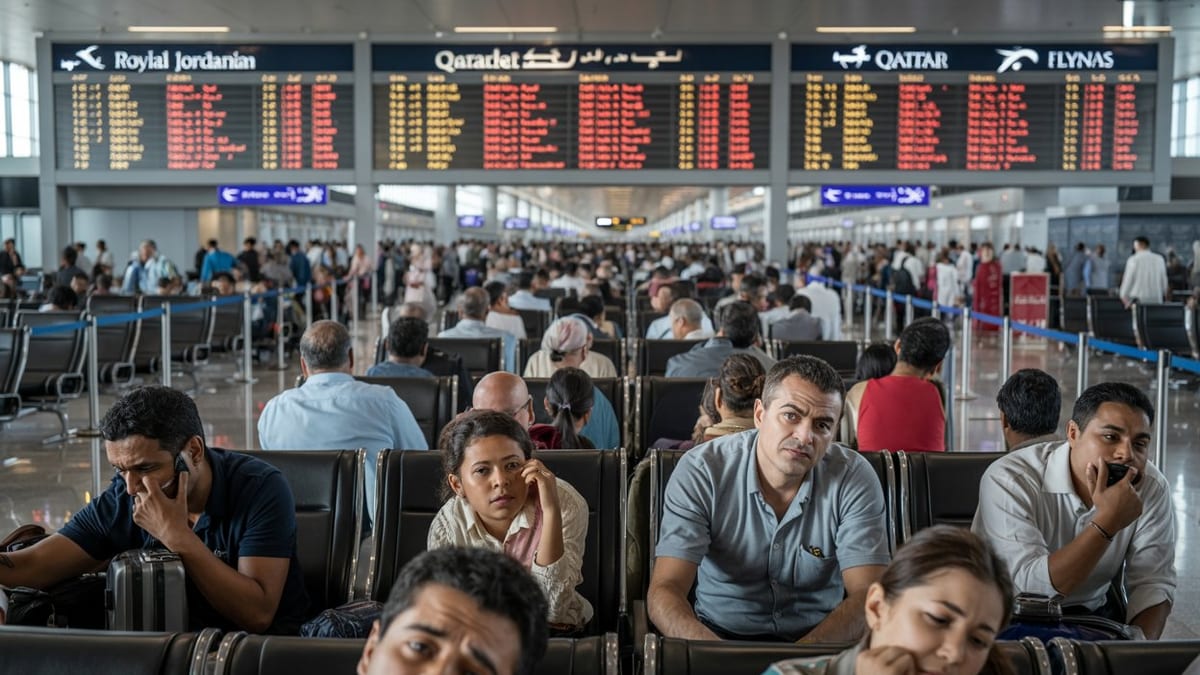
For passengers, the operational statistics translated into long check in queues, tight connection windows and crowded rebooking counters, particularly during the midmorning and late afternoon peaks when many hub banks are scheduled.
Spirit, Frontier and Delta Networks Feel the Strain
Low cost carriers and network airlines that rely heavily on Atlanta saw some of the sharpest impacts. According to published coverage analyzing same day performance, disruptions at Hartsfield-Jackson have recently coincided with elevated delay and cancellation totals for carriers including Delta, Spirit, Frontier, Southwest and several regional operators feeding major hubs.
Spirit and Frontier both operate dense schedules linking Atlanta with leisure destinations such as Fort Lauderdale and Miami, as well as mid sized markets where passengers depend on single daily frequencies. When Atlanta operations slow, these point to point routes can quickly accumulate delays of an hour or more, or face same day cancellations if aircraft and crews cannot be repositioned in time.
Delta, which uses Atlanta as its primary global hub, has repeatedly posted some of the highest nationwide delay and cancellation counts during recent weather affected days, according to national performance tallies. The carrier’s hub and spoke model means that any disruption in Atlanta touches scores of onward connections, including flights operated by partner and regional airlines that share the same terminals and ramp infrastructure.
Industry reporting suggests that as airlines attempt to operate tight schedules with high aircraft utilization, even modest schedule padding may not be sufficient when localized storms or traffic management initiatives reduce departure and arrival rates at major hubs like Atlanta.
Routes to Fort Lauderdale, Miami, Philadelphia and Beyond Disrupted
The 186 delays and 24 cancellations at Atlanta translated into a patchwork of disruptions along key domestic corridors. Flight tracking summaries highlight repeated issues on routes from Atlanta to South Florida, including Fort Lauderdale and Miami, where Spirit, Frontier and Delta all maintain regular service targeting both vacationers and cruise passengers.
In South Florida, airport boards at Fort Lauderdale and Miami showed a series of late arrivals and departures tied to inbound aircraft from Atlanta. These late inbounds then affected subsequent rotations to other U.S. cities, contributing to rolling schedule instability into the evening hours.
To the north, Philadelphia and nearby East Coast hubs also reported a noticeable share of delayed flights associated with aircraft and crews routed through Atlanta. National disruption tallies for early April show Philadelphia among the airports experiencing heightened delay activity, reflecting how a single constrained hub can reverberate through the domestic network when schedules are tightly interlinked.
Additional secondary markets that depend on one or two daily flights from Atlanta were also affected, with some travelers facing missed connections and unscheduled overnight stays. Published analyses of recent operational patterns emphasize that such knock on effects have become more common in 2026 as airlines push to meet resurgent demand with limited slack in their systems.
Weather, Staffing and Congested Hubs Create a Volatile Mix
Recent weeks have seen a combination of severe weather systems, staffing challenges and already congested hubs across the United States, all of which have set the stage for the latest round of disruptions. Reports from March and early April document repeated ground stops and ground delay programs at major airports, including Atlanta, as thunderstorms, low clouds and residual winter weather affected runway and airspace capacity.
At the same time, local media coverage and travel advisories have pointed to persistent security checkpoint queues at Hartsfield-Jackson, with screening wait times in some instances exceeding two hours. Airlines have responded with voluntary travel waivers on select days, encouraging customers to adjust itineraries away from peak travel windows when possible.
National statistics compiled for April 2026 show that on the most disrupted days more than 4,000 flights across the U.S. have been delayed, with cancellation counts rising above 200. In that context, Atlanta’s 186 delays and 24 cancellations represent one node in a larger pattern of strain that has also affected airports in Chicago, New York, Orlando, Houston and Los Angeles.
Analysts note that while weather often serves as the initial trigger, tight schedules, air traffic control constraints and staffing shortages in both ground handling and security can magnify the impact, turning what might have been brief slowdowns into full day network disruptions.
What Travelers Can Expect in the Coming Days
With spring break and early summer booking curves remaining strong, travel industry observers suggest that similar disruption patterns are likely to persist, particularly on days when storms move through major hub regions such as the Southeast. Forecasts for the week ahead indicate additional unsettled weather in parts of the eastern United States, which could again affect operations at Atlanta and other large airports.
Travel guidance published by airlines, airports and passenger advocates consistently encourages flyers to build additional buffer time into their itineraries. For those connecting through Atlanta, that may mean opting for longer layovers, selecting early morning departures when operations are typically less backlogged, and monitoring flight status tools closely in the 24 hours before departure.
Passenger rights and compensation remain a patchwork in the U.S., but many carriers provide meal vouchers, hotel accommodations or fee free rebooking in cases where delays or cancellations are within their control. Weather related disruptions generally offer fewer formal protections, yet some airlines still extend flexible rebooking options on the busiest days in an effort to manage demand.
For now, the latest wave of delays and cancellations at Hartsfield-Jackson underscores how quickly the U.S. air travel system can seize up when a central hub encounters trouble. Travelers planning to pass through Atlanta and other major nodes in the weeks ahead may find that preparation and flexibility are essential tools for navigating an increasingly unpredictable travel landscape.