

More news on this day
Travelers across the United States are facing another round of air travel disruption as operations at Hartsfield-Jackson Atlanta International Airport log 186 delayed flights and 24 cancellations, with the impact spreading to busy routes linking Fort Lauderdale, Miami, Philadelphia, and other major cities.
Get the latest news straight to your inbox!
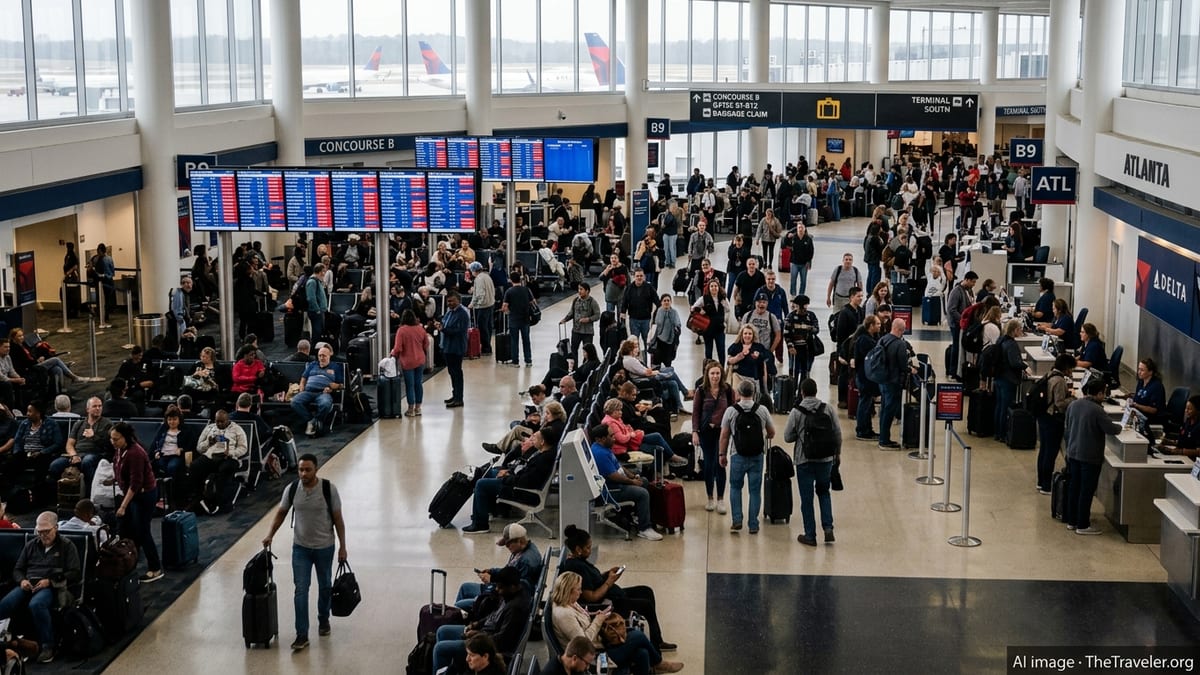
Atlanta Turbulence Sends Delays Across the Network
Flight-tracking data and airport disruption summaries for early April 2026 show that Atlanta’s Hartsfield-Jackson International Airport continues to experience elevated levels of operational strain, with at least 186 delayed flights and 24 cancellations recorded in the latest wave of disruption. Publicly available information indicates that these figures are part of a broader pattern following weeks of weather instability, staffing challenges, and residual congestion from earlier storms.
Atlanta’s role as a central connecting hub means that even a relatively targeted disruption can have broad consequences. When departure banks from the airport begin running late or aircraft rotations are interrupted, late-arriving planes and crew shift delays outward along the network, affecting travelers who may never pass through Atlanta itself.
Recent reports from passenger-rights platforms describe hundreds of delayed and dozens of canceled flights touching Atlanta over the Easter travel period, reinforcing the vulnerability of the hub at peak times. These operational stresses have now translated into fresh disruption totals, including 186 delays and 24 cancellations, underscoring how quickly conditions at the airport can deteriorate when schedules are already tight.
While no single cause has been identified for this specific cluster of delays and cancellations, analysts point to a combination of factors: lingering weather impacts in multiple regions, congested airspace along the East Coast, and heavy spring travel volumes that leave limited slack in airline operations.
Spirit, Frontier, Delta and Others Among Worst Hit
The disruption in Atlanta is affecting a broad mix of carriers, but low cost and network airlines with dense operations in and out of the hub appear prominently in the latest statistics. Publicly available breakdowns for recent days show Spirit Airlines, Frontier Airlines, and Delta Air Lines among the carriers most exposed as delays at Atlanta compound delays at other major US airports.
Analysis of recent performance data for Miami International Airport and other hubs confirms the breadth of the problem. Miami, for example, recorded close to 200 flight delays and several cancellations in the past two days, with coverage from travel-industry outlets highlighting disruption for Frontier, Delta, Spirit, and additional US carriers on routes that either connect through or feed into Atlanta.
For passengers, the airline logo on the boarding pass may matter less than where and when they are flying. Since carriers such as Delta rely on Atlanta as a primary domestic and international hub, any schedule pressure there can spill over onto regional partners and codeshare flights. Spirit and Frontier, which run lean schedules and often have limited spare aircraft, are particularly vulnerable when irregular operations prevent planes from completing their planned rotations.
Travel forums and social media posts from the past several weeks illustrate how quickly routine delays can escalate into missed connections, overnight airport stays, and expensive last-minute rebookings, especially for travelers on ultra-low-cost carriers where reciprocal rebooking options with other airlines are limited.
Fort Lauderdale, Miami and Philadelphia Feel the Shockwaves
The knock-on effect from Atlanta has been especially visible at Florida gateways and along the busy Northeast corridor. Fort Lauderdale-Hollywood International Airport and Miami International Airport, both key markets for Spirit and Frontier, feature prominently in recent disruption tallies that also cite Atlanta among the most frequently affected counterpart airports.
Published coverage focusing on Miami’s operations during the Easter return rush points to nearly 200 delays and multiple cancellations in a single day, with routes to and from Atlanta, Chicago, and New York repeatedly flagged. When aircraft running late from South Florida then turn around to operate services back through Atlanta, the delays do not end at the state line; they propagate through onward connections deeper into the domestic network.
Philadelphia International Airport has also appeared regularly in disruption roundups tied to recent severe weather and air traffic constraints along the I-95 corridor. During the late January winter storm, Philadelphia experienced some of its heaviest snowfall in years, and Atlanta was among the major hubs reporting extensive cancellations as the same system disrupted air travel across multiple regions. Those patterns are being echoed again as spring weather and congestion apply new pressure on similar city pairs.
For routes connecting cities such as Philadelphia, Miami, and Fort Lauderdale with Atlanta, a single missed departure can create significant downstream issues. Passengers may find that the next available flight is not until the following day, especially on carriers with less frequent service, increasing demand for hotel rooms and raising the potential for crowding at customer service points.
Why Delays at One Hub Disrupt the Whole Country
The latest figures from Atlanta illustrate how dependent US air travel has become on a handful of high-volume hubs. Hartsfield-Jackson typically handles tens of thousands of flights per month and regularly sits near the top of national rankings by movements and passenger volume. When a hub of that scale experiences even several dozen cancellations and a couple of hundred delays in a short window, the aggregate impact can be felt nationwide.
Each delayed departure from Atlanta often corresponds to a delayed arrival somewhere else, affecting airport gate availability, crew duty clocks, and the timing of subsequent flights. Airlines attempt to absorb these shocks with schedule buffers and reserve crews, but during periods of heavy demand such as spring break and holiday returns, that capacity can be quickly exhausted.
Public data from airport performance scorecards show that Atlanta, Miami, Fort Lauderdale, Newark, and Philadelphia all process large volumes of flights with high on time percentages in normal conditions, yet several of these airports have recently logged hundreds of delays and dozens of cancellations in single-day snapshots. This suggests that when one hub falters, it can tip others into their own cycles of delay as they attempt to accommodate late-arriving aircraft and displaced passengers.
Experts note that infrastructure constraints, air traffic control staffing levels, and weather volatility are likely to keep disruption risk elevated through the busy spring and summer seasons. In that environment, the numbers now emerging from Atlanta serve as a reminder that resilience remains uneven across the system.
What Travelers Can Do as Disruptions Mount
For travelers with upcoming itineraries through Atlanta or other affected hubs, the latest disruption figures are a signal to build extra flexibility into plans. Passenger advocates recommend monitoring flight status early and often, using airline apps and flight-tracking tools to spot delays or equipment changes as soon as they appear.
Public guidance from consumer-rights organizations stresses the importance of understanding the difference between weather-related and airline-responsible delays, because eligibility for compensation or hotel accommodation can vary. In recent weeks, disruptions linked to severe weather have often been compounded by aircraft and crew positioning issues, making it more complex for travelers to determine which rules apply.
When possible, some analysts suggest choosing longer connection times through major hubs like Atlanta, Miami, and Newark during peak travel periods, in order to create a buffer against minor delays that could otherwise cause missed onward flights. Travelers on tight schedules may also prefer earlier departures in the day, since on time performance tends to deteriorate as delays cascade through afternoon and evening banks.
With 186 delays and 24 cancellations recorded at Atlanta in the latest reporting window, this week’s travel landscape once again highlights how quickly conditions at a single hub can influence journeys across the country. For now, passengers connecting through the world’s busiest airport and its key partner cities are advised to stay alert, stay flexible, and be prepared for plans to change at short notice.