

More news on this day
Flight disruptions centered on Hartsfield-Jackson Atlanta International Airport in early April 2026 are rippling across domestic and transatlantic routes, as severe weather, staffing constraints and peak spring travel volumes intersect at the country’s busiest hub.
Get the latest news straight to your inbox!
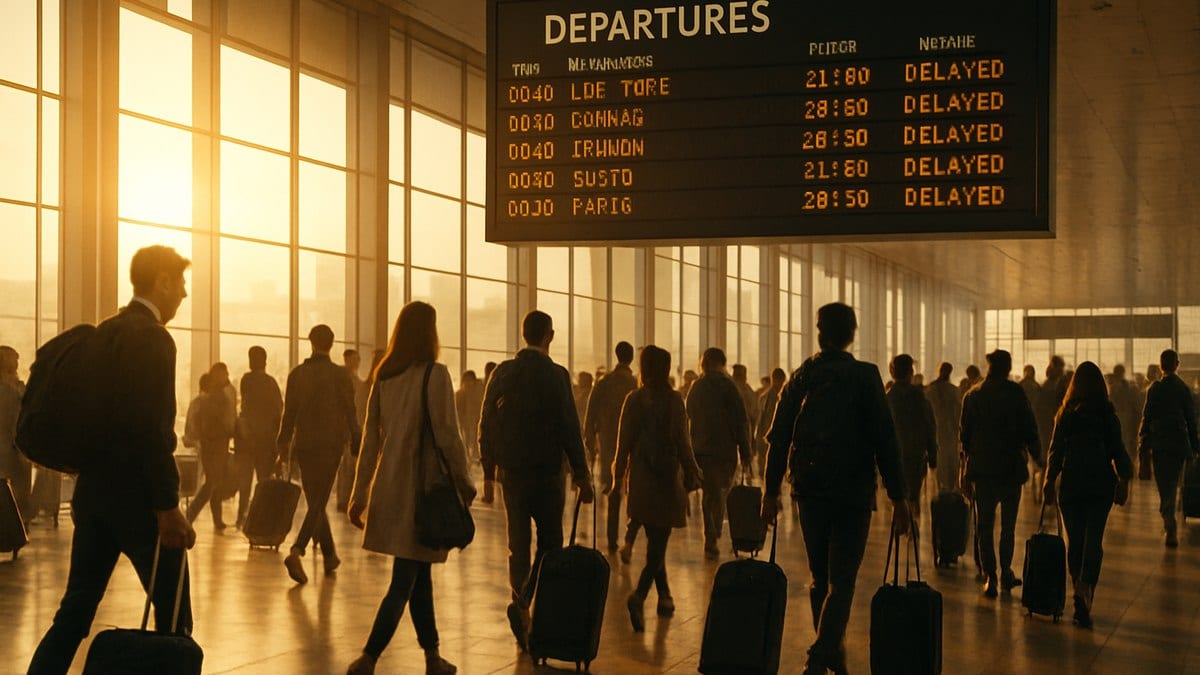
Storms and Ground Stops Snarl Atlanta Operations
Thunderstorms sweeping across the Southeast in late March and the first week of April have repeatedly constrained arrivals and departures at Hartsfield-Jackson Atlanta International Airport, triggering ground delays and schedule reshuffles. Publicly available Federal Aviation Administration advisories in mid-March already identified Atlanta among several major hubs facing weather-related flow restrictions alongside New York, Washington, Charlotte, Orlando and Houston. As storm cells returned in early April, those patterns re-emerged, forcing airlines to hold or reroute aircraft and crews.
On April 6 and 7, tracking data compiled by industry publications and flight-status platforms showed dozens of cancellations and several hundred delays tied to Atlanta alone, with disruption peaking during convective weather in the morning and late afternoon banks. Travel and aviation outlets reported more than 70 cancellations and over 300 delayed flights involving carriers such as Delta Air Lines, Air France, Southwest, American, Spirit and Frontier on routes touching Atlanta or relying on the hub for connections.
Those weather challenges arrived just as the airport moved into one of its busiest periods of the year. Airport forecasts released at the start of April projected more than 8.3 million passengers traversing the terminals during the month, with screening volumes on some days expected to exceed prior single-day records. With high aircraft utilization and tight turn times during spring break, even brief ground stops translated into rolling disruptions across multiple waves of flights.
Airlines have issued a series of flexible-travel advisories around these events, allowing some customers ticketed through Atlanta in late March and early April to rebook without fees when storms or air traffic control programs threatened to upend itineraries. Consumer reports and online forums indicate that travelers have been encouraged to shift to earlier departures or alternative routings when possible to reduce the risk of missed connections.
Ripple Effects Reach Coastal Hubs and Key Domestic Routes
Because Atlanta functions as a primary domestic and transatlantic hub, localized disruption there has quickly propagated across the wider U.S. network. Published coverage of nationwide operations in March documented days when more than 8,000 flights were delayed or canceled across the United States as severe weather moved from the Midwest into the Southeast, prompting restrictions at airports including Atlanta, Charlotte and Houston alongside the New York and Washington regions.
In early April, similar dynamics have resurfaced, with delays at Atlanta contributing to congestion at downline airports. Travel-industry reporting on April 6 described knock-on impacts to flights serving major destinations such as New York, Chicago, Miami and Orlando as aircraft left Atlanta behind schedule or crews exceeded duty limits. Connections to European gateways were also affected when transatlantic departures from Atlanta were held or retimed in response to storms and traffic-management initiatives.
Regional corridors feeding Atlanta have felt the strain as well. Passenger accounts from cities such as St. Louis and smaller Southeastern markets describe clusters of cancellations on single days, sometimes wiping out multiple frequencies on a route and forcing travelers to drive overnight or wait for next-day availability. Industry analysts note that when one or two inbound legs are canceled into a hub like Atlanta, the resulting aircraft and crew imbalance can persist for several rotations, compounding delays even after local weather improves.
The interconnected nature of airline networks means that these disruptions are not limited to the Southeast. Schedules along the East Coast and in the Midwest have experienced secondary delays as flights bound for or originating from Atlanta depart late, causing missed slots at crowded hubs and squeezing turnaround times at outstations. For travelers, that translates into longer connection windows, unexpected overnight stays and, in some cases, rebookings through alternative hubs such as Dallas, Charlotte or Chicago.
Staffing Pressures and Air Traffic Constraints Add to Strain
While thunderstorms have been the most visible trigger, underlying staffing and capacity constraints are magnifying the effect of each weather event. Aviation policy reporting in recent weeks has highlighted ongoing shortages of certified air traffic controllers across several U.S. facilities. In late March, a single morning of controller-related ground stops at Chicago O’Hare produced cascading delays at more than a dozen major airports. Industry summaries of those events noted that carriers such as Delta have seen on-time performance pressured when ground stops are imposed at key hubs, including Atlanta.
The FAA has publicly discussed plans to expand controller hiring and modernize training, but those measures will take time to filter into daily operations. In the interim, traffic-management initiatives such as ground delay programs remain a primary tool for handling both weather and staffing bottlenecks. When those programs intersect with peak travel at an airport of Atlanta’s scale, airlines have limited flexibility to absorb disruptions without resorting to cancellations.
On the ground in Atlanta, staffing challenges have not been limited to control towers. Security-screening disruptions earlier this spring led to hours-long lines at Transportation Security Administration checkpoints, prompting the airport and airlines to urge passengers to arrive significantly earlier than usual. Although recent reports indicate that TSA wait times have improved to only a few minutes at many checkpoints, the earlier strain illustrated how quickly a single chokepoint can spill over into missed flights and tight connections, especially during holiday and spring break peaks.
Operational reports from prior winters have also underscored how ice and winter storms in the Southeast can disrupt Atlanta’s hub structure. While April typically brings a shift from deicing delays to thunderstorm management, airlines continue to fine-tune recovery playbooks developed during earlier seasonal events, including revised crew scheduling practices and greater use of rolling travel waivers when forecasts indicate widespread disruption.
Travelers Confront Long Delays, Rebookings and Route Changes
For individual passengers, the April disruptions at Atlanta have manifested as hours on the tarmac, missed connections and last-minute itinerary changes. Social-media posts and travel-forum discussions from the first week of April describe travelers spending much of a day in the terminal while departure times slipped in small increments, or sitting onboard aircraft that pushed back from gates only to wait for new departure slots as storms built along departure corridors.
Some travelers report having multiple flights on a single route canceled in succession, leaving few options other than driving several hours to Atlanta or an alternate airport to catch a remaining flight. Others describe being rerouted through different hubs or downgraded from nonstop to connecting itineraries to work around bottlenecks at Atlanta. With hotels near the airport quickly filling during peak disruption periods, overnight stays have sometimes required traveling further into the city or relying on limited airport-rest-area facilities.
Consumer advocates point out that while weather-related disruptions generally limit cash compensation obligations for U.S. carriers, airlines are increasingly offering proactive rebooking, waivers of change fees and in some cases meal or hotel vouchers when extended irregular operations occur. April’s events have provided another test of these policies, with passengers comparing experiences across carriers and documenting both smooth and challenging rebooking processes online.
Travel planners note that flexible tickets, nonstop routing when feasible and membership in frequent-flyer programs can modestly improve rebooking options when hubs like Atlanta become congested. However, they also emphasize that during severe constraints on capacity, even well-prepared travelers may face significant inconvenience as airlines work through backlogs of displaced passengers.
What April’s Disruptions Signal for Spring and Summer Travel
The pattern emerging around Atlanta in April suggests a demanding spring and summer ahead for U.S. aviation networks. With Hartsfield-Jackson expecting record or near-record passenger volumes for the month and national carriers still rebuilding staffing depth, the tolerance for weather or infrastructure shocks remains limited. Industry analysts observing March’s blizzard in the Upper Midwest and subsequent severe weather in the Southeast have characterized 2026 as another year in which climate volatility interacts with tight airline schedules to amplify travel risk.
Looking toward late spring, airlines are expected to continue adjusting schedules and capacity allocations through Atlanta and other major hubs, fine-tuning departure banks to reduce congestion at peak times and aligning crew resources around historically vulnerable travel days. Introductions of newer air-traffic-management technology, including enhanced weather-integration tools within the FAA’s modernization programs, may offer incremental improvements in how storms are anticipated and routed around, but those systems are still being phased into full operation.
For travelers with plans in April and beyond, publicly available guidance from airports, airlines and travel advisers consistently emphasizes early planning and real-time monitoring. Recommendations include scheduling the first flights of the day when possible, allowing generous connection times through Atlanta, and enrolling in alert systems that push status changes directly to mobile devices. As the events of March and early April demonstrate, hubs like Atlanta remain highly efficient under normal conditions yet can experience rapid degradation in reliability when storms or staffing shortages occur.
With major holidays, summer vacation periods and large events on the horizon, the performance of Atlanta’s hub operations in April is being watched closely across the industry. How effectively airlines and airport stakeholders absorb and recover from these early-season disruptions may offer a preview of the resilience of the broader U.S. air travel system in the months ahead.